How to Build Muscle: The Complete US Guide (2026)
Written by Tanveer Quraishi · Fact-checked against NIH and peer-reviewed research · Last verified: August 2026
How do you build muscle?
Train each muscle twice a week with 10–20 hard sets, adding weight or reps over time (progressive overload), while eating 0.7–1 g of protein per pound of body weight daily in a small calorie surplus and sleeping 7–9 hours. Any rep range from 5–30 builds muscle if sets end close to failure. Expect roughly 1.5–2 lbs of muscle per month in your first year of proper training, slowing every year after.
Walk into any commercial gym in America and you’ll see the same guy. Decent attendance, five years of membership, benching the same 185 he benched in 2021.
He’s not lazy. He’s drowning in details — the perfect split, the anabolic window, whatever a shirtless 24-year-old told him about tempo last week — while missing the three things that actually grow muscle.
Because that’s the industry’s one real trick: making three requirements look like three hundred. Complexity sells programs, apps, powders and coaching calls. Simplicity just builds muscle.
So here are the three requirements, with the exact numbers attached, in pounds and grams. Then the parts most guides won’t touch: how long this genuinely takes, the mistakes that keep the 185-guy stuck, and an honest accounting of what supplements can and can’t do — including the HGH products we review on this site.
The Whole Guide in One Table
If you screenshot one thing today, make it this.
The Three Requirements for Muscle Growth
One: a signal. Muscle is expensive tissue — your body doesn’t build it for fun. It builds it when repeatedly confronted with tension it can’t comfortably handle, which is what hard training with progressive overload provides. Nothing else sends that signal. Not cardio, not soreness for its own sake, not a pump.
Two: materials. Muscle is protein, and construction costs energy on top of the energy that keeps you alive. Plenty of lifters train hard for years and stay the same size for one reason — the supply truck never shows up.
Three: time to build. The workout places the order. The building happens over the next one to three days, mostly while you sleep. Hammer a half-rebuilt muscle often enough and you’re bulldozing your own construction site.
Every fitness question you’ll ever have collapses into these three. Does it improve my signal, my materials, or my recovery? If the answer is none of the above, you’ve found noise.
[AUTHOR NOTE: one or two sentences here about a client or your own early years — e.g., which of the three requirements you were missing when you first stalled, and what changed. A specific memory beats any statistic in this spot.]
Progressive Overload, Explained Properly
Progressive overload means your training gets measurably harder over time. More weight, more reps, or more sets for the same muscle — measured, not felt.
Why it works is almost insultingly simple. A body that has adapted to 135 lbs has zero reason to change until 140 shows up.
The system most lifters should run is double progression. Pick a rep range — say 8–12 on the bench. When you can hit 12 clean reps on every set, add 5 lbs and drop back to 8s. Climb again. That’s it; that little loop, run for three years, is where physiques come from.
Two rules keep it honest. First, log every session — weight, sets, reps, in a notes app or a $2 notebook — because “I think I’m getting stronger” is how five years disappear. Second, add small. Five pounds on upper-body lifts, ten on lower. The lifters who add 2.5s and 5s for months embarrass the ones who slap on 25s and stall by March.
And when the log flatlines for two or three weeks despite decent sleep and food? Take a deload — one lighter week — then climb again. A plateau is physiology asking for a breather, not a verdict on you.
How Much Protein You Actually Need
The supplement aisle wants this to be complicated. The research says otherwise: 0.7 to 1 gram per pound of body weight, per day. That’s the 1.6–2.2 g/kg range from the Morton meta-analysis — the most cited protein paper in the field — converted for American scales.
A 180-lb man needs 125–180 g. Above roughly a gram per pound, extra protein isn’t dangerous for healthy people. It’s just expensive pee.
Spreading it helps a little: three to five feedings of 25–45 g each beat one heroic dinner. In real US kitchen terms — three eggs at breakfast (about 19 g), an 8-oz chicken breast at lunch (around 50 g), Greek yogurt or cottage cheese mid-afternoon, lean ground beef or salmon at dinner, maybe a shake somewhere. Done. Nobody needs six Tupperware boxes of sadness.
Calories are the half everyone forgets. You want a surplus of 200–300 above maintenance — enough to fund construction, not enough to fund a gut. The old-school dirty bulk mostly builds a spring fat-loss project.
One exception worth knowing: if you’re carrying real extra body fat, you can build muscle at maintenance calories or even a slight deficit, protein kept high. Recomposition is genuinely available to beginners and the overweight. It quietly expires as you get leaner and more trained.
Training Volume, Frequency and Rep Ranges
Three dials. Here’s where the evidence sets each one.
Volume is the growth dial. The dose-response research — from Schoenfeld’s 2017 meta-analysis through the big 2025 meta-regression — keeps landing in the same place: more hard sets grow more muscle, with diminishing returns setting in as volume climbs. For practical purposes, 10–20 weekly sets per muscle covers nearly everyone, and beginners do great at the bottom of that range. Past ~20, most people are just collecting fatigue.
Frequency is how you split the dose. Each muscle twice a week modestly beats once — not because Mondays are magic, but because eight quality sets on two days beat sixteen increasingly ugly ones crammed into one. Full-body three days a week, upper/lower four, push-pull-legs six: all deliver it. Pick whichever your actual calendar survives, because the best split is the one still running in November.
Rep ranges are the most over-argued variable in the sport. Sets of 5 and sets of 30 build comparable muscle — provided they end close to failure. Effort is the active ingredient. The number is packaging.
The practical translation: take most sets to within 1–3 reps of failure. Save true failure for the last set of curls and leg extensions, where failing costs you nothing. Never chase it on a heavy barbell hovering over your face unless a spotter is standing there.
Oh — and rest 2–3 minutes between hard sets on big lifts. The 60-second-rest habit mostly guarantees your next set is worse, which defeats the point of doing it.
Recovery, Sleep and Hormones: HGH, Testosterone and the Truth
This is where our guide parts company with the ones funded by hormone-booster ads. Your anabolic hormones matter enormously. They are also built by behavior, not bought in bottles — and we say that as a site that reviews the bottles.
Sleep is your primary anabolic event. The single biggest growth hormone pulse of your entire 24 hours fires during deep slow-wave sleep. Not after your workout. Not after a supplement. During stage-3 sleep, the thing Americans have spent two decades trading for screens — we’ve laid out the full mechanics, and the ugly age-related numbers, in our guide to how sleep affects HGH production.
Applied version: 7–9 hours, consistent bedtime, dark cold room, caffeine done by early afternoon. Chronic six-hour sleep taxes all three requirements at once — recovery, hormones, and tomorrow’s training quality. It is the most expensive habit in your program and it costs nothing to fix.
Training is your other hormone protocol. Heavy compound work and hard intervals spike GH several-fold per session — protocols in our guide to exercises that boost growth hormone — and consistent lifting supports healthy testosterone over the years. Excess body fat, meanwhile, drags on both hormones. One more argument for the lean-ish surplus.
Now the honest context on “declining hormones,” because half the ads on the internet are built on scaring you about it. Yes, GH and testosterone drift down with age — we’ve charted the curve in HGH levels by age — and no, normal decline does not stop a 45- or 60-year-old from building real muscle. It just makes the three requirements less forgiving. Genuine hormonal deficiency is a different animal: a diagnosable medical condition with a specific symptom-plus-risk-factor picture we’ve covered in our guide to the signs of low growth hormone. If that’s you, the answer lives at an endocrinologist’s office, not a supplement checkout.
Last recovery rule: deload on schedule. Every 6–10 weeks of hard training, take an easy week — half the sets, lighter weights. Fatigue compounds silently, like interest. The lifters still growing at 50 are the ones who’ve been paying it down for decades.
How Long Muscle Growth Really Takes
Good news first: strength shows up fast. The first several weeks of gains are largely your nervous system learning to use the muscle you already own, which is why the bar feels lighter by week three. Visible size changes take longer — usually somewhere around weeks 8–12 of consistent work.
Then the part Instagram won’t tell you, in actual numbers:
Women run the same curve at about half the absolute numbers, on identical principles.
Track it with three instruments, never one. The training log (is weight × reps climbing?), a monthly photo in the same bathroom lighting, and a weekly-average scale weight drifting up about a quarter to half a pound per week in year one. The scale alone lies to you daily. The trio doesn’t.
And calibrate against reality: the physique being sold to you as “one summer of hard work” is nearly always five-plus years of training, professional lighting — or pharmacology nobody’s disclosing.
The 8 Mistakes That Keep Men Benching the Same 185
1. Program hopping. Six weeks per program means the progression that is the mechanism keeps resetting to zero. A decent program run hard for a year beats six perfect ones run for two months each — it isn’t close.
2. Junk volume. Twenty-five going-through-the-motions sets grow less than twelve honest ones. Count only the sets that end near failure; most people’s “20 sets” contain about eight.
3. Ego lifting. If bouncing and momentum move the weight, your joints got trained and your muscles watched. Your shoulders will send the invoice around age 40.
4. The opposite sin — never training hard. Years of comfortable 3×10, quitting five reps before anything challenging happens. No strain, no signal, no growth. Both errors, same result.
5. Out-eating or under-eating the goal. Under-eaters can’t build what they never supply; 500-calorie-surplus bulkers gain 30 lbs to keep 8 of muscle. Boring moderate numbers win because they always do.
6. Treating sleep as negotiable. Chronic short sleep undercuts recovery, blunts your biggest GH pulse, and degrades tomorrow’s session. Triple tax, zero dollar cost to fix, most-skipped item in this guide.
7. Supplement-first thinking. Buying the stack before nailing the basics — the industry’s favorite customer, and the reason the next section exists.
8. Tracking nothing. No log, no photos, no weekly weigh-in average. You cannot progressively overload what you never measured, and vibes are not data.
Where Supplements Fit — and Their Honest Limits
We review supplements for a living. Which is exactly why you should believe us when we say: they’re the last 5% of the last 5%, and for muscle specifically, only two are close to mandatory.
Creatine monohydrate. The most-studied compound in sports nutrition — the ISSN’s position stand calls it the most effective legal supplement for high-intensity capacity and lean mass, full stop. Three to five grams daily, any time of day, no loading circus, no cycling. A tub from Costco runs about fifteen cents a day. If you buy one thing, it’s this.
Protein powder. A scoop of whey is ~25 g of high-quality protein for roughly a dollar — food logistics, not magic. It counts toward your 0.7–1 g/lb exactly the way chicken does. Buy it for the days work eats your meal plan.
Caffeine. One or two cups of coffee 30–45 minutes before training measurably improves output, and you already own it. Cut it by early afternoon so requirement three doesn’t pay for requirement one.
And then the hormone aisle — test boosters, BCAAs you don’t need alongside adequate protein, and the entire HGH-supplement category. Our full evidence teardown lives in do HGH supplements actually work?, and the short version hasn’t changed: no legal pill contains growth hormone, the measured effects are acute and modest, and one good night’s sleep out-produces all of them.
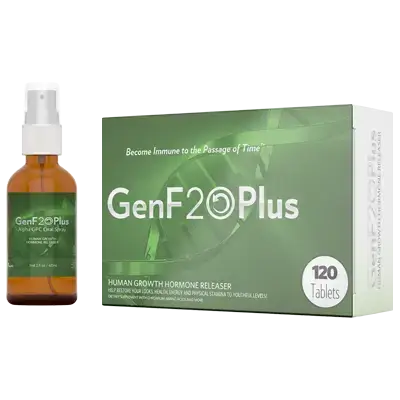
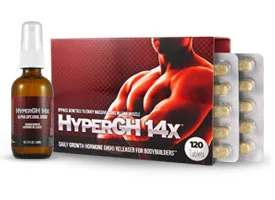
That said — we know a slice of readers over 40, with training, food and sleep genuinely dialed, will want to experiment with that last margin. If that’s you, at least do it with the three US formulas that publish every dose and back it with a real guarantee: GenF20 Plus (our 3.9/5 pick, and the only one with a clinical study on the finished product), HyperGH 14X (3.8/5, dosed around your training and sleep GH pulses — the lifter’s configuration), and HGH-X2 (3.7/5, the four-ingredient minimalist option). We’ve compared all three head-to-head — including the manufacturer overlap nobody else discloses — in our full three-way comparison, and ranked the wider market in the best legal HGH alternatives guide.
FAQ
How long does it take to build noticeable muscle? Strength climbs within 2–3 weeks (mostly neurological), visible changes arrive around weeks 8–12, and “people start commenting” is typically month 4–6. A committed male beginner is worth roughly 18–24 lbs of muscle in year one.
How many days a week should I train to build muscle? Three to six — the requirement underneath is each muscle twice weekly with 10–20 total hard sets. Full-body three days is the minimum effective dose and the best beginner default; upper/lower and push-pull-legs just split the same work across more days.
What rep range is best for muscle growth? Anything from 5 to 30 reps, provided sets end 0–3 reps from failure — effort is the active ingredient, not the number. Sensible defaults: 5–10 on big compounds, 8–15 on most accessories, 15–30 where your joints prefer lighter loads.
How much protein do I need to build muscle? 0.7–1 g per pound of body weight daily — 125–180 g for a 180-lb man — across 3–5 feedings, with a 200–300 calorie surplus. More than that isn’t harmful for healthy people; it’s just not more muscle.
Can I build muscle and lose fat at the same time? Yes, if you’re a beginner, returning from a layoff, or carrying meaningful body fat: train hard, hold protein at the top of the range, eat around maintenance. The leaner and more experienced you get, the more you’ll need dedicated phases.
Do HGH or testosterone boosters help build muscle? Not meaningfully — your hormones answer to training, sleep and body fat far more than to any legal pill, and no supplement contains actual HGH or testosterone. Genuine deficiency symptoms belong at a doctor’s office; everything else is a last-5% experiment at best.
This article is for educational purposes and isn’t medical advice. Check with a physician before starting a new training or nutrition program, particularly with existing health conditions. Dietary supplements are not FDA-approved to diagnose, treat, cure or prevent any disease, and our reviews contain affiliate links — we may earn a commission at no extra cost to you, which never affects our ratings.
References
Protein and the materials requirement
- Morton RW, et al. A systematic review, meta-analysis and meta-regression of the effect of protein supplementation on resistance training-induced gains in muscle mass and strength in healthy adults. Br J Sports Med. 2018;52(6):376–384. — the source of the 1.6–2.2 g/kg (0.7–1 g/lb) protein range this guide is built on.
Training volume, frequency and the dose-response
- Schoenfeld BJ, Ogborn D, Krieger JW. Dose-response relationship between weekly resistance training volume and increases in muscle mass: a systematic review and meta-analysis. J Sports Sci. 2017;35(11):1073–1082. — the foundational finding that more weekly sets produce more growth, each additional set worth roughly a 0.37% gain.
- The Resistance Training Dose Response: Meta-Regressions Exploring the Effects of Weekly Volume and Frequency on Muscle Hypertrophy and Strength Gains. 2025 (67 studies, 2,058 participants). — the newest and largest analysis: hypertrophy rises with volume with diminishing returns, and frequency’s independent effect on size is small — supporting the 10–20 set prescription and the “frequency splits the dose” framing.
Sleep, hormones and the recovery requirement
- Van Cauter E, Leproult R, Plat L. Age-related changes in slow wave sleep and REM sleep and relationship with growth hormone and cortisol levels in healthy men. JAMA. 2000;284(7):861–868. — the study behind “your biggest GH pulse fires in deep sleep,” and the documentation of how that pulse collapses with age and poor sleep.
- Liu H, et al. Systematic Review: The Safety and Efficacy of Growth Hormone in the Healthy Elderly. Ann Intern Med. 2007 (DARE abstract, NCBI). — the honest ceiling on hormone-based shortcuts: even injected GH gave healthy adults ~2 kg of lean mass, no strength gain, and more adverse events.
- Mayo Clinic — Human Growth Hormone (HGH): Does It Slow Aging? — the chemistry behind the supplements section: there is no pill form of human growth hormone.
Supplements
- Kreider RB, et al. International Society of Sports Nutrition position stand: safety and efficacy of creatine supplementation in exercise, sport, and medicine. J Int Soc Sports Nutr. 2017;14:18. — the consensus document calling creatine monohydrate the most effective legal supplement for high-intensity capacity and lean mass, with long-term safety data up to five years.
- Increased Human Growth Hormone After Oral Consumption of an Amino Acid Supplement: A Randomized, Placebo-Controlled, Double-Blind, Crossover Study. Am J Ther. 2019. — the strongest published evidence for HGH-releaser-style formulas, and its limits: 16 subjects, one dose, two hours of measurement.
- Operation Supplement Safety (US Department of Defense) — HGH: Is It Legal? — the official warning that over-the-counter HGH-branded products are unapproved and unproven, cited in the hormone-aisle discussion.