How to Build Muscle After 40 (and After 50): A Realistic Guide
Can you build muscle after 40? Yes. Research shows adults can add measurable muscle mass and strength well into their 70s and 80s. The formula changes slightly with age: lift weights 2–4 times a week with progressive overload, eat roughly 1.6 g of protein per kg of body weight daily, sleep 7–9 hours, and give joints and tendons more recovery time than you did at 25.
Key Takeaways
- Muscle growth over 40 is well documented in research — adults have added significant muscle mass into their 70s and beyond.
- Train each muscle group 2–3 times per week with progressive overload; total-body or upper/lower splits beat “bro splits” at this age.
- Aim for ~1.6 g protein per kg of body weight daily, split across 3–4 meals of 30–40 g each.
- Recovery is where you gain: 7–9 hours of sleep, at least one full rest day between sessions for the same muscles, and 48–72 hours for heavy lower-body work.
- Building muscle after 50 follows the same rules — just with longer warm-ups, slightly higher reps, and more patience with load jumps.
Somewhere around your 40th birthday, the fitness industry quietly writes you off. The magazine covers get younger, the programs assume knees that never ache, and the comment sections tell you it’s all downhill from here.
The research says otherwise, and it says it loudly. So let’s separate what actually changes after 40 from what’s just gym folklore — and build a plan around the real stuff.
Can You Build Muscle After 40? What the Science Actually Shows
This is the question people type into Google at 11 p.m. after a rough day at the gym, so let’s settle it first. In one striking trial, older adults increased mid-thigh muscle area by nearly 10% and leg strength by roughly 180% in just eight weeks of progressive resistance training [3].
That’s not a rounding error. That’s about a decade’s worth of typical age-related muscle loss reversed in two months.
Mayo Clinic researchers who studied muscle tissue from 197 people came to a similar conclusion: resistance training can slow — and often reverse — the fiber-level changes we associate with aging, even in people who started after 70 [1].
So the honest answer to “can you build muscle after 40” isn’t just yes. It’s that your 40s may be one of the most responsive training decades you have left, which makes them too valuable to waste.
What Actually Changes After 40 (and Accelerates After 50)
None of this means your body is the same one you had at 25. Four things genuinely shift, and a smart program accounts for all of them.
1. Sarcopenia starts pulling in the other direction
From around age 30, adults lose roughly 3–8% of muscle mass per decade, and the decline speeds up after 50. You’re no longer building from a neutral baseline — you’re building against a current.
2. Anabolic resistance blunts your protein response
Older muscle responds less efficiently to a given dose of protein, a phenomenon researchers call anabolic resistance. The fix isn’t exotic; it’s simply eating more protein, more evenly spread across the day, than a younger lifter needs.
3. Hormones drift downward
Testosterone in men declines gradually from the 30s onward, and growth hormone output falls in both sexes. This slows recovery and makes body fat easier to gain, especially around the midsection — more on this in the supplement section below.
4. Connective tissue recovers slower than muscle
Tendons, ligaments, and cartilage adapt on a longer timeline than muscle fibers do. Most training injuries after 40 aren’t muscle problems at all — they’re connective tissue that got asked to keep a pace it couldn’t match.
The Training Blueprint for Muscle Growth Over 40
Forget the six-day body-part splits you may have run in your 20s. Frequency and consistency beat volume-bombing when recovery is your limiting factor.
Train each muscle 2–3 times per week
Hitting a muscle more often with moderate volume produces better growth than annihilating it once a week. A three-day full-body plan or a four-day upper/lower split covers this perfectly.
Build around compound lifts
Squats or leg presses, deadlift variations, rows, presses, and carries deliver the most muscle per minute of gym time. Prioritize legs and glutes especially — they hold the most muscle mass and drive everyday capability as you age.
Use progressive overload, but progress in smaller steps
Add weight, reps, or a set most weeks — that’s still non-negotiable. Just make the jumps smaller than you used to: 2.5 kg where you once added 5, one extra rep instead of three.
Favor the 6–15 rep range
Heavy singles and doubles carry more joint risk than reward for most lifters over 40. Sets of 6–15 reps, taken within a couple of reps of failure, build muscle just as well with far less orthopedic cost.
Warm up like it’s part of the workout
Five to ten minutes of easy cardio plus two or three ramp-up sets before your first heavy lift isn’t optional anymore. Cold connective tissue is where “I tweaked something” stories begin.
A sample week
| Day | Focus | Notes |
|---|---|---|
| Mon | Full Body A | Squat pattern, horizontal push, row, core |
| Tue | Walk 30–45 min | Active recovery, 7,000+ steps |
| Wed | Full Body B | Hinge pattern, vertical push, pulldown, carries |
| Thu | Rest or Mobility | Hips, shoulders, thoracic spine |
| Fri | Full Body C | Lunge pattern, incline push, row, arms |
| Sat–Sun | Walk, Hike, Play | One optional short interval session |
Building Muscle After 50: What to Adjust
Everything above still applies for building muscle after 50 — the physiology doesn’t flip a switch at a birthday. But a few dials are worth turning.
Extend the on-ramp. If you’re returning after years away, spend 4–6 weeks at loads around 30–40% of your max before progressing toward the 70–80% range researchers recommend for older adults [3].
Lean slightly higher-rep. Sets of 10–15 keep the growth stimulus while sparing shoulders, knees, and lower backs that have some mileage on them. Machines and cables are tools, not training wheels.
Respect the 48–72 hour rule. A 12-week study of older men found significant muscle fiber hypertrophy with structured resistance training — but the programs that work all build in real recovery between sessions [4].
Add balance and power work. A few sets of controlled step-ups, medicine ball throws, or fast-but-light leg presses maintain the fast-twitch fibers that age erodes first. These fibers are what keep you from falling — and what keep you looking athletic rather than just “in shape.”
For women, this window matters double. Resistance training reliably adds lean mass even after menopause, and it’s one of the best defenses against the bone density losses that accelerate in the same years.
Protein: The Lever Most People Over 40 Under-Pull
If training is the signal, protein is the raw material — and after 40, you need a stronger dose of it. A landmark meta-analysis of 49 studies found muscle gains plateau around 1.6 g of protein per kg of body weight per day, with older adults benefiting from staying near the top of the range precisely because their response per gram is weaker [2].
For an 80 kg (176 lb) person, that’s roughly 128 g of protein daily. Most people over 40 who “eat pretty healthy” are getting barely half that.
Distribution matters too. Aim for 30–40 g per meal across three or four meals, including one within a couple of hours of training, rather than a token breakfast and a protein-heavy dinner.
A separate dose-response analysis found strength gains climb steadily with protein intake up to about 1.5 g/kg/day when combined with lifting — and that protein without resistance training builds nothing [5]. The order of operations is fixed: training first, protein second, everything else third.
Recovery and Hormones: The Unsexy Multipliers
After 40, you don’t get to out-train bad sleep. Growth hormone release is concentrated in deep sleep, and chronically short nights blunt the very recovery processes you’re trying to stimulate.
Seven to nine hours is the target, and it’s worth protecting like a training session. Manage stress the same way — chronically elevated cortisol is catabolic, quietly working against every rep you put in.
Keep cardio in its lane: walking (7,000–12,000 steps a day) plus one or two short interval sessions supports heart health without eating into recovery. Marathon-level endurance volume and maximum muscle growth are competing goals; pick your priority for each season.
Editor’s Picks: 3 Natural HGH Support Supplements
Growth hormone declines steadily from your 30s onward. These over-the-counter HGH releasers use amino acids and botanicals to support the body’s own GH output — they are supplements, not synthetic HGH, and no pill replaces training, protein, and sleep.
Where Supplements Fit After 40 — and Their Honest Limits
Let’s be upfront about something most fitness sites won’t say: supplements are the last 5% of the last 5%. If your training, protein, and sleep aren’t dialed in, no capsule on earth will out-lift a barbell or out-recover a good mattress.
🧪 Our 3 HGH Picks
For the over-40 lifter with training, protein and sleep already dialed — the three US formulas that publish every dose and back it with a real guarantee. Expectations set by this guide, not the ads.

GenF20 Plus
Sharpens: energy, skin and vitality for men over 40
- The only one with a clinical study on the finished product — 12 weeks, double-blind
- 16-ingredient tablet + Alpha-GPC spray
- Two-part system pushes the monthly cost up
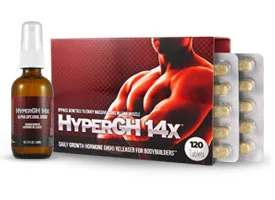
HyperGH 14X
Sharpens: recovery and lean-mass support for men still training hard
- Dosed twice daily around both GH pulses — pre-training and at night
- 15+ ingredients, tablet + oral spray
- No clinical trial on the finished formula
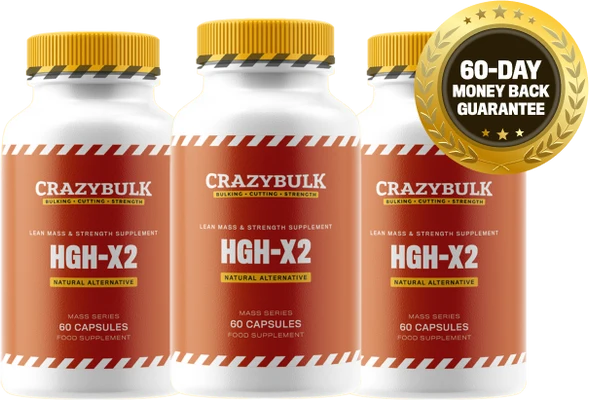
HGH-X2
Sharpens: the short-ingredient-list lane, and cutting phases
- Just four ingredients — arginine, maca, mucuna, hawthorn
- Simple dosing: four capsules before breakfast
- Fewest actives here, and CrazyBulk overclaims
Two products genuinely earn their shelf space at any age. Creatine monohydrate — 3–5 g daily — is the most-studied compound in sports nutrition, and it’s arguably more useful after 40, when preserving strength and lean mass gets harder. Protein powder is the second, not as magic but as logistics: a scoop of whey is 25 g toward your daily target on the days real food doesn’t cooperate.
Then there’s the hormone aisle, and this is where honesty matters most. Growth hormone output really does decline with age — roughly 14–15% per decade after your 20s — and the supplement industry has built an empire on making that number sound like a crisis.
Here’s the context the ads leave out: normal age-related decline is not a deficiency, and it does not stop a 45- or 60-year-old from building real muscle. Your biggest natural GH pulse still fires every night during deep sleep, which means seven to nine hours in a dark room out-produces anything sold in a bottle.
No legal supplement contains actual growth hormone, either. The so-called HGH releasers are amino-acid and botanical blends designed to nudge your body’s own output, and the published evidence for them is thin: small studies, short durations, modest acute effects.
So why feature them at all? Because we know a slice of readers over 40 — the ones who already train hard, hit their protein number, and sleep properly — will want to experiment with that last margin, and if that’s you, you should at least do it with formulas that publish every dose and back it with a real money-back guarantee.
That narrows the field to three. Expectations set by this guide, not the ads: these are small experiments at the margin, not shortcuts around the work.
The 5 Mistakes That Stall Muscle Growth Over 40
- Training like you’re 25. Ego lifting and seven-day splits break bodies that would thrive on three smart sessions a week.
- Dieting too hard. Aggressive calorie cuts starve muscle growth; a small surplus or slow recomposition works far better at this age.
- Skipping legs. Your lower body holds most of your muscle mass and all of your independence — train it first, not last.
- Ignoring pain signals. Working through joint pain was a bad idea at 25 and a program-ending one at 55.
- Program-hopping. Visible muscle change takes 8–12 weeks of consistent work; switching plans every fortnight resets the clock each time.
Frequently Asked Questions
How long does it take to build noticeable muscle after 40?
Strength climbs within 2–4 weeks, mostly from neural adaptation. Visible muscle changes typically show at 8–12 weeks — take monthly photos, because mirrors lie to people who look in them daily.
Is building muscle after 50 harder than after 40?
Somewhat — anabolic resistance and hormonal decline are further along, so progress per month is slower. But study after study shows adults in their 50s, 60s, and 70s adding real muscle, so “slower” never means “impossible.”
Do I need testosterone therapy or HGH injections to build muscle at this age?
No — the study participants gaining 10% muscle area in eight weeks did it with barbells and food, not prescriptions. If you suspect a genuine hormone deficiency, get bloodwork through a doctor rather than self-diagnosing.
Can I build muscle after 40 with bodyweight exercises only?
Yes, especially in your first year, if you keep making the exercises harder (slower tempos, single-limb versions, added reps). Weights simply make progressive overload easier to measure and continue long-term.
The Bottom Line
Building muscle after 40 — and building muscle after 50 — isn’t a loophole or a genetic lottery win. It’s the predictable result of lifting progressively 2–4 times a week, eating around 1.6 g/kg of protein, and sleeping like recovery is your job.
The current is against you now, which is exactly why swimming matters more. Start this week; your 60-year-old self is already grateful.
References
- Mayo Clinic Press — The many benefits of resistance training as you age. https://mcpress.mayoclinic.org/healthy-aging/the-many-benefits-of-resistance-training-as-you-age/
- Morton RW, et al. A systematic review, meta-analysis and meta-regression of the effect of protein supplementation on resistance training–induced gains in muscle mass and strength in healthy adults. Br J Sports Med. 2018. https://pubmed.ncbi.nlm.nih.gov/28698222/
- The Conversation — Am I too old to build muscle? What science says about sarcopenia and building strength later in life. https://theconversation.com/am-i-too-old-to-build-muscle-what-science-says-about-sarcopenia-and-building-strength-later-in-life-203562
- Myonuclear content and domain size in response to 12 weeks of resistance exercise training in older adults. Acta Physiologica (PMC). https://www.ncbi.nlm.nih.gov/pmc/articles/PMC8047909/
- Tagawa R, et al. Synergistic effect of increased total protein intake and strength training on muscle strength: a dose-response meta-analysis. Sports Med Open. 2022 (PMC). https://www.ncbi.nlm.nih.gov/pmc/articles/PMC9441410/