How Much Protein to Build Muscle (With Calculator)
How much protein do you need to build muscle? 0.7–1 gram per pound of body weight per day (1.6–2.2 g/kg), spread across 3–5 meals of 25–45 g each. For a 180-lb person that’s 125–180 g daily. This range comes from a meta-analysis of 49 studies, which found no additional muscle gain above roughly 0.73 g per pound when combined with resistance training.
Key Takeaways
- The research range for protein for muscle growth is 0.7–1 g per pound of body weight daily (1.6–2.2 g/kg) — gains plateau beyond it.
- Spread it across 3–5 feedings of roughly 0.18 g per pound each (25–45 g for most people); the “30 g per meal limit” is a myth.
- Cutting? Go higher, not lower — 1–1.2 g/lb protects muscle in a calorie deficit.
- Over 40, anabolic resistance means you get less muscle per gram, so live at the top of the range.
- Total daily intake matters far more than timing; the “anabolic window” is hours wide, not minutes.
- For healthy kidneys, high-protein diets are safe — the kidney-damage claim traces to patients with pre-existing disease.
Ask five people at your gym how much protein you need and you’ll get five different numbers, three of which were invented by a supplement label. The actual research answer fits in one sentence and hasn’t changed much since 2018.
So let’s get you your exact number first, then show you where it comes from — and why almost everything else you’ve heard about protein timing, limits, and kidney doom is noise.
Protein Calculator for Muscle Growth
Enter your weight, pick your situation, and get your daily target plus a per-meal breakdown. The math underneath is straight from the two most-cited protein papers in sports science, referenced at the bottom of this page.
💪 Daily Protein Calculator
Built on the Morton 2018 and Schoenfeld & Aragon 2018 research ranges
Bookmark that result — it’s the single most important number in your nutrition. Now here’s why you can trust it.
Grams of Protein Per Pound: Where the Number Comes From
In 2018, researchers pooled 49 studies covering 1,863 people who lifted weights while eating different amounts of protein. The finding that settled the debate: muscle gains climbed with protein intake up to about 1.6 g/kg/day (0.73 g per pound), then flatlined [1].
The confidence interval stretched to roughly 2.2 g/kg — a full gram per pound — which is why serious lifters use 0.7–1 g/lb as the working range. Above that, extra protein isn’t dangerous for healthy people; it’s just expensive.
A separate 2022 dose-response analysis found the same pattern for strength: gains rose steadily with each 0.1 g/kg increase in protein, up to about 1.5 g/kg, then stopped [2]. Two independent research teams, two methods, one landing zone.
That same paper confirmed something the shake industry hates: protein without resistance training built nothing. The lifting is the signal; protein is only the material.
How to Split It: Per-Meal Protein Targets
Once your daily total is set, distribution is the second-order optimization — worth doing, not worth obsessing over. The definitive paper on this concluded that anabolism is maximized at about 0.4 g/kg per meal across a minimum of four meals [3].
In pounds-and-plates terms, that’s roughly 0.18 g per pound of body weight per feeding. For a 180-lb lifter: about 32 g per meal, four times a day.
The same paper quietly killed a gym legend along the way. The old “your body can only absorb 30 g of protein per meal” claim came from studies of fast-digesting whey taken alone — real meals with fat, fiber, and slower proteins digest over hours, and the extra amino acids get used.
So a 50-g protein dinner isn’t wasted. It’s just slightly less efficient than splitting it, which matters at the margins and nowhere else.
What your day might actually look like
| Meal | Example (US Kitchen) | Protein |
|---|---|---|
| Breakfast | 3 eggs + Greek yogurt cup | ~36 g |
| Lunch | 8-oz chicken breast, rice, vegetables | ~50 g |
| Snack | Cottage cheese or a whey shake | ~25 g |
| Dinner | 6-oz salmon or lean ground beef | ~40 g |
That’s roughly 150 g without a single Tupperware box of sadness. Adjust portions up or down to hit your calculator number.
The Situations That Change Your Number
Cutting: protein goes up, not down
In a calorie deficit, protein does double duty — it protects existing muscle and it’s the most filling macronutrient per calorie. Push to 1–1.2 g per pound while dieting, especially as you get leaner.
Over 40: anabolic resistance is real
The Morton analysis found protein’s effect on lean mass shrinks with age — older muscle simply responds less per gram [1]. The fix is staying at the top of the range and never skipping the per-meal minimums, because small doses that work at 25 barely register at 55.
Plant-based: add 10–20% and mind the leucine
Plant proteins digest less completely and run lower in leucine, the amino acid that triggers muscle protein synthesis. Vegans build muscle just fine — they just need slightly more total protein and smart combinations (soy, legumes plus grains, or a pea-rice blend).
Very overweight? Use goal weight
Grams-per-pound math breaks at high body fat, because fat tissue needs almost no protein. If you’re well above a healthy weight, run the calculator on your rough goal weight instead.
The Two Protein Myths That Refuse to Die
“High protein wrecks your kidneys.” This claim was born in studies of patients with pre-existing kidney disease, then copy-pasted onto healthy people for decades. Reviews in healthy, training adults keep finding no harm at intakes well above 1 g per pound — if you have diagnosed kidney issues, that’s a doctor conversation, not a blog one.
“You must drink a shake within 30 minutes of training.” The anabolic window exists, but it’s a garage door, not a mousetrap — several hours wide, and effectively wider if you ate protein before training. Total daily grams beat stopwatch timing every single time they’ve been tested head-to-head.
Where Supplements Fit — and Their Honest Limits
Protein powder is the one supplement this article genuinely endorses, and only as logistics. A scoop of whey is ~25 g toward your number for about a dollar; it counts exactly the way chicken counts, no more and no less.
Creatine monohydrate deserves the second slot in your cart — 3–5 g daily is the most-studied performance supplement in existence. It works on a different mechanism than protein, so the two stack rather than overlap.
The HGH question, answered honestly
Then there’s the hormone aisle, which loves to insert itself into protein conversations. The pitch writes itself: protein supplies the bricks, growth hormone directs the construction, so surely a “GH booster” multiplies every gram you eat.
There’s a kernel of real physiology in that pitch. Growth hormone genuinely is part of the machinery that turns dietary protein into tissue — it stimulates IGF-1, supports protein synthesis, and its output really does decline around 14–15% per decade after your 20s.
But here’s what the ads skip: no legal pill or powder contains actual growth hormone, because real HGH is a prescription injectable that digestion would destroy if you swallowed it [5]. Every over-the-counter “HGH supplement” is really an amino-acid and botanical blend designed to nudge your body’s own output.
And the amino acids doing that nudging — arginine, glutamine, glycine, lysine — are things you’re already eating. Hit 150 g of daily protein and you’ve consumed more of these GH-associated amino acids than any capsule provides; the supplements just deliver them isolated, on an empty stomach, at specific times.
🧪 The Last-5% Experiment: Our 3 HGH Picks
For the over-40 lifter with training, protein and sleep already dialed — the three US formulas that publish every dose and back it with a real guarantee. Expectations set by this guide, not the ads.
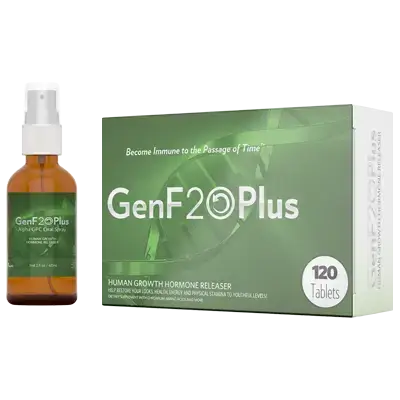
GenF20 Plus
Sharpens: energy, skin and vitality for men over 40
- The only one with a clinical study on the finished product — 12 weeks, double-blind
- 16-ingredient tablet + Alpha-GPC spray
- Two-part system pushes the monthly cost up
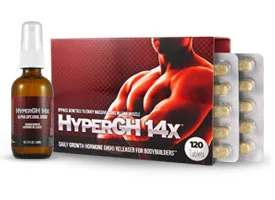
HyperGH 14X
Sharpens: recovery and lean-mass support for men still training hard
- Dosed twice daily around both GH pulses — pre-training and at night
- 15+ ingredients, tablet + oral spray
- No clinical trial on the finished formula
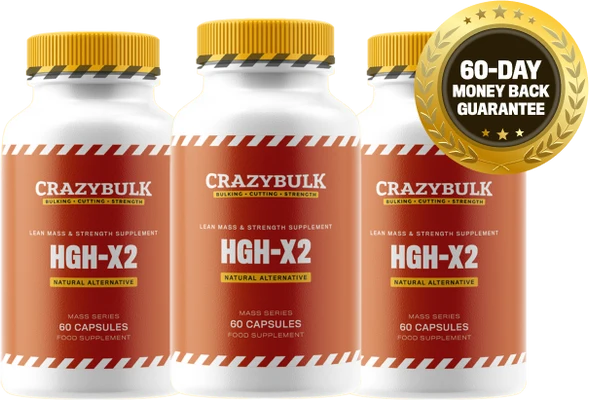
HGH-X2
Sharpens: the short-ingredient-list lane, and cutting phases
- Just four ingredients — arginine, maca, mucuna, hawthorn
- Simple dosing: four capsules before breakfast
- Fewest actives here, and CrazyBulk overclaims
Can that timing trick move the needle? The best published evidence is a small crossover study where an amino-acid blend raised GH levels acutely — 16 subjects, one dose, two hours of measurement [6], which is a long way from proof of extra muscle.
For calibration, consider what actual injected GH does in healthy adults: roughly 2 kg of lean mass and no strength gain, with more side effects [7]. If the real hormone adds that little on top of proper training and protein, a releaser’s ceiling is necessarily lower.
Meanwhile, your single biggest natural GH pulse fires every night during deep slow-wave sleep — not after any workout, shake, or capsule [8]. Which means the cheapest GH protocol in existence is hitting your protein number and sleeping 7–9 hours.
So why feature these products at all? Because some readers over 40 — with protein, training, and sleep already dialed — will want to experiment with that last margin, and if that’s you, at least do it with formulas that publish every dose and back it with a real money-back guarantee.
That narrows the field to three. Expectations set by this article, not the ads: small experiments at the margin, never substitutes for the gram targets above.
FAQ
Is 100 g of protein a day enough to build muscle?
For anyone under about 140 lbs, yes — that lands inside the 0.7–1 g/lb range. At 180 lbs, 100 g sits below the research floor of ~125 g, so gains would come slower than they need to.
Can you eat too much protein?
For muscle purposes, anything past ~1 g per pound builds nothing extra — it just displaces carbs and fats that fuel training. For health, intakes well above that appear safe in people with healthy kidneys.
Does protein powder count the same as food?
Gram for gram, yes — whey is actually one of the highest-quality proteins measured. Whole foods win on fullness, micronutrients, and cost per meal, so use powder to plug gaps, not as the foundation.
How much protein per day for a 180-lb man to build muscle?
125–180 g daily, split into roughly four feedings of 32–45 g. If he’s over 40 or cutting, aim at the top of that range.
Do I need protein on rest days?
Yes — muscle repair from Tuesday’s workout is still running on Wednesday and Thursday. Keep your daily number identical every day of the week.
References
- Morton RW, et al. A systematic review, meta-analysis and meta-regression of the effect of protein supplementation on resistance training–induced gains in muscle mass and strength in healthy adults. Br J Sports Med. 2018;52(6):376–384. https://pubmed.ncbi.nlm.nih.gov/28698222/
- Tagawa R, et al. Synergistic effect of increased total protein intake and strength training on muscle strength: a dose-response meta-analysis of randomized controlled trials. Sports Med Open. 2022. https://www.ncbi.nlm.nih.gov/pmc/articles/PMC9441410/
- Schoenfeld BJ, Aragon AA. How much protein can the body use in a single meal for muscle-building? Implications for daily protein distribution. J Int Soc Sports Nutr. 2018;15:10. https://pubmed.ncbi.nlm.nih.gov/29497353/
- Kreider RB, et al. International Society of Sports Nutrition position stand: safety and efficacy of creatine supplementation in exercise, sport, and medicine. J Int Soc Sports Nutr. 2017;14:18. https://www.ncbi.nlm.nih.gov/pmc/articles/PMC5469049/
- Mayo Clinic — Human Growth Hormone (HGH): Does It Slow Aging? https://www.mayoclinic.org/healthy-lifestyle/healthy-aging/in-depth/growth-hormone/art-20045735
This article is for educational purposes and isn’t medical advice. Check with a physician before changing your diet significantly, particularly with existing health conditions such as kidney disease. Dietary supplements are not FDA-approved to diagnose, treat, cure or prevent any disease, and our reviews contain affiliate links — we may earn a commission at no extra cost to you, which never affects our ratings.