Can You Build Muscle in a Calorie Deficit? The Honest Answer
Can you build muscle in a calorie deficit? Yes — if you’re a beginner, returning after a layoff, or carrying meaningful body fat. In one controlled trial, men in a 40% deficit gained 2.6 lbs of muscle while losing 10.5 lbs of fat over four weeks, eating 1.1 g of protein per pound and training hard. The leaner and more experienced you are, the narrower this window gets — advanced lean lifters usually do better with separate building and cutting phases.
Ask this question on any fitness forum and you’ll get two armies. One insists you must “bulk or cut, pick one”; the other swears their cousin got shredded and jacked simultaneously eating 1,800 calories.
Both armies are half right, which is why the argument never ends. The real answer depends almost entirely on who’s asking — so let’s sort out which camp you’re in before you waste a year in the wrong one.
Key Takeaways
- You can build muscle and lose fat at the same time — research calls it body recomposition, and it’s best documented in beginners, returning lifters, and people with higher body fat.
- Protein is the deciding variable: 1–1.2 g per pound daily doubled the results in the landmark deficit study.
- Keep the deficit moderate — around 300–500 calories, or 0.5–1% of body weight lost per week — unless you’re carrying substantial fat.
- Train to build, not to burn: progressive overload with weights sends the muscle signal; endless cardio just deepens the deficit.
- The scale is the wrong instrument for recomp — judge by photos, tape measurements, and a rising training log.
- Advanced lean lifters gain muscle without getting fat faster through a small surplus (lean bulk) than by forcing a deficit recomp.
The Study That Settled It
In 2016, researchers at McMaster University put 40 overweight young men into a brutal 40% calorie deficit for four weeks, with intense training six days a week [1]. Half ate 1.2 g of protein per kg; half ate 2.4 g/kg — about 1.1 g per pound.
The high-protein group gained 1.2 kg (2.6 lbs) of lean mass while losing 4.8 kg (10.5 lbs) of fat. Losing weight and building muscle, in the same four weeks, under lab measurement.
So the door is real, and it’s not even narrow — for the right person. The question is whether you’re the right person — the three requirements for growth from our complete muscle-building guide don’t change in a deficit, but your margin for error does.
Body Recomposition: Who It Works For (and How Well)
Building muscle and losing fat at once has a name in the literature: body recomposition. A 2020 review in the NSCA’s Strength and Conditioning Journal pulled together every study documenting it and mapped who pulls it off [2].
Beginners: the golden window
Untrained people are so responsive to lifting that muscle grows almost regardless of the calorie situation. Your first 3–6 months of proper training are the easiest recomposition of your life — don’t waste them on a dirty bulk or a starvation diet.
Returning lifters: muscle memory is real
If you built muscle before and lost it during a layoff, your body rebuilds it far faster than it built it the first time. Detrained lifters routinely recomp for months on the way back to their old baseline.
Higher body fat: your fat funds the build
The more stored energy you carry, the more your body can pull from fat to pay for muscle construction. This is why the Longland subjects — average BMI near 30 — could gain in a 40% deficit that would flatten a lean lifter.
Trained and lean: possible, but slow
Here’s where the 2020 review surprised people: even resistance-trained individuals showed recomposition in multiple studies, given high protein and progressive training [2]. But the effect shrinks with every year of training — the same year-by-year slowdown mapped in our guide to how long muscle growth really takes applies double when calories are scarce.
Your honest odds at a glance
| Your Situation | Recomp Odds | What to Expect |
|---|---|---|
| New to lifting (any body fat) | Excellent | Visible muscle + fat loss for 3–6 months |
| Returning after 6+ months off | Excellent | Rapid regain of lost muscle while cutting |
| Overweight, some training history | Very good | Steady recomp for months in a moderate deficit |
| 2+ years trained, average body fat | Moderate | Slow gains; scale may barely move |
| Advanced and already lean | Poor | Pick a phase — recomp mostly maintains here |
How to Build Muscle and Lose Fat at the Same Time: The Setup
1. Size the deficit like a scalpel, not a chainsaw
For most people, 300–500 calories below maintenance — about 0.5–1% of body weight lost per week — keeps enough energy around for muscle building. The Longland subjects survived a 40% cut only because they were young, overweight, supervised, and fed enormous protein.
2. Eat protein like it’s your job
In a deficit, protein needs go up, not down — 1–1.2 g per pound of body weight daily, split across 3–5 feedings. That’s higher than the standard targets in our protein calculator guide [3] because protein now has two jobs: building new tissue and defending the tissue you have.
3. Train like you’re bulking
The single biggest recomp mistake is switching to light weights and high reps “for toning.” Muscle only stays — or grows — when you keep asking it to lift heavy things, so keep progressive overload as the core of every session.
4. Keep cardio as a side dish
Walking daily plus one or two short conditioning sessions supports the fat-loss side without stealing recovery. Hours of extra cardio just deepens the deficit you already created with food, at a higher recovery cost.
5. Sleep like it’s part of the program
The recomposition review flags sleep as a non-training variable that meaningfully shifts results [2]. Short sleep pushes your body toward losing muscle and keeping fat — the exact opposite of the trade you’re trying to make.
How to Know It’s Working (Hint: Not the Scale)
Recomposition is invisible to a bathroom scale, because muscle gained offsets fat lost. People quit successful recomps every week because a number that was never going to move didn’t move.
Use three instruments instead. Monthly photos in the same lighting, a tape measure at the waist and arms, and a training log where the weights keep climbing.
Waist shrinking while lifts climb is recomposition, full stop. If both stall for 3–4 weeks, adjust one variable — usually food quantity — and give it another three weeks.
Gain Muscle Without Getting Fat: When to Recomp vs. Lean Bulk
If your real goal is gaining muscle without the fat that traditional bulking adds, you have two tools. Recomposition works from a deficit or maintenance; a lean bulk works from a small surplus of 200–300 calories.
The decision rule is simple. Carrying extra fat or new to training: recomp, and enjoy the free win.
Already lean with a year or more of training: lean bulk, because your body has no fat reserves worth borrowing from. A 200–300 calorie surplus adds muscle at nearly the maximum possible rate while keeping fat gain to a couple of pounds per year, not per month.
What doesn’t work is the old-school dirty bulk. Past a small surplus, extra calories buy fat, not extra muscle — the muscle-building machinery has a speed limit that food can’t override.
The 4 Mistakes That Kill Deficit Gains
- Cutting too deep. Huge deficits strip the energy muscle construction runs on; outside of high body fat situations, aggressive cuts trade muscle for speed.
- Protein at maintenance levels. The low-protein group in the Longland trial lost fat but built nothing — same training, same deficit, half the protein [1].
- Swapping lifting for cardio. Without the training signal, a deficit is just a weight-loss diet, and some of that weight will be muscle.
- Judging by the scale. A perfect recomp can show zero pounds lost while your waist drops two inches — measure the right things.
Where Supplements Fit — and Their Honest Limits
Nothing in a bottle changes which recomp category you’re in. But a deficit is the one context where two supplements earn their money most clearly.
Protein powder matters more when calories are scarce, because hitting 1–1.2 g per pound inside a calorie budget is a logistics problem whey solves cheaply. Creatine matters more too — it defends training performance right when the deficit starts dragging it down.
Then there’s the HGH aisle, which loves dieters especially. The pitch: growth hormone mobilizes fat and protects muscle, so a “GH booster” must be the recomp shortcut.
The honest physiology: your body already raises GH during fasting and calorie restriction — it’s part of how fat gets mobilized — and your biggest pulse still fires nightly in deep sleep [4]. No legal supplement contains actual growth hormone [5], and even injected GH in healthy adults produced only ~2 kg of lean mass with no strength gain [6].
So the hierarchy stands: deficit sized right, protein at 1–1.2 g/lb, progressive training, real sleep. For the slice of readers over 40 who have all four dialed and still want to experiment at the margin, the three formulas below at least publish every dose and back it with a real guarantee.
🧪 The Last-5% Experiment: Our 3 HGH Picks
For the over-40 lifter with training, protein and sleep already dialed — the three US formulas that publish every dose and back it with a real guarantee. Expectations set by this guide, not the ads.

GenF20 Plus
Sharpens: energy, skin and vitality for men over 40
- The only one with a clinical study on the finished product — 12 weeks, double-blind
- 16-ingredient tablet + Alpha-GPC spray
- Two-part system pushes the monthly cost up
HyperGH 14X
Sharpens: recovery and lean-mass support for men still training hard
- Dosed twice daily around both GH pulses — pre-training and at night
- 15+ ingredients, tablet + oral spray
- No clinical trial on the finished formula
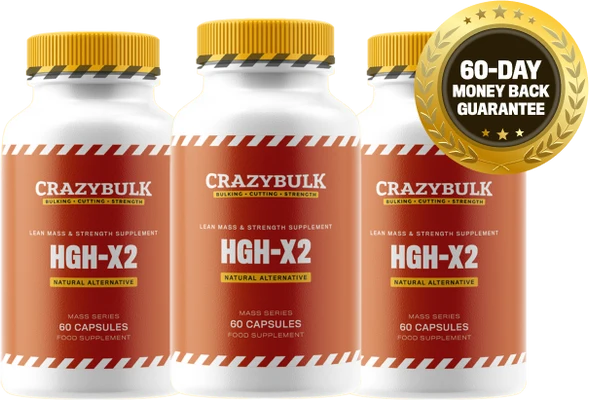
HGH-X2
Sharpens: the short-ingredient-list lane, and cutting phases
- Just four ingredients — arginine, maca, mucuna, hawthorn
- Simple dosing: four capsules before breakfast
- Fewest actives here, and CrazyBulk overclaims
FAQ
How big should my calorie deficit be to build muscle and lose fat?
300–500 calories below maintenance for most people, targeting 0.5–1% of body weight lost per week. Larger deficits are defensible only at higher body fat levels, and even then protein must climb to compensate.
How long does body recomposition take?
Expect visible changes in 8–12 weeks and a genuinely different physique in 6–12 months. It’s slower than a bulk at building and slower than a cut at losing — the trade is doing both at once.
Can you build muscle in a deficit after 40?
Yes, with the same qualifiers — the window depends on training status and body fat, not age alone. Push protein toward the top of the range since older muscle responds less per gram, and see our full guide to building muscle after 40 and 50 for the training adjustments that matter.
Should I do cardio during a recomp?
Daily walking plus one or two short conditioning sessions, yes. Long daily cardio sessions, no — they deepen the deficit and tax recovery, both of which work against the muscle side of the equation.
Why is my weight not changing if my recomp is working?
Because muscle gained is offsetting fat lost — that’s the entire point. A shrinking waist and climbing lifts at a stable weight is the best-case outcome, not a stall.
References
- Longland TM, Oikawa SY, Mitchell CJ, Devries MC, Phillips SM. Higher compared with lower dietary protein during an energy deficit combined with intense exercise promotes greater lean mass gain and fat mass loss: a randomized trial. Am J Clin Nutr. 2016;103(3):738–746. https://ajcn.nutrition.org/article/S0002-9165(22)06559-5/fulltext
- Barakat C, Pearson J, Escalante G, Campbell B, De Souza EO. Body Recomposition: Can Trained Individuals Build Muscle and Lose Fat at the Same Time? Strength Cond J. 2020;42(5):7–21. https://journals.lww.com/nsca-scj/Fulltext/2020/10000/Body_Recomposition__Can_Trained_Individuals_Build.3.aspx
- Morton RW, et al. A systematic review, meta-analysis and meta-regression of the effect of protein supplementation on resistance training–induced gains in muscle mass and strength in healthy adults. Br J Sports Med. 2018;52(6):376–384. https://pubmed.ncbi.nlm.nih.gov/28698222/
- Van Cauter E, Leproult R, Plat L. Age-related changes in slow wave sleep and REM sleep and relationship with growth hormone and cortisol levels in healthy men. JAMA. 2000;284(7):861–868. https://pubmed.ncbi.nlm.nih.gov/10938176/
- Mayo Clinic — Human Growth Hormone (HGH): Does It Slow Aging? https://www.mayoclinic.org/healthy-lifestyle/healthy-aging/in-depth/growth-hormone/art-20045735
- Liu H, et al. Systematic Review: The Safety and Efficacy of Growth Hormone in the Healthy Elderly. Ann Intern Med. 2007. https://www.ncbi.nlm.nih.gov/books/NBK74769/
This article is for educational purposes and isn’t medical advice. Check with a physician before starting a significant calorie deficit or new training program, particularly with existing health conditions. Dietary supplements are not FDA-approved to diagnose, treat, cure or prevent any disease, and our reviews contain affiliate links — we may earn a commission at no extra cost to you, which never affects our ratings.