What Is DIM and What Does It Have to Do With Your Prostate?
DIM — short for Diindolylmethane — is a compound your body produces naturally when you eat cruciferous vegetables like broccoli, cauliflower, and kale.
Its primary job is to regulate estrogen metabolism. It shifts your body toward producing more “good” estrogen metabolites (2-hydroxyestrone) and fewer of the harmful ones (16-alpha-hydroxyestrone).
Why does that matter for your prostate? Because excess estrogen — specifically the harmful metabolites — has been directly linked to prostate inflammation, abnormal cell growth, and an elevated risk of BPH and prostate cancer.
DIM promotes the production of beneficial estrogen metabolites and reduces the formation of harmful ones, making it particularly relevant to prostate health — and it’s often combined with saw palmetto for synergistic effects on prostate and urinary health.
DIM also acts as a mild aromatase inhibitor, reducing the conversion of testosterone to estrogen in the body. This keeps testosterone functioning more effectively while keeping estrogen from accumulating in prostate tissue.
Think of DIM as the hormonal cleanup crew — quietly working to keep the biochemical environment around your prostate cleaner and more balanced.
What Is Saw Palmetto and How Does It Work?
Saw palmetto comes from the dark berries of the Serenoa repens palm tree, native to the southeastern United States. It’s been used for prostate and urinary health for well over a century.
Its primary mechanism is different from DIM. Saw palmetto has gained prominence for its potential efficacy in managing BPH because of its ability to influence the conversion of testosterone to dihydrotestosterone (DHT) — the hormone directly responsible for prostate cell proliferation and enlargement.
Saw palmetto inhibits both type I and type II isoforms of 5-alpha reductase, reducing conversion of testosterone to DHT in prostate tissue — and it blocks nuclear uptake of DHT, decreasing its ability to bind androgen receptors by nearly 50%.
That’s a significant mechanism. DHT is the primary driver of prostate growth. By reducing how much DHT your prostate tissue is exposed to, saw palmetto may slow or limit that enlargement.
In test tubes, saw palmetto also inhibits the actions of growth factors and inflammatory substances that may contribute to BPH — giving it an anti-inflammatory layer on top of its DHT-blocking activity.
A 2025 study published in the journal Lower Urinary Tract Symptoms confirmed that saw palmetto extract possesses anti-proliferative and pro-apoptotic effects by inhibiting 5-alpha-reductase and DHT expression, thereby mitigating the progression of BPH.
It’s worth being honest here though. A 2023 Cochrane review of 27 randomized controlled trials concluded that saw palmetto administered alone provides little or no benefit for BPH symptoms compared to placebo — which is exactly why the combination approach with DIM is worth understanding.
Why DIM and Saw Palmetto Work Better Together
This is where things get genuinely interesting. DIM and saw palmetto target two completely different hormonal pathways — and that’s precisely what makes them complementary.
Saw palmetto blocks the conversion of testosterone to DHT. DIM manages the estrogen side of the equation — reducing harmful estrogen metabolites and limiting aromatase activity.
Prostate enlargement and disease don’t have a single hormonal cause. Both excess DHT and excess estrogen play a role. Addressing only one pathway leaves the other wide open.
DIM promotes favorable estrogen metabolism and buffers androgen receptor activity, while saw palmetto supports DHT balance and urinary comfort through modulation of 5-alpha reductase, COX, and 5-LOX pathways — together covering the full hormonal picture.
The anti-inflammatory effects are also additive. Both compounds reduce inflammation in prostate tissue through different mechanisms. Combined, that dual anti-inflammatory action may produce more meaningful symptom relief than either compound achieves alone.
Combining DIM with saw palmetto enhances DIM’s effectiveness in supporting prostate health and reducing urinary symptoms — and this synergy is increasingly recognized by formulators of professional-grade men’s health supplements.
DIM vs saw palmetto — how they target prostate health
Two different hormonal pathways, one shared goal
DIM
Saw palmetto
| Factor |
DIM (Diindolylmethane) |
Saw palmetto |
| Primary target |
Estrogen metabolism
|
DHT production
|
| Key mechanism |
Shifts estrogen toward safer 2-hydroxyestrone metabolites;
inhibits aromatase
|
Inhibits 5-alpha reductase (types I and II);
blocks DHT uptake in prostate tissue
|
| Hormone addressed |
Estrogen (16-alpha-hydroxyestrone)
estrogen
|
Dihydrotestosterone (DHT)
androgen
|
| Anti-inflammatory |
Yes — reduces harmful estrogen metabolites
in prostate tissue
|
Yes — inhibits COX and 5-LOX
inflammatory pathways
|
| Urinary symptom relief |
Indirect — via reduced prostate inflammation
indirect
|
Direct — reduces prostate enlargement
and improves flow
direct
|
| Hormonal balance |
Strong — optimizes testosterone-to-estrogen ratio
|
Moderate — preserves testosterone
by reducing DHT conversion
|
| Cancer risk support |
Emerging — reduces harmful estrogen metabolites
linked to cell proliferation
|
Limited — primarily focused on BPH,
not cancer prevention
|
| Best for |
Men with estrogen dominance, hormonal imbalance,
or elevated estrogen metabolites
|
Men with BPH symptoms — weak stream,
frequent urination, nocturia
|
| Works best when |
Used together — they cover the full hormonal picture
|
Signs You Might Benefit From This Combination
Not every man needs prostate-focused supplementation. But certain patterns are worth paying attention to.
Frequent urination — especially waking up two or more times per night — is one of the earliest signs of prostate enlargement. A weak or interrupted urinary stream, difficulty starting urination, or a feeling of incomplete bladder emptying are also classic BPH symptoms.
Beyond urinary function, hormonal imbalance signals matter too. Low energy, reduced libido, unexplained weight gain around the midsection, and mood changes can all point to a shifting testosterone-to-estrogen ratio — the same imbalance that accelerates prostate problems.
Men over 40 with a family history of prostate issues are at elevated risk. African American men face statistically higher rates of BPH and prostate cancer and may benefit from earlier proactive support.
If any of these patterns sound familiar, a combination of DIM and saw palmetto — alongside a conversation with your physician — is worth exploring.
Our Recommended Supplement: PrimeGenix DIM 3X + Prostate Support
For men who want to address both hormonal balance and prostate health, PrimeGenix offers two purpose-built formulas that work powerfully in combination.
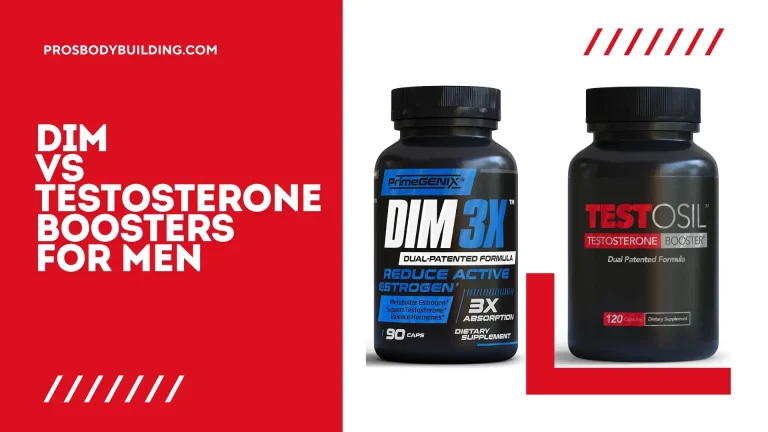
PrimeGenix DIM 3X handles the estrogen metabolism side — delivering a clinically dosed 200mg of DIM alongside BioPerine® and AstraGin® for maximum absorption. It’s the foundational hormonal support layer.
PrimeGenix Prostate Support covers the DHT and prostate-specific side — featuring saw palmetto standardized to 45% fatty acids (a clinically relevant potency), alongside patented compounds including Phytopin® (pine-derived beta-sitosterol shown to reduce BPH symptoms), Flowens™ (cranberry extract for antibacterial support), and LycoRed® Lycopene for antioxidant protection.
PrimeGENIX Prostate Complex goes beyond saw palmetto with a dual-action formula that tackles both age-related prostate swelling and harmful bacteria — using a clinically proven saw palmetto extract standardized to 45% fatty acids for maximum effectiveness.
Used together, DIM 3X and Prostate Support address the full hormonal and inflammatory picture — from estrogen metabolism to DHT control to bacterial support — in a way no single-ingredient supplement can match.
Both are made in the USA in FDA-registered, cGMP-certified facilities. Both are 100% natural with no artificial fillers. And both are backed by a 67-day money-back guarantee.
👉 Read Our Complete PrimeGenix DIM 3X Review 👉 Read Our Complete PrimeGenix Prostate Support Review
Dosage and What to Expect
For DIM, the clinically studied range for men is 100–200mg daily. Take it with a meal — ideally one containing some healthy fat to improve absorption.
For saw palmetto, the most studied and widely used dose is 320mg daily of a liposterolic extract standardized to 85–95% fatty acids. This is the dose used in most European clinical trials showing positive results.
Consistency is everything with both compounds. Neither produces overnight results. Most men notice improved urinary flow and sleep quality within 4–6 weeks of daily use. Hormonal balance improvements from DIM typically take 8–12 weeks to fully develop.
Always consult your physician before starting either supplement — particularly if you’re on medications for blood pressure, blood thinners, or any hormone-related treatment.
Side Effects and Safety
Both DIM and saw palmetto are well-tolerated by the majority of men at standard doses.
DIM’s most commonly reported side effect is a temporary change in urine color (harmless). Some men experience mild digestive discomfort early on, which typically resolves within a few days of taking it with food.
Saw palmetto side effects are generally mild and infrequent — occasional nausea or digestive upset, usually resolved by taking it with meals. In rare cases, headaches or dizziness have been reported.
The combination is considered safe for most healthy adult men. However, saw palmetto may interact with blood-thinning medications, and DIM may affect the metabolism of certain drugs processed by the liver’s cytochrome P450 pathway.
If you’re on any prescription medication, run both supplements past your doctor before starting. This isn’t excessive caution — it’s just good practice.
Natural vs pharmaceutical prostate treatments
How DIM + saw palmetto stack up against prescription options
| Factor |
DIM + Saw palmetto (natural) |
Finasteride (Proscar) |
Tamsulosin (Flomax) |
| How it works |
Modulates estrogen and DHT via natural pathways;
reduces prostate inflammation |
Synthetic 5-alpha reductase inhibitor;
aggressively blocks DHT production |
Alpha-blocker; relaxes prostate and bladder neck
muscles to improve urine flow |
| Addresses root cause |
Yes — hormonal + inflammatory
|
Partial — DHT only
|
No — symptom relief only
|
| Prescription needed |
No |
Yes |
Yes |
| Sexual side effects |
Rare — may improve libido
|
Common — reduced libido, ED, ejaculation issues
|
Moderate — retrograde ejaculation
|
| Other side effects |
Mild — urine color change, minor digestive upset
|
Depression, gynecomastia, persistent
sexual dysfunction
|
Dizziness, low blood pressure,
nasal congestion
|
| Hormonal balance |
Yes — full estrogen + DHT modulation
|
Partial — DHT only, can raise estrogen
|
No hormonal effect
|
| Speed of results |
4–12 weeks |
3–6 months |
Days to weeks |
| Monthly cost (approx.) |
$45–$80 |
$20–$60 (generic) |
$15–$50 (generic) |
| Best suited for |
Men seeking proactive, natural hormone support
with minimal side effects |
Clinically diagnosed moderate-to-severe BPH
with confirmed DHT elevation |
Men needing fast symptom relief
from urinary obstruction |
| Our verdict |
Best first-line natural option
|
Use only under physician supervision
|
Symptom management only — not a fix
|
FAQs
Can I take DIM and saw palmetto together safely?
Yes — they work on completely different hormonal pathways (estrogen vs. DHT), so there are no known interactions between the two, making them safe and complementary for most healthy adult men
Will saw palmetto lower my testosterone levels?
No — saw palmetto actually preserves testosterone by blocking the enzyme that converts it into DHT, while DIM further supports healthy testosterone levels by reducing its conversion into estrogen.
How long before I see results from this combination?
Most men notice urinary flow and sleep improvements within 4–6 weeks, with fuller hormonal benefits — better energy, mood, and libido — developing over 8–12 weeks of consistent daily use.
Can I take DIM or saw palmetto with Flomax or Finasteride?
Only under medical supervision — saw palmetto and Finasteride both target the same enzyme, and DIM shares the liver’s cytochrome P450 pathway with many prescription medications, so always disclose both supplements to your physician first.
Final Thoughts
DIM and saw palmetto represent two of the most scientifically grounded natural options for men’s prostate health — each targeting a different hormonal driver of prostate problems.
Saw palmetto attacks the DHT pathway. DIM cleans up the estrogen side. Together, they cover the full hormonal landscape that drives prostate enlargement and dysfunction.
Neither is a cure. Neither replaces medical evaluation if you have significant prostate symptoms. But as a proactive, daily support strategy — particularly for men in their 40s and 50s who want to stay ahead of the curve — this combination makes real biological sense.
Give it 8–12 weeks of consistent use, pair it with a clean diet and regular exercise, and monitor how your body responds. For many men, it’s the most comprehensive natural step they can take before symptoms ever become serious.
References and further reading
Key studies and sources cited in this article
DIM and estrogen metabolism
1
Bradlow HL, Zeligs MA.
Diindolylmethane (DIM) spontaneously
forms from indole-3-carbinol (I3C) during cell culture
experiments.
In Vivo, 2010; 24(4):387–391.
DIM metabolism
2
Sepkovic DW, Bradlow HL.
Estrogen hydroxylation — the good
and the bad.
Annals of the New York Academy of
Sciences, 2009; 1155:10–21.
Estrogen metabolites
3
Thomson CA, et al.
Pilot study of diindolylmethane (DIM):
a biologically active constituent of brassica vegetables —
without toxicity in human subjects.
Cancer Epidemiology, Biomarkers and
Prevention, 2010; 20(5):932–934.
Human trial
Saw palmetto and DHT / BPH
4
Zhang B, Wang H, Ma T, Yang J.
Saw palmetto extract ameliorates
benign prostatic hyperplasia by regulating 5α-reductase and
apoptosis in vitro and in vivo.
Lower Urinary Tract Symptoms, 2025;
17:e70015.
2025 study
5
Tacklind J, MacDonald R, Rutks I,
Wilt TJ.
Serenoa repens for benign prostatic
hyperplasia — Cochrane systematic review of 27 randomized
controlled trials (4,656 participants).
Cochrane Database of Systematic Reviews,
2023.
Cochrane review
6
Avins AL, et al.
Saw palmetto for benign prostatic
hyperplasia: a comprehensive lipid profile and 5α-reductase
inhibition activity study.
MDPI Pharmacognosy, 2023; 3(1):5.
Mechanism study
Prostate health, hormones, and combination therapy
7
Prins GS, Korach KS.
The role of estrogens and estrogen
receptors in normal prostate growth and disease.
Steroids, 2008; 73(3):233–244.
Prostate biology
8
Prostatesupplements.com Research Team.
Diindolylmethane (DIM) and prostate
health — a comprehensive review including combination with saw
palmetto and lycopene.
ProstateSupplements.com, October 2024.
Review article
Prescription drugs and comparative data
9
McConnell JD, et al.
(MTOPS Research Group).
The long-term effect of Finasteride
on the risk of acute urinary retention and the need for surgical
treatment among men with benign prostatic hyperplasia.
New England Journal of Medicine, 1998;
338:557–563.
Finasteride RCT
10
Kaplan SA, et al.
Saw palmetto for the treatment of
men with lower urinary tract symptoms — combined data from
two randomized trials.
Journal of Urology, 2011;
186(3):1037–1043.
Comparative RCT