HGH for Anti-Aging: What the Evidence Really Shows (2026)
Key Takeaways
Nine claims, checked against the trial data — and the pattern in which ones survive is the whole story.
- 1 The body composition claims hold up. The function claims don’t. Pooled trials show about 4.6 lbs of lean mass gained and 4.4 lbs of fat lost — with no significant improvement in strength, energy, cognition or quality of life. Part of that “muscle” is fluid, which is why the scale moves and the bench press doesn’t.
- 2 Almost every page telling you it works also sells it. The top search results for this topic are anti-aging clinics — and the three claims they repeat most often, improved strength, sharper memory and restored libido, are three the trials specifically failed to support.
- 3 The harms column is real. Eighteen randomized trials found significantly higher rates of joint pain, edema, carpal tunnel syndrome, gynecomastia and impaired fasting glucose or new diabetes. Growth hormone is diabetogenic by mechanism.
- 4 And the cancer question is genuinely open. IGF-1 drives cell proliferation and suppresses apoptosis, and no multi-decade trial in healthy adults exists. Nobody can honestly call it proven safe long-term — or proven dangerous.
- 5 TRIIM is the best pro-HGH evidence — and it’s nine men with no control group. The 2019 trial reported roughly 2.5 years of epigenetic age reversal, but GH was combined with DHEA and metformin, and epigenetic clocks aren’t validated treatment endpoints.
- 6 The longevity data runs the other way, and the law is stricter than most people realize. In every animal model tested, less GH signaling means a longer life. And distributing HGH for anti-aging carries up to five years’ imprisonment under 21 U.S.C. § 333(e) — the FDA treats writing the prescription as distribution.
- 7 One question exposes the whole pitch. Ask whether your IGF-1 is being compared to an age-adjusted range or to a 25-year-old’s. By the second standard every man over 40 is “deficient” — which is another way of saying the word has stopped meaning anything.
Every clinic selling growth hormone shows you the same before-and-after. Almost none of them show you the outcome column where the trials came up empty.
So I did something different for this article. I took the nine claims the anti-aging industry actually makes for HGH, and checked each one against the trial data.
Some hold up. Most don’t. And one of them — the one that sounds most impressive — turns out to be measuring something nobody promised you.
In short: controlled trials show HGH does change body composition in older adults, adding roughly 4.6 lbs of lean mass and removing about 4.4 lbs of fat. But those same trials found no improvement in strength, function or quality of life, alongside significantly higher rates of joint pain, swelling, carpal tunnel and diabetes. The pooled verdict from 18 randomized trials was that HGH cannot be recommended as an anti-aging therapy.
What HGH Is Actually Approved For in the United States
Start here, because it reframes everything that follows.
Recombinant human growth hormone is real medicine with a real evidence base. The FDA has approved it for a specific, narrow list of conditions.
In adults, that list covers growth hormone deficiency caused by pituitary disease, pituitary surgery, cranial radiation or significant head trauma. It also covers short bowel syndrome and HIV-associated wasting.
Notice what isn’t there. Aging is not an approved indication, and neither is feeling tired at 54 with a thicker waist than you had at 34.
That gap is the entire market. Every anti-aging HGH clinic operates in the space between what the drug is approved for and what people want it to do.
The Nine Claims, Checked Against the Evidence
Here’s the honest scorecard. Each claim below is one the industry makes routinely, assessed against controlled trial data in healthy older adults.
🔍 Nine Claims, Checked Against the Trials
What the anti-aging industry promises HGH does, versus what controlled research in healthy older adults actually found
| The claim | Verdict | What the evidence actually shows |
|---|---|---|
| Builds lean muscle mass | Partly true | Pooled trials show around 4.6 lbs of lean body mass gained. But read it alongside the next row — a portion is fluid retention, not contractile tissue. |
| Makes you stronger | Not supported | No meaningful strength improvement in the same trials that found the lean mass gain. The scale moves; the bench press doesn’t. |
| Burns body fat | Supported | Genuinely true and mechanistically sound — GH is strongly lipolytic. Averaged around 4.4 lbs of fat lost, roughly six weeks of competent dieting. |
| Improves energy & quality of life | Not supported | The claim that sells the most vials has the weakest support. No significant improvement in functional or quality-of-life outcomes in healthy older adults. |
| Thickens skin, reduces wrinkles | Weak | The 1990 study found a 6.6% skin thickness increase — and that’s close to the only skin data anyone has. No trials on wrinkles or appearance. |
| Improves bone density | Mixed | Defensible in genuine GH deficiency, where replacement does improve bone mineral density. Thinner evidence in healthy adults, and bone responds over years, not months. |
| Sharpens memory & cognition | Not supported | Appears in clinic marketing. Does not appear in robust controlled trial data for healthy older adults. |
| Restores libido & sexual function | Not supported | No meaningful trial support. These symptoms overlap heavily with low testosterone, thyroid dysfunction and sleep apnea — all cheaper to test and legal to treat. |
| Slows or reverses aging | Contradicted | The evidence points the other way. In every animal model tested, reduced GH signaling means longer life; mice engineered with high GH and IGF-1 are short-lived. |
Claim 1: “HGH builds lean muscle mass” — Partly true
This one holds up, and it’s the strongest card the industry has. Pooled trial data shows an average lean body mass increase of about 4.6 lbs.
But read the next claim before you get excited, because these two belong together.
Claim 2: “HGH makes you stronger” — Not supported
Here’s where it falls apart. The same trials that found lean mass increases found no meaningful improvement in muscle strength.
That combination is strange until you understand what’s happening. A significant portion of the “lean mass” gain is fluid retention, not contractile muscle tissue.
Your scale moves. Your bench press doesn’t.
Claim 3: “HGH burns body fat” — True
Genuinely true, and mechanistically sound. GH is strongly lipolytic, and pooled trials show fat mass reductions averaging around 4.4 lbs.
Worth noting the scale, though. That’s roughly what a competent diet and training program delivers in six weeks, without the needle or the adverse events.
Claim 4: “HGH improves your energy and quality of life” — Not supported
This is the claim that sells the most vials, and it has the weakest support. Trials measuring quality of life and functional outcomes in healthy older adults found no significant improvement.
There’s a subjective wrinkle worth acknowledging. Men on GH often report feeling better — but in unblinded settings, so does anyone paying $1,500 a month for a treatment they expect to work.
Claim 5: “HGH thickens skin and reduces wrinkles” — Weak
The original 1990 study did find a 6.6% increase in skin thickness, and that finding is real. It’s also almost the only skin data anyone has.
There are no controlled trials showing HGH reduces wrinkles, improves skin appearance ratings, or does anything a dermatologist would recognize as an anti-aging outcome. Skin thickness is a measurement, not a mirror.
Claim 6: “HGH improves bone density” — Mixed
Bone is one of the more defensible claims biologically, since GH drives remodeling. In genuine adult GH deficiency, replacement does improve bone mineral density over time.
In healthy older adults, the evidence is thinner and the timescales are long. Bone responds over years, which is a difficult thing to sell alongside a six-month protocol.
Claim 7: “HGH sharpens memory and cognition” — Not supported
You’ll see this claim in clinic marketing. You will not find robust controlled trial evidence for it in healthy older adults.
Claim 8: “HGH restores libido and sexual function” — Not supported
Another common pitch with no meaningful trial support. Symptoms here overlap heavily with low testosterone, thyroid dysfunction and sleep apnea — all of which are cheaper to test for and legal to treat.
Claim 9: “HGH slows or reverses aging” — Contradicted
This is the headline claim, and the evidence points the other way. In every animal model tested, reduced growth hormone signaling is associated with longer life.
Mice engineered with elevated GH and IGF-1 are short-lived and show accelerated aging. We cover that paradox in depth in our guide to HGH and aging.
What the Trials Measured vs. What You’re Being Sold
Step back and the pattern is unmistakable.
Every claim that survives scrutiny is a body composition claim — lean mass up, fat mass down, skin thickness up. Every claim that fails is a function claim — strength, energy, cognition, quality of life.
That’s not a coincidence. It’s the central finding of the research, and it’s been stable for twenty years.
The 2003 New England Journal of Medicine assessment put it plainly: studies confirm the body composition effects but show no improvement in function. The same piece pointed out that resistance training does improve strength and function — which is the journal that started this whole industry telling readers to go lift something.
So the honest summary is this. HGH changes what a DEXA scan says about you, more than it changes what you can do.
Who’s Actually Telling You HGH Works?
Now do something worth thirty seconds: look at the other tabs open in your browser.
Search “HGH for anti-aging” and the first page of results is dominated by anti-aging clinics — businesses whose revenue depends on your answer being yes. Rejuvenation centers, hormone clinics, longevity practices. Almost none of the top results is an independent source.
That’s not a conspiracy. It’s just how commercial search works in an unregulated market. But it does mean the consensus you’re seeing isn’t a scientific one.
The three claims they make that trials don’t support
Read a few of those clinic pages and the same promises repeat, almost word for word.
“Improved strength.” One clinic lists it alongside energy, productivity and mood. The pooled trial data found no meaningful strength improvement in healthy older adults.
“Enhanced memory and concentration.” Widely advertised. There’s no robust controlled evidence for cognitive benefit in this population.
“Restored libido and sexual function.” Marketed heavily, sometimes with a claim that HGH raises testosterone. Not supported by controlled trials — and those symptoms overlap almost entirely with conditions that are cheaper to test for and legal to treat.
What they leave out
More telling than what they claim is what’s consistently missing.
The adverse event data from 18 randomized trials. The federal legal position. The animal longevity findings. The fact that the researcher behind the founding 1990 study spent the rest of his life saying it meant nothing of the kind.
A page that lists nine benefits and no risks isn’t reporting evidence. It’s writing an advertisement.
How to read any page on this topic
One question does most of the work: does this site sell the thing it’s recommending?
If the answer is yes, read the claims as marketing and check them against the trial data yourself. If a page shows you a benefits list and the next thing it shows you is a consultation booking form, read the list and ignore the form.
For transparency on our side: we don’t sell or prescribe HGH, and we’re not affiliated with any clinic. We do earn affiliate commissions on the legal supplement reviews linked later in this article, which is a much smaller conflict than prescribing — but you should weigh it, and you should weigh it knowing that this article argues against the more expensive option.
TRIIM: The Strongest Study on the Other Side
I want to give the best pro-HGH evidence a fair hearing, because most articles on this topic either ignore it or oversell it.
In 2019, the TRIIM trial published something genuinely remarkable. Nine healthy men aged 51 to 65 took recombinant HGH alongside DHEA and metformin for a year.
The results: regenerated thymus tissue in seven of nine participants, and a measured reversal of epigenetic aging of roughly 2.5 years across four separate aging clocks.
That’s a real finding in a peer-reviewed journal, and it’s the single most interesting piece of evidence in this entire field. If you’re going to argue for HGH in aging, this is the study to argue from.
Now the four caveats that matter
Nine men, no control group. This was an uncontrolled pilot study. It generates a hypothesis; it doesn’t establish an effect.
It wasn’t HGH alone. The protocol combined GH with DHEA and metformin — metformin specifically to offset GH’s diabetogenic effect. Metformin has its own independent longevity literature, so attribution is genuinely unclear.
Epigenetic age isn’t the same as health. The clocks are correlational markers, not validated treatment endpoints. Nobody has yet demonstrated that moving a clock backwards makes a person live longer or better.
The purpose was immune restoration, not anti-aging. The trial targeted thymus regeneration to address immunosenescence. The epigenetic result was a secondary finding that the press ran with.
The follow-up expanded trial, TRIIM-X, is ongoing. Until it reports with controls, TRIIM is a fascinating signal — not a green light, and certainly not a basis for a $20,000-a-year protocol sold today.
The Harms Column Nobody Advertises
Every clinic page lists benefits. Almost none lists this.
The pooled analysis of 18 randomized controlled trials in healthy older adults found significantly increased rates of adverse events compared to controls.
Soft tissue swelling and edema. The most common complaint, and part of why “lean mass” gains overstate real muscle.
Joint pain and carpal tunnel syndrome. Both appeared at meaningfully higher rates. Ironic, given how often HGH is sold to men whose complaint is aching joints.
Gynecomastia. Breast tissue development in men, at higher rates than controls.
Impaired fasting glucose and new-onset diabetes. This is the one that deserves the most weight. Growth hormone is diabetogenic — it directly raises blood sugar.
Give it to a 58-year-old with borderline glucose control and you may be trading a slightly better body composition scan for a metabolic disease. The TRIIM researchers took this seriously enough to build metformin into their protocol specifically to counter it.
And the long-term cancer question is open. The GH/IGF-1 axis is involved in cell proliferation, and higher IGF-1 has been associated with certain cancer risks in observational data. Nobody has run a multi-decade trial in healthy adults, which means nobody can reassure you here honestly.
The Cancer Question Clinics Don’t Raise
This deserves its own section, because it’s the risk least likely to appear on a clinic’s consent form and the one with the longest shadow.
The mechanism is the problem
Growth hormone works largely through IGF-1, and IGF-1’s job is to drive cell proliferation and suppress apoptosis — programmed cell death.
Read that as a biologist would. You are pushing a signal that tells cells to divide more and die less, systemically, in a body that has had five decades to accumulate mutations.
That’s the same axis that makes GH useful for building tissue. You can’t selectively switch it on for muscle and off everywhere else.
What the evidence actually shows
Be careful here, because this is where both sides overstate.
A review in Clinical Interventions in Aging named the growing evidence linking GH and cancer as one of the central controversies of the whole field — alongside the markedly extended lifespan of GH-deficient and GH-resistant mice.
Observational research has associated higher circulating IGF-1 with increased risk of certain cancers, including prostate, breast and colorectal. Those are correlations rather than proof of causation, and the effect sizes are modest.
Running it the other direction is more striking. People with Laron syndrome — a congenital GH receptor defect that leaves them unable to respond to growth hormone — show remarkably low rates of cancer and diabetes despite otherwise ordinary lifestyles.
What nobody can tell you
Here’s the honest limit of the science.
No one has run a multi-decade randomized trial of HGH in healthy adults. The longest controlled data runs months, not years, and cancer risk is a question measured in decades.
So anyone who tells you HGH is proven safe long-term is describing evidence that doesn’t exist. So is anyone who tells you it definitely causes cancer.
What you have is a plausible mechanism, supportive observational data, a striking natural experiment in Laron syndrome, and no long-term trial. For a treatment with no approved indication for the use you’re considering, that’s a poor risk-benefit position — you’re accepting an unquantified long-term risk in exchange for benefits that controlled trials couldn’t demonstrate.
That asymmetry, more than any single finding, is the argument.
What It Actually Costs
Worth putting a number on it, because the economics change the calculation.
Anti-aging HGH protocols in the US typically run somewhere between $1,000 and $2,500 per month, often before consultation fees, mandatory lab panels and follow-up visits.
Call it $15,000 to $30,000 a year, out of pocket, since insurance won’t cover an unapproved indication.
For that, the pooled evidence predicts roughly 4.6 lbs of lean mass — a portion of it fluid — and 4.4 lbs of fat loss, with no measurable improvement in strength or how you function day to day.
A gym membership, a food scale and a sleep schedule cost about $600 a year and produce more of what people actually want from this.
Who HGH Genuinely Helps
None of the above means growth hormone is snake oil. It means the anti-aging application is unsupported, which is a different statement.
For adults with genuine growth hormone deficiency — from a pituitary tumor, pituitary surgery, cranial radiation or serious head injury — GH replacement is legitimate medicine with real benefits and a real evidence base.
That condition is diagnosed by stimulation testing ordered by an endocrinologist, not by a clinic comparing your IGF-1 to a 25-year-old’s reference range. The difference between normal age-related decline and actual deficiency is explained in our breakdown of HGH levels by age.
If you have a clinical reason to suspect deficiency, see an endocrinologist. That pathway is real, covered by insurance, and completely different from what’s being marketed.
Five Questions to Ask Before You Sign Anything
If you’re sitting in a consultation anyway, these five questions will tell you more about the clinic than any brochure. The answers you get — and how comfortable they seem answering — are the actual test.
1. “Are you comparing my IGF-1 to an age-adjusted range, or a young adult’s?”
This is the question that exposes the entire pitch, and it’s why it goes first.
The standard playbook compares a 52-year-old’s IGF-1 against a 25-year-old’s reference interval, calls the gap a deficiency, and offers treatment. By that logic every man over 40 is deficient — which means the word has stopped doing any work.
Ask to see the age bracket printed on your own lab report. We break down what those brackets actually are in our guide to HGH levels by age.
2. “What’s your evidence that this will improve my strength or energy?”
Ask for the study. Not a testimonial, not a mechanism, not a before-and-after — the controlled trial.
Pooled data from 18 randomized trials found no significant improvement in either. If the clinic advertises both, this question has no good answer.
3. “How will you monitor my blood glucose?”
Growth hormone is diabetogenic. A clinic that takes this seriously will have a clear answer involving baseline HbA1c, fasting insulin and scheduled retesting.
A clinic that waves it off is telling you how carefully they’ll manage the rest of your care.
4. “What’s the legal basis for prescribing this to me?”
Distributing HGH for anti-aging purposes is a federal offense, and the FDA treats writing the prescription as distribution. There’s a section on this below.
Watch what happens when you ask. A legitimate practice treating a diagnosed condition will name the condition without hesitation.
5. “What happens when I stop?”
The body composition changes are not permanent. Fluid retention resolves, and the fat and lean mass shifts reverse once treatment ends.
Which makes this less a six-month protocol than an indefinite subscription at $15,000 to $30,000 a year. That’s worth knowing before month one, not month seven.
The pattern to watch for
Across all five, the tell isn’t any single answer. It’s whether the conversation moves toward your diagnosis or toward your payment plan.
If it’s the second, you already have the information you came for.
The Legal Line in the United States
This is the part most articles skip entirely, and it’s not a technicality.
Distributing human growth hormone for anti-aging, athletic or performance purposes — rather than a recognized medical condition — is a federal offense under 21 U.S.C. § 333(e), carrying up to five years’ imprisonment.
The FDA’s position is that writing a prescription for an unauthorized use constitutes distribution under that statute. Anti-aging clinic operators have been federally prosecuted on exactly this basis.
A few states go further and criminalize possession. So the question isn’t only whether HGH works for anti-aging — it’s that the transaction itself sits outside federal law.
If a clinic’s marketing doesn’t mention this, that tells you something about the rest of their marketing.
What the Evidence Actually Supports Instead
Here’s the part I find genuinely encouraging.
The mechanisms that raise your own growth hormone still work at 45, 55 and beyond. They’re just unglamorous.
Sleep accounts for roughly 70% of daily GH output, and the collapse of deep sleep tracks the age-related GH decline almost exactly. Visceral fat directly suppresses GH secretion — and that suppression is largely reversible with weight loss.
Training intensity produces the largest acute GH responses, and unlike injections, it also delivers the strength and function outcomes the trials couldn’t find. That’s the lever the NEJM itself pointed to.
None of this reverses aging. It does support the things men in their forties and fifties actually care about: recovery, joint health, body composition, and not watching the waistband creep every year.
Where Legal HGH Supplements Fit
Fair question, and it deserves a straight answer rather than a pivot into a sales pitch.
No oral supplement contains growth hormone. GH is a peptide, and stomach acid destroys it — a point the NEJM made explicitly in 2003 and which hasn’t changed since.
What legitimate products in this category actually are is secretagogues: amino acid and nutrient formulas that modestly support your own production. That’s a much smaller claim than the marketing usually makes.
Set expectations accordingly. These sit below sleep, visceral fat and training on the list — not above them, and nowhere near injectable GH in effect size.
If your fundamentals are genuinely handled and you want to evaluate what’s on the market, three are worth knowing about. GenF20 Plus is the only one with a double-blind, placebo-controlled trial on the finished product. HyperGH 14X is dosed twice daily around both natural GH pulses, which suits men still training seriously. HGH-X2 runs the shortest ingredient list — four actives, one dose.
Our full breakdown of the best legal HGH alternatives covers which formulas disclose their doses honestly and which are selling a story. Read that before spending anything — and remember that a supplement supports the fundamentals rather than replacing them.
🏆 Our Top 3 Legal HGH Supplements
None contains growth hormone — these are secretagogues that support your own production, and they belong below sleep, body fat and training on the list
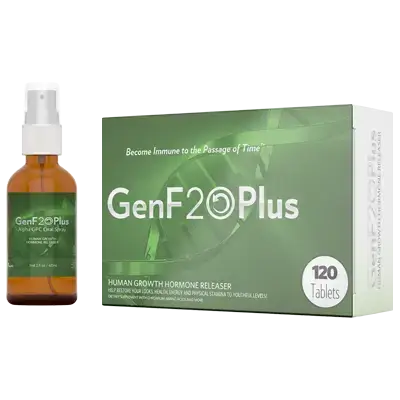
GenF20 Plus
- The only one with a clinical study on the finished product — 12 weeks, double-blind, placebo-controlled
- 16-ingredient enteric-coated tablet plus an Alpha-GPC oral spray
- The two-part system pushes the monthly cost up
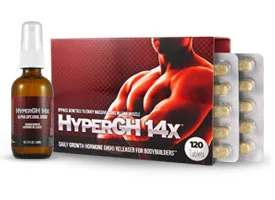
HyperGH 14X
- Dosed twice daily around both GH pulses — once pre-training, once at night
- 15+ ingredients across an enteric-coated tablet and oral spray
- No clinical trial on the finished formula
HGH-X2
- Just four ingredients — L-arginine, maca root, mucuna pruriens and hawthorn berry
- Simple dosing: four capsules before breakfast
- Fewest actives here, and CrazyBulk’s marketing overclaims
The Bottom Line
The evidence on HGH for anti-aging is clearer than the marketing suggests, and it’s been clear for two decades.
It changes body composition modestly — a few pounds of lean mass, a few pounds of fat, some of the former being water. It does not improve strength, energy, cognition or quality of life in healthy older adults.
It raises rates of joint pain, swelling, carpal tunnel and diabetes. It costs $15,000 to $30,000 a year. And distributing it for this purpose is a federal crime.
Meanwhile the longevity data runs the other way entirely: in every animal model tested, less GH signaling means a longer life.
The pooled conclusion from 18 randomized trials was that growth hormone cannot be recommended as an anti-aging therapy. Twenty years on, nothing has come along to overturn that — including TRIIM, which is a genuinely interesting nine-man pilot and nothing more yet.
Fix your sleep, lose the visceral fat, train hard three times a week. That isn’t the consolation prize. It’s what the evidence actually supports.
FAQs
Does HGH really work for anti-aging?
Not in the way it’s marketed. Controlled trials show modest body composition changes — roughly 4.6 lbs of lean mass and 4.4 lbs of fat loss — but no improvement in strength, function or quality of life, alongside significantly increased adverse events. A systematic review of 18 randomized trials concluded HGH cannot be recommended as an anti-aging therapy.
Is HGH for anti-aging legal in the US?
No. Distributing human growth hormone for anti-aging, athletic or performance purposes is a federal offense under 21 U.S.C. § 333(e), carrying up to five years’ imprisonment, and the FDA treats writing such a prescription as distribution. HGH is approved only for specific conditions including pituitary-related GH deficiency, short bowel syndrome and HIV-associated wasting.
What are the side effects of HGH in healthy older adults?
Pooled trial data shows significantly higher rates of soft tissue swelling, joint pain, carpal tunnel syndrome, gynecomastia, and impaired fasting glucose or new-onset diabetes. The diabetes risk is the most serious, since growth hormone directly raises blood sugar.
Do HGH supplements work like injections?
No, and they don’t claim to once you read past the headline. Growth hormone is a peptide destroyed by stomach acid, so no oral product contains it — legal alternatives are secretagogues that modestly support your own production, with far smaller effects than injectable GH.
References
The founding study and the response to it
- Rudman D, et al. Effects of human growth hormone in men over 60 years old. N Engl J Med. 1990;323(1):1–6.
- Vance ML. Can growth hormone prevent aging? N Engl J Med. 2003;348(9):779–780.
Efficacy and safety in healthy older adults
- Liu H, Bravata DM, Olkin I, et al. Systematic review: the safety and efficacy of growth hormone in the healthy elderly. Ann Intern Med. 2007;146(2):104–115.
- Growth Hormone and Aging. Endotext, NCBI Bookshelf.
The GH/IGF-1 longevity paradox
- Junnila RK, List EO, Berryman DE, et al. The GH/IGF-1 axis in ageing and longevity. Nat Rev Endocrinol. 2013;9(6):366–376.
- Bartke A. Growth hormone and aging: a challenging controversy. Clin Interv Aging. 2008;3(4):659–665.
The TRIIM trial
- Fahy GM, Brooke RT, Watson JP, et al. Reversal of epigenetic aging and immunosenescent trends in humans. Aging Cell. 2019;18(6):e13028.
- TRIIM-X extension trial record, ClinicalTrials.gov NCT04375657.
Sleep, body fat and natural GH support
- Van Cauter E, Leproult R, Plat L. Age-related changes in slow wave sleep and REM sleep and relationship with growth hormone and cortisol levels in healthy men. JAMA. 2000;284(7):861–868.
- Rasmussen MH. Obesity, growth hormone and weight loss. Mol Cell Endocrinol. 2010.
Legal status
- 21 U.S. Code § 333 — Penalties. Cornell Legal Information Institute.
- U.S. DOJ. Owner and operator of anti-aging center sentenced for distributing growth hormones.
This article is for informational purposes and is not medical advice. Do not begin, stop or alter any hormone therapy without consulting a licensed physician.
Semantic Keywords (50)
hgh for anti aging does hgh work for anti aging hgh anti aging evidence human growth hormone anti aging hgh benefits and side effects hgh therapy for aging growth hormone anti aging results is hgh worth it hgh injections for anti aging rudman study hgh hgh clinical trials growth hormone systematic review hgh side effects in adults hgh and diabetes risk hgh carpal tunnel growth hormone joint pain hgh gynecomastia hgh lean body mass hgh fat loss results hgh and muscle strength hgh skin thickness hgh and collagen igf-1 and aging gh igf-1 axis longevity somatopause explained adult growth hormone deficiency growth hormone stimulation test hgh legal status usa 21 usc 333e is hgh legal for anti aging fda approved uses of hgh somatropin indications anti aging clinic hgh hgh cost per month hgh therapy price triim trial results epigenetic age reversal horvath clock thymus regeneration metformin and longevity hgh alternatives legal hgh supplements hgh secretagogues do hgh supplements work genf20 plus hypergh 14x hgh x2 natural ways to increase hgh sleep and growth hormone visceral fat and growth hormone