Does Weightlifting Increase Testosterone?
Here is a question that gets typed into Google thousands of times every single month.
And honestly? It deserves a proper answer — not a vague “yes, exercise is good for you” non-response that leaves you no wiser than before.
A 2021 study published in the Journal of Strength and Conditioning Research found that a single resistance training session can temporarily spike testosterone levels by up to 15 to 20% in healthy men. That is not a trivial number. That is a meaningful hormonal shift triggered by nothing more than picking up a barbell and putting it down again.

I have been obsessing over this topic for years. The more I dug into the research, the more I realized that most fitness articles only scratch the surface. They say “yes, lifting raises testosterone” and then move on. But the real story — the how, the why, the which exercises, the how often — is where it gets genuinely fascinating.
So let’s go deep. Whether you are lifting to build muscle, fight the hormonal decline that comes with age, or simply feel more like yourself again, this guide gives you the complete, science-backed picture.
The Science Behind Weightlifting and Testosterone — What Research Actually Shows
Let’s start with what actually happens inside your body when you pick up heavy weight.
When you perform resistance exercise, your body responds by releasing a cascade of hormones — and testosterone is one of the stars of that show. Research consistently shows that this spike in testosterone begins during the workout itself and peaks somewhere between 15 and 30 minutes after the session ends.
Now, there is an important distinction to understand here: acute response versus long-term baseline elevation. The acute spike — the temporary surge after a single workout — is well-documented and relatively predictable. What is less straightforward is whether consistent lifting actually raises your resting testosterone levels over time.
The good news is that long-term research does support sustained elevation. A meta-analysis published in the Journal of Endocrinology found that men who engaged in regular resistance training over 12 weeks showed meaningfully higher baseline testosterone than sedentary controls. The effect was more pronounced in middle-aged and older men, where the hormonal drop from aging gave training the most ground to recover.
The hormonal picture is more complex than just testosterone alone, though. Every lifting session triggers a three-way interaction between testosterone, growth hormone, and cortisol. Testosterone and growth hormone are your allies — they drive muscle repair, fat metabolism, and recovery. Cortisol is the stress hormone that, in high amounts, works against them.
The key insight from the research is that the right training produces a large testosterone and growth hormone spike with a manageable cortisol response. The wrong training — too long, too frequent, not enough recovery — flips the ratio and leaves cortisol dominant, which actively suppresses testosterone production.
Individual response varies enormously too. Genetics, baseline testosterone levels, age, training history, sleep quality, and nutritional status all influence how dramatically a person’s testosterone responds to lifting. Two men doing the exact same workout can have very different hormonal outcomes. But the general direction — up — holds across the research.
Weightlifting Frequency And Testosterone Impact In Men
| Frequency | Acute T-spike | 8-week baseline ↑ | Cortisol risk | Recovery score | Best suited for |
|---|---|---|---|---|---|
| Daily (7×/wk) | +12–15% | +4–6% | High ⚠ Cortisol chronically elevated |
Poor Insufficient rest |
Elite athletes only Very high fitness base Requires periodization |
| 5× / week | +14–18% | +8–11% | Moderate ⚡ Manageable with nutrition |
Fair Tight recovery windows |
Intermediate lifters High protein diet Sleep 8hrs+ |
| 4× / week ⭐ | +15–20% | +12–17% | Low ✓ Optimal T:cortisol ratio |
Excellent Full recovery between sessions |
Most men — best sweet spot Beginners to advanced Compound-focused |
| 3× / week | +13–16% | +7–10% | Very Low ✓ Well within safe range |
Very Good Ample recovery time |
Beginners Men over 45 Busy schedules Full-body splits |
⭐ 4× per week is the research-supported sweet spot for maximizing both acute testosterone spikes and long-term baseline elevation while keeping cortisol in check. Acute T-spike = % rise measured 15–30 min post-session. 8-week baseline ↑ = sustained resting testosterone change vs sedentary baseline. Figures based on aggregated resistance training research; individual results will vary.
Chart shows mid-point estimates for both acute testosterone spike (%) and 8-week sustained baseline increase (%) by training frequency. Daily training produces the lowest long-term baseline gain despite the highest effort — because chronic cortisol from insufficient recovery suppresses testosterone production.
Which Exercises Increase Testosterone the Most?
Not all exercises are created equal when it comes to testosterone.
The single biggest determinant of how much testosterone a given exercise generates is how many muscle groups it recruits simultaneously. This is why compound, multi-joint movements sit at the top of every evidence-based testosterone-boosting list — and why isolation exercises like bicep curls and cable flyes, while useful for specific development, produce a fraction of the hormonal response.
The exercises with the strongest and most consistent testosterone response in the research are squats, deadlifts, bench press, bent-over rows, and overhead press. These movements demand coordinated effort from multiple large muscle groups, they require high mechanical tension, and they stress the body enough to trigger a significant hormonal reaction.
Squats and deadlifts deserve special attention. Both movements recruit the largest muscles in the human body — the quadriceps, hamstrings, glutes, and spinal erectors — and research has repeatedly shown that they produce the most pronounced post-exercise testosterone spikes of any exercise. A study from the University of Connecticut found that heavy squats triggered a significantly greater testosterone response than arm exercises performed with the same relative intensity.
This is the scientific basis behind the long-standing gym wisdom that “leg day raises your testosterone.” It is not bro-science. It is physiology. Training your lower body — which contains the majority of your total muscle mass — creates the most powerful anabolic hormonal stimulus.
The practical application of this knowledge is straightforward. Build every workout around compound movements. Lead each session with your biggest, heaviest multi-joint lift. Do not skip leg day. Treat squats and deadlifts as non-negotiable anchors of your program, not optional additions.
Isolation exercises still have their place — they develop specific muscles and improve aesthetics. But structure them as accessories that come after the compound work, not instead of it.
Training Variables That Maximize the Testosterone Response
The exercises you choose matter. But so does how you perform them.
There are several key training variables that significantly influence how much testosterone a workout produces — and understanding them lets you fine-tune your program for hormonal as well as muscular outcomes.
Load (how heavy you lift) is one of the most debated variables. Research generally supports that lifting in the moderate-to-heavy range — roughly 70 to 85% of your one-rep max — produces the strongest acute testosterone response. This corresponds to weights you can perform for approximately 6 to 12 repetitions per set with good form. Extremely heavy, low-rep training (90%+ of 1RM) and very light, high-rep training both tend to produce a smaller hormonal spike than this middle range.
Rest periods have a surprising impact on hormonal response. Shorter rest intervals of 60 to 90 seconds between sets appear to create greater metabolic stress and a larger growth hormone and testosterone surge compared to longer rest periods of 3 minutes or more. That said, very short rest periods also compromise how much weight you can lift — so there is a practical trade-off. Most research-informed practitioners recommend 60 to 120 seconds of rest between sets for a balance of hormonal stimulus and training quality.
Training volume — the total amount of work done in a session — needs to sit in a productive middle ground. Too little volume fails to generate enough stimulus. Too much pushes cortisol up and starts eroding the testosterone-to-cortisol ratio. Most research suggests that 3 to 5 working sets per exercise, with 15 to 25 total sets per session, represents the range where testosterone response is optimized without cortisol overrunning the picture.
Training to failure is another contested topic. Some research suggests that taking sets to muscular failure produces a greater anabolic hormonal signal. Other research shows that stopping 1 to 2 reps short of failure — called “leaving reps in the tank” — achieves a similar hormonal outcome while reducing the recovery demand significantly. The current consensus is that occasional failure-level sets are useful, but basing every set around failure creates excessive fatigue without proportional hormonal benefit.
Session length matters too. Testosterone peaks during training and begins to decline as sessions extend past 45 to 60 minutes, while cortisol continues rising. Keeping training sessions focused and under an hour — which is entirely achievable with compound-focused programming — keeps the hormonal environment favorable throughout the workout.
Does Weightlifting Increase Testosterone in Women?
Here is something that gets far less attention than it deserves.
Testosterone is not just a male hormone. Women produce testosterone too — in smaller amounts, primarily in the ovaries and adrenal glands — and it plays a critical role in female health, including energy levels, libido, bone density, mood stability, and the ability to build and maintain muscle.
The research on how weightlifting affects testosterone in women mirrors what we see in men, scaled to the lower baseline. Resistance training produces an acute testosterone spike in women, and consistent lifting over time supports healthy testosterone levels relative to sedentary controls.
The benefits of optimized testosterone for women are genuinely significant. Higher (but still normal) testosterone is associated with better body composition — more muscle, less fat — improved training performance, stronger bones, elevated mood, and a more robust sex drive. These are not small quality-of-life improvements. They are meaningful health outcomes that strength training directly supports.
One concern women sometimes raise is whether lifting heavy will cause testosterone levels to rise so dramatically that masculinizing effects occur. The research here is clear and reassuring: natural resistance training does not raise testosterone in women to levels that cause masculinization. The increases seen are within the normal female range and are associated with the positive health effects listed above, not with voice deepening or excessive body hair.
The practical takeaway for women is identical to the advice for men. Prioritize compound movements. Train consistently. Include heavy lower-body work. The hormonal response is there — it just operates at a different scale.
How Age Affects the Testosterone Response to Weightlifting
Age changes the hormonal landscape in ways that make this topic particularly important for men over 35.
Starting in the early 30s, men experience a natural decline in testosterone of approximately 1 to 2% per year. This is not a catastrophic drop — it is gradual. But over a decade or two, the cumulative effect becomes significant: lower energy, reduced muscle mass, increased body fat, declining libido, and a general sense of vitality that is harder to access.
The excellent news is that resistance training works at every age. Multiple studies on men in their 40s, 50s, 60s, and even 70s have confirmed that weightlifting produces a meaningful testosterone response — and that older men who train consistently have substantially higher testosterone than age-matched sedentary men.
A landmark study published in the European Journal of Applied Physiology found that older men who engaged in regular resistance training for 12 weeks showed testosterone increases of up to 14% from baseline. For a population that is actively losing testosterone, this is not a small finding. It represents a meaningful reversal of a trend that most men assume is simply inevitable.
The magnitude of the acute testosterone spike does diminish somewhat with age. A 25-year-old’s hormonal response to a heavy squat session will generally be larger than a 55-year-old’s. But the direction — upward — remains consistent. And critically, the long-term baseline elevation from consistent training remains significant at any age.
Training adjustments for older lifters are worth noting. Recovery takes longer. Connective tissue is more vulnerable. The optimal approach is to prioritize compound movements and progressive overload while being somewhat more conservative with volume and training frequency than a 22-year-old might be. Three to four well-structured sessions per week, with adequate rest between, tends to produce better hormonal outcomes in older men than five or six sessions that outpace recovery.
Overtraining and Testosterone — When Too Much Lifting Backfires
Here is a painful truth that a lot of motivated lifters need to hear.
More training is not always better. And when it comes to testosterone, too much training without adequate recovery does not just fail to raise your levels — it actively suppresses them.
The mechanism is straightforward. Every training session is a stressor. In appropriate doses, that stress triggers adaptation — including hormonal adaptation in the form of increased testosterone. But when training stress consistently outpaces your body’s ability to recover, cortisol levels stay chronically elevated.
Cortisol and testosterone have an inverse relationship in this context. When cortisol is chronically high — as it is in overtrained athletes — testosterone production is suppressed. The body essentially prioritizes survival (managing the stress of overtraining) over anabolic functions like muscle building and testosterone production.
The signs of overtraining-induced testosterone suppression are worth knowing. Persistent fatigue that does not resolve after rest days. Declining strength despite consistent training. Low sex drive. Irritability and mood swings. Poor sleep despite physical exhaustion. These are the classic symptoms, and they represent your body signaling that the hormonal balance has tipped in the wrong direction.
The solution is not to train less permanently — it is to train smarter. Structured programming that builds volume gradually, incorporates planned deload weeks every four to six weeks, and prioritizes sleep and nutrition as non-negotiables keeps you in the anabolic zone rather than the catabolic one.
A deload week — reducing training volume and intensity by 40 to 50% for seven days — allows the hormonal system to reset. Most well-programmed lifters find their strength and testosterone-driven energy actually improve after a deload, precisely because the body finally had space to complete the recovery process.
Lifestyle Factors That Amplify (or Cancel) the Testosterone Benefits of Weightlifting
Here is something most gym-focused articles on testosterone get wrong.
Weightlifting creates the stimulus for testosterone production. But everything outside the gym determines whether your body actually capitalizes on that stimulus or squanders it.
Sleep is the most critical lifestyle variable — and the most commonly underestimated. The majority of daily testosterone production occurs during sleep, specifically during the slow-wave deep sleep phases. Research from the University of Chicago found that men who slept just 5 hours per night for one week had testosterone levels 10 to 15% lower than after a full night of sleep. For perspective, that is comparable to aging 10 to 15 years hormonally. Getting 7 to 9 hours of quality sleep is not optional if you want your training to translate into hormonal gains.
Nutrition is equally non-negotiable. Three nutritional factors are directly linked to testosterone production: total calorie intake, protein consumption, and dietary fat. Eating in a severe caloric deficit suppresses testosterone — the body interprets starvation as an unsafe environment for reproduction and downregulates hormone production accordingly. Healthy fats from sources like olive oil, eggs, avocado, and fatty fish provide the cholesterol that is literally the raw material for testosterone synthesis. Do not go low-fat while trying to optimize testosterone. It is counterproductive.
Alcohol is one of the most underappreciated testosterone disruptors. Even moderate regular drinking — two to three drinks per night — has been shown to reduce testosterone by 6 to 7% in controlled studies. Alcohol disrupts sleep architecture, raises cortisol, and directly impairs the Leydig cells in the testes that are responsible for testosterone synthesis. The occasional drink is not going to derail your hormonal health. But daily drinking while trying to optimize testosterone is working against yourself.
Chronic psychological stress from work, relationships, and finances keeps cortisol elevated around the clock — independent of training. As we already covered, chronically elevated cortisol suppresses testosterone. Managing stress through whatever approaches genuinely work for you — exercise, therapy, meditation, nature, protected downtime — is a legitimate hormonal strategy, not just a wellness cliché.
Sunlight exposure and vitamin D deserve a specific mention. Vitamin D receptors exist in the Leydig cells that produce testosterone, and research has found that men with adequate vitamin D levels have significantly higher testosterone than those who are deficient. For people in regions with limited sun exposure, supplementing with 2,000 to 4,000 IU of vitamin D3 daily is a practical and evidence-backed strategy for supporting the hormonal gains from training.
Cardio vs Weightlifting for Testosterone — Which Wins?
This is a debate that comes up constantly in fitness circles, and the research has a fairly clear answer.
Resistance training wins. Consistently and convincingly.
The comparison studies are not even close in most cases. A 2012 review published in the European Journal of Applied Physiology analyzed multiple exercise modalities and found that resistance training produced a substantially greater acute testosterone response than steady-state aerobic exercise performed at the same relative intensity.
The reason comes back to muscle mass recruitment. Heavy lifting engages far more total muscle tissue than running or cycling at a moderate pace. Greater muscle mass recruitment means a greater mechanical and metabolic demand, which means a stronger hormonal signal.
Cardio’s relationship with testosterone is more nuanced. Moderate aerobic exercise — 30 to 40 minutes of brisk walking, cycling, or light jogging — does not meaningfully suppress testosterone and may offer mild supportive benefits through improved insulin sensitivity and cardiovascular health. The problem arises with high-volume endurance training.
Marathon runners, triathletes, and long-distance cyclists often show chronically suppressed testosterone. Prolonged endurance exercise raises cortisol significantly and places sustained metabolic stress on the body that, without adequate recovery, tips the hormonal balance away from testosterone. This does not mean running is bad. It means that hours of intense cardio every day, without strength training to counterbalance it, is not a testosterone-friendly training approach.
HIIT (High-Intensity Interval Training) sits in an interesting middle ground. The research on HIIT and testosterone is more favorable than for steady-state cardio — the intensity is high enough to generate a meaningful hormonal response, and the sessions are short enough that cortisol does not have time to accumulate. One to two sessions of HIIT per week alongside a strength-focused program represents a well-rounded and hormonally supportive training approach for most people.
The optimal combination for testosterone and overall health is straightforward: resistance training as the foundation (three to five sessions per week), moderate LISS cardio for cardiovascular health (two to three sessions, 30 to 40 minutes each), and HIIT used sparingly (one to two sessions) as a metabolic and hormonal amplifier.
Supplements That Support Testosterone Gains From Weightlifting
Let’s be precise about what supplements can and cannot do.
They cannot replace training, sleep, and nutrition as the foundations of healthy testosterone. But when those foundations are in place, the right supplements can meaningfully support and amplify the hormonal response your training is already generating.
Zinc is the first mineral worth understanding. Testosterone synthesis in the Leydig cells requires zinc as a cofactor, and zinc is lost through sweat — which means regular, intense training actively depletes it. Studies have shown that zinc-deficient men have significantly lower testosterone, and that zinc supplementation in deficient individuals can restore testosterone to normal ranges. Athletes and regular lifters are among the most at-risk populations for zinc deficiency.
Magnesium works alongside zinc with complementary mechanisms. It supports the enzymatic processes involved in testosterone production and helps regulate cortisol — which, as we have established, has a direct inverse effect on testosterone. A study published in Biological Trace Element Research found that magnesium supplementation in active men significantly increased both free and total testosterone compared to placebo.
Vitamin D3 is technically a hormone precursor rather than a vitamin, and its relationship with testosterone is well-established. A randomized controlled trial published in Hormone and Metabolic Research found that men supplementing with 3,332 IU of vitamin D3 daily for one year had significantly higher testosterone levels than the placebo group. Given that vitamin D deficiency is widespread — estimates suggest that 40 to 70% of people in northern latitudes are deficient — this is a high-impact, low-cost intervention.
Ashwagandha (KSM-66) is the adaptogenic herb with the strongest clinical evidence for testosterone support. A double-blind placebo-controlled study published in the Journal of the International Society of Sports Nutrition found that men taking 600mg of KSM-66 ashwagandha daily for 8 weeks showed testosterone increases of up to 17% compared to placebo — alongside significantly reduced cortisol.
The dual action of raising testosterone while lowering cortisol makes it uniquely well-suited to the demands of resistance training.
Creatine monohydrate has an indirect but meaningful relationship with testosterone. While it does not directly stimulate testosterone synthesis, creatine improves training performance — allowing you to lift more weight, complete more reps, and create a stronger mechanical stimulus with every session.
Better training stimulus leads to a stronger hormonal response. There is also emerging evidence that creatine may increase levels of DHT (dihydrotestosterone), a potent androgen derived from testosterone.
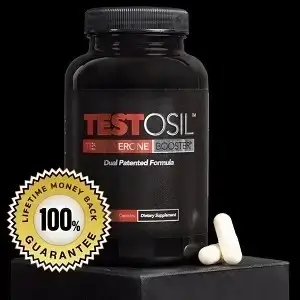
Testosil brings together the most clinically-supported testosterone-boosting ingredients in a single, well-formulated natural supplement. Built around KSM-66 ashwagandha — the same extract used in the clinical studies — alongside zinc, D-aspartic acid, vitamin D3, and fenugreek,
Testosil is designed specifically to amplify the hormonal response to resistance training. For men whose training, sleep, and nutrition are already dialed in and who want to give their testosterone every possible advantage, a supplement like Testosil can meaningfully stack on top of a smart lifting program.
Unlock Your Peak Testosterone Naturally.
The most powerful natural testosterone booster — built for weightlifters, bodybuilders, and men with low T who demand real results without a prescription.
than exercise alone (Testosil.com clinical data)
reduction
Click Here to Check Out My Complete and Unbiased Testosil Review
How to Build a Weightlifting Program Specifically Designed to Boost Testosterone
Everything in this article comes together here.
The ideal testosterone-focused training program has a clear structure: resistance training as the foundation, compound movements as the anchors, progressive overload as the long-term driver, and recovery as a non-negotiable component.
Here is what that looks like in practice.
Session frequency: Four sessions per week represents the sweet spot for most natural lifters when testosterone optimization is the primary goal. This frequency is high enough to provide a consistent anabolic stimulus throughout the week, while leaving adequate recovery time between sessions. Research comparing training frequencies consistently shows that four sessions per week produces superior hormonal and muscular outcomes compared to two or three, without the overtraining risk that comes with five or six sessions when volume is not carefully managed.
Session length: Keep sessions focused and under 60 minutes. After 60 minutes, cortisol continues rising while testosterone begins declining. A focused 45 to 55 minute session built around compound movements produces a better hormonal outcome than a 90-minute session padded with isolation work and excessive rest periods.
Exercise selection: Every session should begin with the heaviest compound movement for that muscle group. Squats or Romanian deadlifts for lower body. Bench press or incline press for chest. Deadlifts or barbell rows for back. Overhead press for shoulders. These movements recruit the most muscle mass, produce the strongest testosterone stimulus, and should never be replaced with machine alternatives for the sake of convenience.
Sets and reps: Working in the 6 to 12 rep range with 70 to 85% of your one-rep max consistently produces the strongest hormonal response in the research. Three to four working sets per exercise, with 60 to 90 seconds of rest between sets, balances hormonal stimulus with training quality. Total session volume should sit between 15 and 25 sets.
Progressive overload: This is the long-term driver of both muscular and hormonal development. Consistently adding weight to the bar — or completing more reps with the same weight — over weeks and months forces continuous adaptation. Testosterone follows strength. Men who get significantly stronger over years of lifting almost always have higher testosterone than those who stagnate at the same weights.
Sample 4-day testosterone-focused training split:
Day 1 — Lower body (quad-focused): Back squat 4×6-8, Romanian deadlift 3×10, leg press 3×12, walking lunges 3×12 per leg, leg curl 3×12.
Day 2 — Upper body (push): Bench press 4×6-8, incline dumbbell press 3×10, overhead press 3×8, lateral raises 3×15, tricep dips 3×12.
Day 3 — Rest or LISS cardio (30-40 min walk or cycle).
Day 4 — Lower body (posterior chain): Deadlift 4×5, Bulgarian split squat 3×10 per leg, hip thrust 3×12, leg curl 3×12, calf raises 4×15.
Day 5 — Upper body (pull): Barbell row 4×8, pull-ups 3x max reps, seated cable row 3×12, face pulls 3×15, barbell curl 3×12.
Days 6 and 7 — Rest or active recovery.
This structure prioritizes the movements with the strongest testosterone stimulus, keeps sessions focused and productive, and builds in adequate recovery to prevent the cortisol-driven suppression that overtraining causes.
The Bottom Line
The question “does weightlifting increase testosterone?” has a clear, well-supported, research-backed answer.
Yes. Definitively.
But the nuance matters. It is the right exercises, trained with the right variables, supported by adequate sleep, smart nutrition, and managed stress, that turns lifting into a genuine hormonal optimization strategy.
Prioritize compound movements. Train four to five times per week with focused, progressive sessions. Sleep seven to nine hours. Eat enough protein and fat. Manage your stress. And if you want to give your training an additional hormonal edge, a well-formulated natural testosterone booster like Testosil — built around the same clinically-validated ingredients that have shown up in the research throughout this article — can meaningfully amplify what your training is already doing.
The weights do not lie. Neither does the science.
Pick up the barbell, train smart, recover hard, and let your hormones do the rest.
Disclaimer: Always consult a qualified healthcare professional before starting any new training program or supplement regimen. Individual results will vary. If you suspect clinically low testosterone, seek a proper medical evaluation rather than relying solely on training or supplements.