The Complete Guide to Low Testosterone Testing in 2026: What Every Man Needs to Know
⚡ Quick Answer
A testosterone test is a blood draw that measures total testosterone, ideally taken between 7 and 10 a.m. Low testosterone is usually confirmed only after two morning results below 300 ng/dL plus symptoms such as low libido or fatigue, and a basic test costs about $69–$75 without insurance.
Key Takeaways
- ✓A testosterone test is a simple blood draw, and total testosterone is the one most doctors order first.
- ✓Test between 7 and 10 a.m., because levels can be up to 25% lower by late afternoon.
- ✓One low number proves nothing on its own. US urologists diagnose low T only after two early-morning results under 300 ng/dL plus symptoms.
- ✓Without insurance, a basic lab test runs roughly $69 to $75, and at-home kits cost $49 to $259.
- ✓A low result should trigger a search for the cause (LH, prolactin and other labs) before anyone talks about treatment.
- ✓Use our free T estimator below to see whether testing should be on your to-do list.
You feel flat. Your energy dips by mid-afternoon, your workouts have stalled and your sex drive isn’t what it used to be.
Low testosterone is one possible explanation, but it’s far from the only one. The only way to know is a blood test, and the way you take it matters more than most guys realize.
Test at the wrong time of day and you can “fail” a test you’d pass at 8 a.m. Order the wrong test and you might miss a real problem altogether.
This guide walks you through the whole process for US readers. You’ll learn which test to ask for, how to prepare, what it costs and how to read your number without panicking.
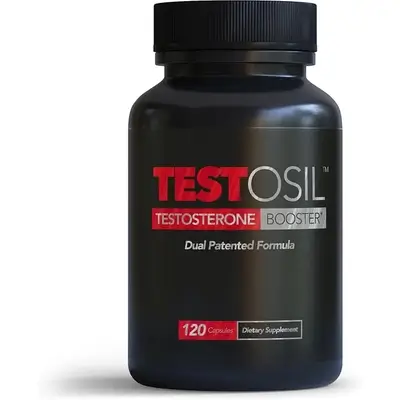
Looking for natural testosterone support? Testosil is the booster we recommend for men whose levels are normal or borderline and who want help with energy, drive and gym performance.
It’s built around KSM-66 ashwagandha, the most-studied form of the herb, and comes with a lifetime money-back guarantee.
Jump to our Testosil pick ↓Supplements don’t treat medically diagnosed hypogonadism. Get tested first so you have a baseline.
Do You Actually Need a Testosterone Test?
Testing makes sense when you have symptoms that line up with low T. Common signs include low libido, weaker erections, stubborn fatigue, shrinking muscle, rising belly fat and a shorter fuse than usual.
We cover each of these in depth in our guide to low testosterone symptoms in men. If one symptom stands out, our deep dives on chronic fatigue, libido, muscle loss and mood swings go further.
Some men should get tested even without classic symptoms. The American Urological Association (AUA) recommends checking testosterone in men with unexplained anemia, bone density loss, diabetes, HIV/AIDS, infertility, pituitary problems, past chemotherapy or testicular radiation, or long-term opioid or steroid use.
Bone loss is one of those quiet ones. Our article on osteoporosis in men explains why low T and brittle bones often travel together.
When a test probably isn’t useful
The Endocrine Society advises against routine testosterone screening in men who feel fine. Testing a man with no symptoms and no risk factors tends to produce numbers nobody knows what to do with.
Erectile problems are a gray area. Blood flow issues cause ED far more often than hormones, and some guidelines don’t treat ED alone as a reason to test, though many US doctors still check testosterone during an ED workup.
How common is low T? In a large US study of men 45 and older visiting primary care offices, about 38.7% had total testosterone under 300 ng/dL.
That figure comes from men already seeing a doctor, so it likely overstates the rate in the general population.
Free Testosterone Estimator: Get a Rough Idea First
Not sure whether to book a test? This tool estimates a likely range for your total testosterone from your age, body weight, sleep, training and health history.
It can’t measure anything, and it never replaces a blood test. Use it to decide whether testing is worth your time, then use the second tab to make sense of lab results once you have them.
Testosterone Estimator & Results Checker
This is an educational estimate based on population averages and published links between age, body fat, sleep, medications and testosterone. Your real level can sit well outside this range, and only a morning blood test can tell you where you stand.
Every lab sets its own reference range, so always compare against the range printed on your report. This checker uses the AUA 300 ng/dL cutoff and the harmonized 264–916 ng/dL range for young, non-obese men.
Want a second opinion from a different angle? Our original testosterone calculator uses a symptom-based questionnaire instead.
Types of Testosterone Tests (and Which One to Ask For)
Most of the testosterone in your blood is stuck to proteins, mainly SHBG (sex hormone-binding globulin) and albumin. Only a small slice floats free and is ready for your body to use.
That's why there's more than one test. Here's how they compare.
| Test | What it measures | When it's used | How common |
|---|---|---|---|
| Total testosterone | Bound plus free testosterone | First-line test for suspected low T and for TRT monitoring | Standard |
| Free testosterone | Only the unbound fraction | Borderline total T, obesity, older age, abnormal SHBG | Common add-on |
| Bioavailable testosterone | Free plus albumin-bound testosterone | Similar to free T; used by some labs and specialists | Less common |
| SHBG | The main binding protein | Needed to calculate free T accurately | Common add-on |
| Albumin | A second binding protein | Used with SHBG in free T calculations | Panel item |
Sources: MedlinePlus, Cleveland Clinic, AUA guideline.
Sources: MedlinePlus, Cleveland Clinic, AUA guideline.
Our advice: ask for total testosterone first. If it comes back borderline, or you carry extra weight, ask for SHBG and a calculated free testosterone too.
Weight matters here more than people think. In men with obesity, SHBG often drops, which pulls total T down even when free T is perfectly normal.
A quick word on lab methods
Labs measure testosterone with either an immunoassay or a more precise method called LC-MS/MS (liquid chromatography with tandem mass spectrometry). For adult men, a good immunoassay is usually fine.
Free testosterone is trickier. The gold standard is equilibrium dialysis, but it's expensive and slow, and the cheap "direct" free T assays are considered unreliable, so a calculated free T is the practical middle ground.
How to Prepare for a Testosterone Test
Preparation is where most bad results come from. Get these details right and your number will actually mean something.
- ⏰ Book an early slot. Aim for 7 to 10 a.m., when testosterone peaks. In men in their 30s, levels at 4 p.m. can be up to 25% lower than at 8 a.m.
- 🍳 Consider fasting. Some labs and doctors prefer a fasting sample, since a sugary meal can temporarily lower testosterone. Ask when you book.
- 😴 Sleep normally the night before. The morning testosterone peak is tied to sleep, so an all-nighter can skew the result. Here's more on how sleep and low testosterone feed each other.
- 🏋️ Skip a brutal workout right before. A hard session can shift hormone levels for a few hours. Keep the morning of the test easy.
- 🤒 Don't test while sick. Acute illness, injury and big stress can all drag testosterone down temporarily. Reschedule if you're unwell.
- 💊 List every medication and supplement. Opioids, steroids and some other drugs lower testosterone. Don't stop anything without your doctor's say-so.
- 🧪 Use the same lab for repeat tests. The AUA prefers repeat measurements from the same lab and method, so results are comparable.
Shift worker? The morning rule assumes a normal sleep schedule, so if you work nights, test shortly after your main sleep period and tell your doctor about your schedule.
Where to Get a Testosterone Test in the US
You have four realistic options. They differ a lot in convenience, price and whether the result counts toward a diagnosis.
| Option | How it works | Accuracy | Counts toward diagnosis? |
|---|---|---|---|
| Your doctor (PCP, urologist, endocrinologist) | Doctor orders the test, you visit a lab for a vein draw | High | Yes |
| Direct-to-consumer lab order | Buy online from Quest, Labcorp or a reseller, then visit a patient service center | High (same labs) | Usually, if you share results |
| At-home finger-prick kit | Collect a few drops of blood at home and mail it to a lab | Moderate | Usually needs a repeat vein draw |
| At-home saliva kit | Spit into a tube and mail it in | More variable | No |
At-home kits are convenient, but there's limited research on how they compare with in-clinic draws.
If you go the home-kit route, choose one processed by a CLIA-certified lab. That's the federal quality standard US clinical labs must meet.
Treat any home result as a screening step. If it comes back low, your doctor will want a proper morning vein draw to confirm it.
| Option | Typical cash price | What you get |
|---|---|---|
| Labcorp total testosterone (direct order) | About $69 | Total T only |
| Quest total testosterone (direct order) | About $75 | Total T only |
| Comprehensive panel (Labcorp or Quest) | $159 to $220 | Total and free T, often with SHBG and more |
| At-home testosterone kit | $49 to $259 | $49–$69 for T only; more for multi-hormone kits |
| Doctor visit (if self-pay) | Varies widely | Exam, test order and interpretation |
Advertised prices at the time of writing. Check current pricing and any draw fees before you order.
At-home kits are convenient, but there's limited research on how they compare with in-clinic draws.
If you go the home-kit route, choose one processed by a CLIA-certified lab. That's the federal quality standard US clinical labs must meet.
Treat any home result as a screening step. If it comes back low, your doctor will want a proper morning vein draw to confirm it.
How Much Does a Testosterone Test Cost?
With insurance, a doctor-ordered test for symptoms is usually covered, though your deductible and copay still apply. Without insurance, expect prices in these ranges.
| Option | Typical cash price | What you get |
|---|---|---|
| Labcorp total testosterone (direct order) | About $69 | Total T only |
| Quest total testosterone (direct order) | About $75 | Total T only |
| Comprehensive panel (Labcorp or Quest) | $159 to $220 | Total and free T, often with SHBG and more |
| At-home testosterone kit | $49 to $259 | $49–$69 for T only; more for multi-hormone kits |
| Doctor visit (if self-pay) | Varies widely | Exam, test order and interpretation |
Advertised prices at the time of writing. Check current pricing and any draw fees before you order.
Advertised prices at the time of writing. Check current pricing and any draw fees before you order.
One money-saver is worth knowing. Many home kits and direct-order lab tests accept HSA and FSA cards, so check before paying out of pocket.
Understanding Your Testosterone Results
Most US labs report testosterone in nanograms per deciliter (ng/dL). Here's how to read the number.
| Total testosterone (adult men) | What it generally means | Status |
|---|---|---|
| Under 150 ng/dL | Very low; your doctor will likely check for a pituitary cause | Very low |
| 150–299 ng/dL | Below the AUA cutoff; low T if repeated and you have symptoms | Low |
| 300–400 ng/dL | Normal, but on the lower side; free T can help clarify | Low-normal |
| 400–916 ng/dL | Comfortably within the typical range | Normal |
| Above 916 ng/dL | Above the typical range; common on TRT, rare otherwise | High |
Based on the AUA cutoff (300 ng/dL) and the harmonized range for healthy non-obese men aged 19–39 (264–916 ng/dL). Your lab's range may differ.
Don't be surprised if your report shows a different range. Cleveland Clinic's lab, for example, lists 193–824 ng/dL for adult men and treats 193–320 ng/dL with symptoms as low.
Free testosterone and other numbers on your report
| Marker | Example adult male range | Why it matters |
|---|---|---|
| Free testosterone (calculated) | 38–120 pg/mL | The active fraction; key when total T is borderline |
| Bioavailable testosterone | 105–324 ng/dL | An alternative "usable T" measure |
| SHBG | 14–82 nmol/L | High SHBG traps T; low SHBG (common with obesity) lowers total T |
Example ranges from Cleveland Clinic Laboratories. Units and ranges vary by lab.
🔄 Got your result in nmol/L? Multiply by 28.84 to get ng/dL, or multiply ng/dL by 0.0347 to get nmol/L.
The 300 ng/dL cutoff works out to about 10.4 nmol/L, and the results checker above does the math for you.
What about high testosterone?
Naturally high testosterone in men is uncommon. When it shows up, the usual reasons are TRT, anabolic steroid use or, rarely, a testicular or adrenal tumor.
If you're not on any hormones and your level is well above your lab's range, get it rechecked and talk to your doctor.
Your Result Came Back Low. What Happens Next?
First, breathe. A single low reading is common and often turns out fine on a repeat.
The AUA requires two separate early-morning results under 300 ng/dL before calling it low testosterone. Even then, the diagnosis also requires symptoms or signs, not just a number.
Once low T is confirmed, a good doctor goes looking for the reason. These are the follow-up tests you're most likely to see.
| Follow-up test | Why it's ordered |
|---|---|
| 🧬 LH and FSH | Tells whether the problem starts in the testicles (primary) or the brain's signaling (secondary) |
| 🧠 Prolactin | Screens for a pituitary issue when LH is low or low-normal |
| ⚖️ Estradiol | Checked if there's breast tissue growth (gynecomastia) |
| 🩸 Hemoglobin and hematocrit | Baseline before TRT, which can thicken the blood |
| 🔬 PSA | Recommended for men over 40 before starting testosterone therapy |
| 👶 Semen analysis | For men who want children, before any treatment starts |
Based on AUA and Endocrine Society guidelines. Your doctor may order only some of these, depending on your results and history.
Many causes are fixable without hormones. Excess weight, poor sleep, heavy drinking, certain medications and untreated sleep apnea are common culprits, and we break them all down in what causes low testosterone in men.
The weight connection deserves its own mention. If the scale has crept up, our piece on weight gain and low testosterone explains the vicious cycle.
👶 Planning to have kids? Testosterone therapy can shut down sperm production.
The AUA says men interested in fertility should have a reproductive evaluation before treatment, and our guide to low testosterone and male fertility covers the options.
Testing While You're on TRT
Testing doesn't stop once treatment starts. Your doctor will check a follow-up level early on to make sure you've reached the target range.
After that, the AUA recommends measuring testosterone every 6 to 12 months while you stay on therapy. Hematocrit and PSA are usually checked alongside it.
Timing depends on your treatment. With injections, many doctors draw blood midway between doses, so ask which point in your cycle they want.
What Changed for Testosterone in 2026
This year brought the biggest shift in US testosterone policy in a decade. If you read older articles on this topic, some of what they say is now out of date.
- February 2025: After reviewing the large TRAVERSE heart-safety trial, the FDA ordered class-wide label changes for testosterone products. It also added a new warning about increased blood pressure.
- December 2025: The FDA held an expert panel on testosterone therapy for men, including diagnostic thresholds for age-related low T.
- June 18, 2026: HHS, through the FDA, asked drugmakers to update TRT labels. The request removes the 2015 limitation on age-related low T and narrows the prostate cancer contraindication to men whose cancer has spread.
Here's what that means for you. The proposed labels still call for screening before treatment and monitoring during it, so accurate testing matters more now, not less.
These are requested label changes, and manufacturers still have to submit the new wording for FDA review. Expect it to roll out gradually.
Can a Testosterone Booster Help?
Let's be straight about this. If your doctor confirms true hypogonadism, an over-the-counter supplement isn't the treatment, and you should follow medical advice.
Plenty of men, though, land in the "normal but not great" zone, with levels in the 300s or 400s and symptoms that won't quit. That's where lifestyle changes do the heavy lifting and a well-formulated natural booster can add support.
Start with the basics: lift heavy, sleep seven-plus hours, lose excess fat and cut back on alcohol. Our guides on whether weightlifting increases testosterone, the anti-inflammatory testosterone diet and 10 ways to boost testosterone naturally show you how.
If you want a supplement on top of that, Testosil is our pick. Here's why.
Testosil is a natural, non-hormonal formula built around KSM-66 ashwagandha. It's designed for men who want better energy, drive and training results without prescription hormones.
The anchor ingredient has real research behind it. In an 8-week trial in young men doing resistance training, KSM-66 at 600 mg a day increased testosterone by about 96 ng/dL versus 18 ng/dL on placebo, with bigger strength and muscle gains too.
🧪 Key ingredients
- KSM-66 ashwagandha
- Fenugreek extract
- D-aspartic acid
- ZMA (zinc, magnesium, vitamin B6)
- Panax ginseng
- L-arginine and garlic extract
✅ Why we prefer it
- Uses the branded, standardized KSM-66 extract rather than generic ashwagandha
- Covers stress, sleep and minerals, not just one pathway
- Made in the USA
- Lifetime money-back guarantee from the manufacturer
⛔ Who should skip it
- Men under 18
- Anyone already on TRT
- Men with thyroid or liver conditions, or on regular medication, without a doctor's OK
Smart way to use it: get a baseline morning blood test first, take Testosil consistently for at least 8 to 12 weeks, then retest under the same conditions.
That way you'll know whether it's working for you.
If you're comparing options, start with our roundup of the best 5 supplements for low testosterone symptoms. If estrogen is part of the picture, read ways to stop testosterone from converting into estrogen.
Testosterone Testing FAQs
Can I order a testosterone test without a doctor in the US?
Yes, in most states. Quest, Labcorp and several online services sell testosterone tests directly, and some include a physician who approves the order.
A few states restrict direct-access lab testing, so check whether it's available where you live. Either way, share your results with a doctor if they come back abnormal.
Are at-home testosterone tests accurate?
Finger-prick kits processed by CLIA-certified labs can give a useful ballpark, but collection errors are more likely at home. Saliva tests have shown more variable results.
Use a home kit as a first look, not a diagnosis. A low home result should be confirmed with a morning vein draw.
How long does it take to get testosterone results?
Most people get results within two to three business days. Specialized tests like free testosterone by equilibrium dialysis can take up to a week.
Does testosterone really change that much during the day?
Yes, especially in younger men. Levels peak in the early morning and fall through the day, which is why an afternoon test can make normal testosterone look low.
The effect gets smaller with age, but morning testing is still the standard for everyone.
The Bottom Line
A testosterone test is cheap, quick and genuinely useful, as long as you take it the right way. Book an early-morning draw, ask for total testosterone first and repeat any low result before drawing conclusions.
If the numbers confirm low T, find out why before you treat it. If they're normal but you still feel off, fix sleep, training and body fat first, and consider a quality booster like Testosil for extra support.
📚 References
- Mulhall JP, Trost LW, Brannigan RE, et al. Evaluation and Management of Testosterone Deficiency: AUA Guideline. American Urological Association, 2018 (validity confirmed 2024).
- Bhasin S, Brito JP, Cunningham GR, et al. Testosterone Therapy in Men With Hypogonadism: An Endocrine Society Clinical Practice Guideline. J Clin Endocrinol Metab. 2018;103(5):1715–1744.
- MedlinePlus. Testosterone Levels Test. US National Library of Medicine.
- Cleveland Clinic. Testosterone Test.
- Cleveland Clinic Journal of Medicine. Diagnosis of male hypogonadism: free, total and bioavailable testosterone.
- Travison TG, Vesper HW, Orwoll E, et al. Harmonized Reference Ranges for Circulating Testosterone Levels in Men of Four Cohort Studies in the United States and Europe. J Clin Endocrinol Metab. 2017.
- Mulligan T, Frick MF, Zuraw QC, et al. Prevalence of hypogonadism in males aged at least 45 years: the HIM study. Int J Clin Pract. 2006;60(7):762–769.
- Trost LW, Mulhall JP. Challenges in Testosterone Measurement, Data Interpretation, and Methodological Appraisal of Interventional Trials. J Sex Med. 2016;13(7):1029–1046.
- US Food and Drug Administration. FDA issues class-wide labeling changes for testosterone products. February 28, 2025.
- US Department of Health and Human Services. HHS Announces Requested Updates to Testosterone Therapy Product Labels. June 18, 2026.
- Wankhede S, Langade D, Joshi K, et al. Examining the effect of Withania somnifera supplementation on muscle strength and recovery: a randomized controlled trial. J Int Soc Sports Nutr. 2015;12:43.
- Lopresti AL, Drummond PD, Smith SJ. A Randomized, Double-Blind, Placebo-Controlled, Crossover Study Examining the Hormonal and Vitality Effects of Ashwagandha in Aging, Overweight Males. Am J Mens Health. 2019;13(2).
- British Columbia Ministry of Health. Testosterone Testing Protocol. BC Guidelines, revised 2022.
- Ro Health Guide. At-home testosterone test: how it works.
- BetterCare. How much does a testosterone test cost?
This article is for educational purposes and isn't a substitute for advice from your own doctor. Talk to a healthcare professional before starting any supplement or treatment.