Estrogen Dominance in Men: Symptoms, Causes, and How to Naturally Restore Hormonal Balance
Estrogen dominance in men is one of the most common and most overlooked hormonal conditions affecting male health today — driving symptoms like stubborn belly fat, low libido, gynecomastia, brain fog, and mood instability in millions of men who have no idea their estrogen is the problem.
In this guide, we cover exactly what estrogen dominance is, how to recognise it, what is causing it, and the evidence-based strategies you can use right now to restore your testosterone-to-estrogen balance naturally.
What Is Estrogen Dominance in Men — And Why Does It Matter?
Most men have never been told that they produce estrogen — and even fewer understand why too much of it is a serious problem.
Estrogen dominance in men is not simply about having high estrogen. It is about having an unfavorable ratio of estrogen to testosterone — a hormonal imbalance that undermines virtually every system in the male body.
How Men Produce Estrogen
Men produce estrogen primarily through a process called aromatization — the enzymatic conversion of testosterone into estradiol by the aromatase enzyme.
This process is normal and necessary. The problem begins when aromatase activity runs too high — producing more estradiol than the body can appropriately manage — or when testosterone production declines while aromatization continues at the same rate.
The result is a hormonal environment where estrogen begins to dominate the picture, producing effects that are the opposite of what most men want from their hormones.
The Three Estrogens in Men
Men have three main estrogens circulating in their bodies — estradiol, estrone, and estriol.
Estradiol is the most potent and the most clinically relevant — it is the form that drives both the beneficial effects of estrogen in men (bone density, cardiovascular protection) and the problematic ones (gynecomastia, fat gain, mood instability) when levels are too high.
Relative Estrogen Dominance
One of the most important concepts to understand is that a man can have total testosterone within the normal reference range and still be estrogen dominant.
This happens when the ratio of testosterone to estradiol has shifted — even if both hormones are technically within range, the relative balance between them determines the hormonal environment experienced by your cells and tissues.
This is why standard hormone panels that report only testosterone often miss the real picture — without estradiol, you cannot assess the ratio that actually determines how you feel.
Why It Is Increasingly Common
Estrogen dominance in men has become more prevalent in the modern world for reasons that are entirely environmental and lifestyle-driven.
The combination of increasing body fat rates, chronic stress, sedentary lifestyles, widespread xenoestrogen exposure, and nutritional deficiencies has created conditions in which excessive aromatization is almost inevitable for many men — particularly after the age of 35.
Symptoms of Estrogen Dominance in Men — Recognising the Signs
The symptoms of estrogen dominance in men are wide-ranging, often subtle initially, and almost universally attributed to other causes — stress, aging, poor sleep, or depression.
Understanding the full symptom picture is the first step toward recognising that a hormonal root cause may be driving what you are experiencing.
Symptoms of Low Estrogen in Men
| Symptom | Category | Severity | Key mechanism |
|---|---|---|---|
Gynecomastia Glandular breast tissue under the nipple |
Physical | High | Estrogen directly stimulates breast tissue receptors |
Stubborn belly and chest fat Resistant to diet and exercise |
Physical | High | Estrogen promotes fat storage in estrogen-sensitive areas |
Water retention Puffy, soft appearance despite training |
Physical | Moderate | Estrogen affects fluid regulation and subcutaneous tissue |
Muscle loss Difficulty maintaining strength gains |
Physical | High | Estrogen competes with testosterone’s anabolic signaling |
Body hair reduction Thinning facial and body hair |
Physical | Mild | Reduced androgenic stimulation of hair follicles |
Low libido Persistent loss of sexual desire |
Sexual | High | Estrogenic dominance suppresses androgenic drive |
Erectile dysfunction Difficulty achieving or maintaining erection |
Sexual | High | Poor testosterone-to-estrogen ratio impairs sexual function |
Reduced fertility Declining sperm quality or count |
Sexual | Moderate | Elevated estrogen suppresses LH and FSH signaling |
Testicular atrophy Reduction in testicular size |
Sexual | Moderate | Long-standing hormonal suppression of testicular function |
Brain fog Poor concentration, mental sluggishness |
Cognitive | High | Estrogen excess disrupts neurotransmitter balance |
Mood instability Irritability, anxiety, emotional volatility |
Cognitive | High | Estrogen disrupts dopamine and serotonin signaling |
Depression Low mood, loss of motivation |
Cognitive | Moderate | Imbalanced sex hormones affect norepinephrine pathways |
Chronic fatigue Low energy unresponsive to rest |
Energy | High | Testosterone’s energy regulation role is undermined |
Sleep disturbances Difficulty falling or staying asleep |
Energy | Moderate | Hormonal imbalance disrupts sleep architecture and recovery |
Physical Symptoms
Gynecomastia — the development of actual glandular breast tissue beneath the nipple — is one of the most recognisable signs of estrogen dominance in men, and it occurs because estrogen directly stimulates estrogen receptors in male breast tissue.
Stubborn fat accumulation around the abdomen, chest, and hips is another classic presentation — estrogen promotes fat storage in these specific areas, and until the hormonal environment changes, this fat resists both diet and exercise.
Water retention and a persistently soft, puffy appearance — despite training and caloric management — is driven by estrogen’s effects on fluid regulation and subcutaneous tissue.
Reduced muscle mass and difficulty maintaining strength gains, even with consistent training, reflects estrogen’s competition with testosterone’s anabolic effects — when estrogen is dominant, the androgenic environment that drives muscle growth is compromised.
Sexual and Reproductive Symptoms
Low libido is one of the most distressing and most common symptoms of estrogen dominance in men — the hormonal environment that drives sexual desire is fundamentally androgenic, and when estrogen dominates, that drive is suppressed.
Erectile dysfunction or reduced sexual performance, reduced testicle size in severe cases, and declining sperm quality are all potential downstream effects of a chronically unfavorable testosterone-to-estrogen ratio.
Cognitive and Emotional Symptoms
Brain fog, difficulty concentrating, and reduced cognitive sharpness are frequently reported by men with estrogen dominance — and are among the most professionally and personally disruptive symptoms.
Mood instability, irritability, anxiety, and symptoms of depression are directly connected to estrogen’s effects on neurotransmitter systems — estrogen at excessive levels in men disrupts dopamine, serotonin, and norepinephrine signaling in ways that produce these emotional symptoms.
Energy and Sleep
Chronic fatigue that does not respond to rest is a hallmark of hormonal imbalance generally, and estrogen dominance specifically — the energy regulation systems that testosterone supports are directly undermined when estrogen is disproportionately high.
Sleep disturbances — difficulty falling asleep, frequent waking, or non-restorative sleep — are both a symptom and a driver of estrogen dominance, creating a self-reinforcing cycle that can be difficult to break without addressing the hormonal root.
What Causes Estrogen Dominance in Men?
Estrogen dominance in men rarely has a single cause.
In the vast majority of cases, it is the result of multiple overlapping factors that simultaneously increase estrogen production, impair estrogen clearance, or reduce testosterone — often all three at once.
Body Fat and Aromatase
Excess body fat is the single most common driver of estrogen dominance in men — and the mechanism is direct.
Adipose tissue is rich in aromatase enzyme, and the more fat a man carries, the more testosterone is converted to estradiol — creating the infamous fat-estrogen feedback loop in which higher estrogen promotes further fat gain, which promotes further aromatization.
Chronic Stress and Cortisol
Chronic stress keeps cortisol chronically elevated, and cortisol is the direct hormonal antagonist of testosterone — when cortisol is high, the body deprioritizes testosterone production.
Beyond its effects on testosterone production, chronic stress also impairs liver function and gut health — two of the primary systems responsible for estrogen clearance — creating a triple impact on hormonal balance.
Environmental Estrogens
Xenoestrogens are synthetic chemical compounds that mimic estrogen in the body — and they are everywhere in the modern environment.
BPA in plastic bottles and food containers, pesticides and herbicides on non-organic produce, parabens and phthalates in personal care products, and industrial pollutants in the air and water all contribute to a cumulative estrogenic burden that the body struggles to clear.
The individual exposure from any single source may seem minor — but the cumulative lifetime exposure to dozens of xenoestrogen sources has documented effects on male hormone levels that researchers are increasingly concerned about.
Alcohol
Alcohol directly increases aromatase activity in the liver — the organ responsible for processing and clearing estrogen.
Even moderate alcohol consumption raises estrogen levels in men measurably, and chronic heavy drinking can produce estrogen levels that rival those in women, alongside the testicular damage that further reduces testosterone production.
Nutritional Deficiencies
Zinc is a natural aromatase inhibitor — and zinc deficiency is one of the most directly correctable dietary contributors to estrogen dominance.
Vitamin D3 deficiency, magnesium insufficiency, and inadequate dietary fat all impair testosterone synthesis and hormonal balance in ways that create conditions favorable to estrogen dominance.
Medications and Medical Conditions
A range of commonly prescribed medications — including certain antidepressants, antifungals, antihypertensives, statins, and opioids — can elevate estrogen or suppress testosterone as side effects.
Liver dysfunction impairs the liver’s ability to process and excrete estrogen, while gut dysbiosis disrupts the estrobolome — the collection of gut bacteria responsible for regulating estrogen recycling through the enterohepatic circulation.
How to Diagnose Estrogen Dominance in Men — The Blood Work You Need
Symptoms alone are not sufficient to diagnose estrogen dominance — because many symptoms of estrogen dominance overlap with other conditions.
The right blood work, interpreted in the right context, is what separates informed hormonal management from guesswork.
The Core Panel
The minimum essential panel for assessing estrogen dominance in men includes total testosterone, free testosterone, estradiol (using the sensitive assay, not the standard assay), and SHBG.
The sensitive estradiol assay is critical — the standard assay used in most routine labs is calibrated for female hormone ranges and is insufficiently precise for the lower estradiol levels relevant to male hormonal assessment.
What Each Marker Tells You
Total testosterone gives you the production picture — how much testosterone is being made.
Free testosterone tells you how much is actually available to your tissues — after SHBG has bound what it can.
Estradiol tells you the conversion picture — how much testosterone is being aromatized into estrogen.
SHBG tells you the binding picture — high SHBG reduces free testosterone availability and compounds the effective dominance of estrogen in the hormonal environment.
The 2:16 Ratio
For a deeper assessment of estrogen metabolism quality, the ratio of 2-hydroxyestrone to 16-alpha-hydroxyestrone can be assessed through a urinary hormone panel.
A higher 2:16 ratio indicates healthier estrogen metabolism — more estrogen being processed through the protective pathway — while a lower ratio suggests the more proliferative, potentially problematic metabolic direction.
Finding the Right Support
Most general practitioners are not trained to interpret male hormone panels beyond checking testosterone against a broad reference range.
Finding an endocrinologist, functional medicine physician, or integrative practitioner who understands the testosterone-to-estrogen ratio, SHBG dynamics, and optimal rather than simply normal ranges is often what separates men who get answers from those who are told everything looks fine.
Diet and Nutrition Strategies to Reverse Estrogen Dominance in Men
What you eat every day has a direct and measurable impact on your estrogen levels, your aromatase activity, and your liver’s ability to clear estrogen.
The dietary changes that most reliably shift the hormonal environment in a man’s favor are not fad approaches — they are grounded in clear, reproducible physiological mechanisms.
Cruciferous Vegetables
Broccoli, cauliflower, kale, Brussels sprouts, and cabbage contain glucosinolates that break down into indole-3-carbinol in the gut — which then converts to DIM (Diindolylmethane), the compound that redirects estrogen metabolism toward the more protective 2-hydroxy pathway.
Eating cruciferous vegetables 4 to 5 times per week is a practical, evidence-supported dietary strategy for improving estrogen metabolite quality — though at dietary doses, supplemental DIM typically delivers a more concentrated and consistent effect.
Dietary Fiber
Adequate dietary fiber is one of the most underappreciated tools for estrogen management.
Fiber binds to estrogen in the gut, preventing its reabsorption into the bloodstream through the enterohepatic circulation — reducing total circulating estrogen load.
Men eating high-fiber diets consistently show lower circulating estrogen levels than low-fiber counterparts — a relationship that is direct, measurable, and dose-dependent.
Foods That Support Liver Detoxification
The liver is the primary organ of estrogen clearance — and its function directly determines how efficiently used estrogen is metabolized and excreted.
Foods that support Phase I and Phase II liver detoxification include brassica vegetables, garlic, onions, turmeric, beets, and foods rich in glutathione precursors like asparagus, avocado, and walnuts.
Zinc-Rich Foods
Zinc directly inhibits aromatase activity — and the best dietary source by far is oysters, which contain more zinc per serving than any other food.
Grass-fed red meat, pumpkin seeds, hemp seeds, and legumes are practical daily sources of zinc for men who are not eating oysters regularly.
Healthy Fats
Testosterone is synthesized from cholesterol — which means dietary fat is the literal raw material for testosterone production.
Olive oil, avocados, whole eggs, fatty fish, and grass-fed meat provide the fatty acid profile that supports optimal steroidogenesis, while diets that are excessively low in fat consistently produce lower testosterone levels.
What to Reduce or Eliminate
Alcohol is the single most impactful dietary change most men can make for estrogen management — it directly increases aromatase activity and impairs liver estrogen clearance simultaneously.
Ultra-processed foods, refined sugars, and non-organic produce with high pesticide residues all contribute to estrogenic burden and should be minimized in any serious estrogen management protocol.
Exercise and Lifestyle Changes to Combat Estrogen Dominance
Exercise is not just beneficial for estrogen dominance — targeted training is one of the most powerful hormonal interventions available.
The right approach works at multiple levels simultaneously: directly stimulating testosterone, reducing body fat and therefore aromatase activity, and improving the insulin sensitivity that underlies much of the metabolic picture.
Heavy Compound Resistance Training
Heavy multi-joint exercises — squat, deadlift, bench press, pull-ups, and overhead press — produce the most significant acute and chronic testosterone response of any physical activity.
Three to four sessions per week, focused on progressive overload with heavy compound movements, is the evidence-backed training approach for men seeking to improve their testosterone-to-estrogen ratio naturally.
Body Fat Reduction
Since adipose tissue is the primary site of aromatase activity in men, body fat reduction is arguably the most impactful single lifestyle change for estrogen dominance.
Every kilogram of fat lost reduces aromatase activity proportionally — producing a measurable improvement in the testosterone-to-estrogen ratio that no supplement can replicate at scale in an overweight man.
Sleep Optimization
The majority of daily testosterone is produced during deep sleep — and chronic sleep deprivation produces measurable reductions in testosterone within days.
Targeting 7 to 9 hours of quality sleep per night, with consistent sleep and wake times, is not optional for men serious about hormonal optimization — it is foundational.
Stress Management
Chronic cortisol elevation suppresses the HPG axis — the hormonal signaling chain that drives testosterone production — making stress management a direct hormonal intervention, not just a lifestyle nicety.
Meditation, breathwork, time in nature, social connection, and reducing digital overstimulation all produce measurable cortisol reductions that free up the hormonal environment for better testosterone-to-estrogen balance.
Reducing Xenoestrogen Exposure
Switching from plastic to glass or stainless steel food and water containers, choosing organic produce for the highest-pesticide crops, and replacing synthetic-ingredient personal care products with cleaner alternatives are all practical daily reductions in estrogenic burden.
None of these changes alone is transformative — but the cumulative reduction in daily xenoestrogen load over months and years produces a meaningful change in the hormonal environment.
Natural Supplements for Estrogen Dominance in Men — What the Evidence Says
The supplement market for men’s hormonal health is enormous and largely unreliable.
Here is what the evidence actually supports — and what it does not.
Natural vs Pharmaceutical Options Comparison
| Option | Type | Mechanism | Strength | Risk level | Best for |
|---|---|---|---|---|---|
DIM 200–400mg/day |
Natural | Redirects estrogen metabolism toward 2-hydroxy pathway via CYP enzyme induction | Moderate | Low | First-line for mild-moderate estrogen dominance; TRT estrogen management |
Zinc 25–45mg/day |
Natural | Direct aromatase inhibition — reduces testosterone-to-estradiol conversion | Moderate | Low | All men — best combined with DIM for upstream and downstream coverage |
Calcium D-glucarate 500mg/day |
Natural | Supports hepatic glucuronidation — improves rate of estrogen excretion | Mild | Low | Complementary to DIM — enhances estrogen clearance |
Ashwagandha KSM-66 300–600mg/day |
Natural | Reduces cortisol — indirectly supports testosterone and estrogen clearance | Mild | Low | Stress-driven estrogen dominance; men with elevated cortisol |
Body fat reduction Lifestyle |
Natural | Reduces adipose aromatase activity at the source — most impactful single intervention | Strong | None | All overweight men — addresses root cause, not just symptoms |
Anastrozole Rx — 0.25–1mg |
Pharmaceutical | Direct aromatase enzyme blocker — produces dramatic estradiol reduction | Strong | High | Clinically elevated estradiol unresponsive to natural interventions |
Exemestane Rx — 12.5–25mg |
Pharmaceutical | Irreversible aromatase inactivator — steroidal AI with longer duration of action | Strong | High | Alternative to anastrozole; some practitioners prefer for TRT management |
Tamoxifen Rx — SERM |
Pharmaceutical | Blocks estrogen receptors in breast tissue — does not reduce estrogen production | Strong | Moderate | Early-stage gynecomastia; estrogen receptor blockade needed |
Clomiphene Rx — SERM |
Pharmaceutical | Blocks hypothalamic estrogen receptors — stimulates LH/FSH and raises natural testosterone | Strong | Moderate | Secondary hypogonadism; men wanting testosterone boost without TRT |
For informational purposes only. Pharmaceutical options require physician prescription and regular blood work monitoring. Do not self-administer pharmaceutical estrogen management agents.
DIM (Diindolylmethane)
DIM is the most specifically targeted natural compound available for estrogen metabolic support in men.
It works by inducing the CYP1A1 and CYP1A2 enzyme pathways that direct estrogen toward the more protective 2-hydroxyestrone metabolite — reducing the proportion of estrogen that follows the more proliferative 16-alpha pathway.
This is not estrogen blocking — it is estrogen metabolic optimization, and the distinction matters because it preserves the beneficial roles estrogen plays in male physiology while reducing its problematic estrogenic activity.
Calcium D-Glucarate
Calcium D-glucarate supports the liver’s glucuronidation pathway — one of the primary Phase II detoxification routes through which estrogen is packaged for excretion.
At 500mg per day, calcium D-glucarate works complementarily to DIM — DIM improves estrogen metabolite quality while calcium D-glucarate improves estrogen clearance rate.
Zinc
Zinc is the most evidence-backed natural aromatase inhibitor available without a prescription.
At 25 to 45mg per day in a bioavailable form such as zinc bisglycinate or zinc picolinate, it directly reduces the enzymatic conversion of testosterone to estradiol — working upstream of DIM’s metabolic pathway to reduce total estrogen production.
Vitamin D3
Vitamin D3 functions as a steroid hormone precursor in the body — not just a bone vitamin — and its receptors are present in the cells of the testes that produce testosterone.
Studies have shown consistent correlations between vitamin D3 levels and testosterone levels, and supplementation with 2000 to 4000 IU daily can meaningfully improve the hormonal environment in men who are deficient — which is the majority of the population.
Ashwagandha KSM-66
Ashwagandha’s primary hormonal mechanism is through cortisol reduction — and since chronic cortisol elevation suppresses testosterone and impairs estrogen clearance, reducing cortisol produces downstream improvements in hormonal balance.
Clinical trials using 300 to 600mg of KSM-66 standardized extract have shown testosterone increases of 10 to 22% in men with elevated stress — a clinically meaningful effect achieved through a completely natural mechanism.
PrimeGENIX DIM 3X
For men looking for a purpose-built, multi-mechanism approach to estrogen dominance support, PrimeGENIX DIM 3X is a product that comes up consistently in discussions about men’s hormonal health supplementation.
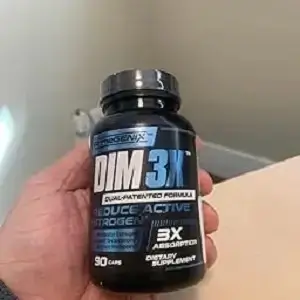
It is specifically formulated for men’s hormonal optimization — not a generic wellness product — and features a patented bioavailability-enhancing system that addresses the core limitation of standard DIM supplements: poor absorption.
DIM 3X combines DIM with absorption-enhancing technology designed to maximize systemic DIM delivery, making it relevant for men who want the estrogen metabolic benefits of DIM without the absorption inconsistency of plain DIM products.
The ingredient profile is transparent, the formulation rationale is sound from a mechanistic standpoint, and the product is clearly designed with the specific hormonal challenges of male users in mind.
As with all branded supplement products, DIM 3X as a combined formula has not been independently evaluated in its own peer-reviewed clinical trial — the standard limitation of the supplement industry.
Individual results will vary based on baseline estradiol levels, body composition, diet, training status, and lifestyle factors.
Treat DIM 3X or any DIM supplement as one component of a comprehensive approach — not a standalone solution — and consult your physician before starting, particularly if you are on any hormone-affecting medications.
Click here to read my honest and unbiased Primegenix DIM3X Review.
Medical Treatment Options for Severe Estrogen Dominance in Men
For some men, natural interventions — even when applied consistently and comprehensively — are not sufficient to restore an acceptable testosterone-to-estrogen ratio.
In these cases, medical management is not a failure of the natural approach — it is the appropriate next step.
Pharmaceutical Aromatase Inhibitors
Anastrozole and exemestane are the pharmaceutical aromatase inhibitors most commonly used in male hormonal management — they directly block the aromatase enzyme, producing dramatic reductions in estradiol.
The risk of over-suppression is the primary concern — crashing estrogen too low in men produces its own serious symptom profile, including severe joint pain, mood depression, bone density loss, and complete loss of libido.
Pharmaceutical AI use requires regular blood work monitoring and physician oversight — it is not a self-management strategy.
SERMs
Selective estrogen receptor modulators like tamoxifen and clomiphene work differently from aromatase inhibitors — instead of reducing estrogen production, they block estrogen receptors in specific tissues.
Clomiphene is particularly relevant in male hormonal management because it also stimulates LH and FSH production, which can increase natural testosterone production in men with secondary hypogonadism.
TRT and Estrogen Management
Men on testosterone replacement therapy face a unique challenge: exogenous testosterone dramatically increases aromatization substrate, producing higher estrogen levels that require active management.
DIM is commonly used as a first-line estrogen management tool in TRT patients, with pharmaceutical AI reserved for cases where DIM alone is insufficient — a hierarchy that minimizes pharmaceutical exposure while still providing meaningful estrogen control.
Finding the Right Medical Support
Endocrinologists, urologists with hormonal specialization, and integrative physicians with expertise in male hormonal health are the appropriate specialists for men whose estrogen dominance requires medical management.
Look for practitioners who measure both testosterone and estradiol, who understand the ratio rather than just the absolute values, and who are willing to treat symptoms alongside numbers.
Estrogen Dominance in Men — Special Considerations by Life Stage
Estrogen dominance does not present identically across all ages and circumstances.
Understanding how it manifests differently across life stages helps men identify where they sit — and what approach is most relevant to their situation.
Men Under 35
The growing phenomenon of estrogen dominance in younger men is driven primarily by obesity, sedentary lifestyles, chronic stress, and environmental xenoestrogen exposure — not aging.
Young men presenting with gynecomastia, low libido, poor body composition response, and mood instability are increasingly likely to have estrogen dominance as a root cause, and their situation is highly responsive to lifestyle intervention.
Men Over 40
After 40, the natural decline in testosterone production combines with unchanged or increasing aromatase activity to accelerate the shift in the testosterone-to-estrogen ratio.
Men in this decade often experience what feels like a sudden deterioration in how they feel and function — but is actually the cumulative result of a gradual hormonal shift that has been building for years.
Men Over 50 and Andropause
By 50, the testosterone decline is more pronounced and the relative estrogen dominance more clinically significant for many men.
This is also when the symptoms of estrogen dominance most frequently overlap with what is dismissed as normal aging — fatigue, mood changes, reduced libido, cognitive slowing — making accurate hormonal assessment particularly important at this life stage.
Men on TRT
TRT creates the highest-risk hormonal environment for estrogen dominance — because the exogenous testosterone introduced dramatically increases the substrate available for aromatization.
Estrogen management is not optional on TRT — it is a core component of a well-managed protocol, and men who do not address it often feel worse than before they started therapy.
Bodybuilders and Athletes
Athletes using anabolic compounds face acute, high-level aromatization during use and estrogen rebound on cessation — both of which require active hormonal management.
Natural bodybuilders face a subtler but still significant challenge: aggressive bulking phases increase body fat and therefore aromatase activity, while aggressive cutting phases stress cortisol and testosterone — making estrogen management relevant across the entire competitive cycle.
Conclusion
Estrogen dominance in men is not a niche concern for bodybuilders or hormone obsessives.
It is a genuine, increasingly prevalent hormonal condition that affects men across every age group, body type, and lifestyle — and it is doing significant damage to quality of life, physical performance, mental health, and long-term wellbeing for millions of men who have no idea what is actually causing their symptoms.
The good news is that estrogen dominance in men is addressable.
Not overnight, and not with a single pill — but systematically, through the consistent application of evidence-based dietary changes, targeted exercise, lifestyle optimization, strategic supplementation, and where necessary, medical intervention.
Start with blood work. Know your numbers before you intervene.
Then build your approach around the evidence: reduce body fat, clean up your diet, prioritize sleep, manage stress, minimize xenoestrogen exposure, and consider DIM alongside zinc and vitamin D3 as your foundational supplement stack.
Monitor your response. Adjust. Work with a physician who understands that hormonal optimization in men is not just about testosterone — it is about the ratio.
Your hormones are not a fixed destiny. They are a dynamic system that responds to how you live.
Take the evidence seriously, take the action consistently, and the balance you are looking for is achievable.