Cutting Diet for Bodybuilders – How To Torch Fat Without Losing the Muscle You Worked So Hard To Build
Let’s be real — cutting is the part of bodybuilding that nobody really looks forward to.
Bulking is fun. You eat big, you lift big, you feel invincible. But when it’s time to cut? Suddenly you’re counting every gram of chicken breast, second-guessing your cardio, and lying awake at 2 AM thinking about pizza you’re not allowed to have.
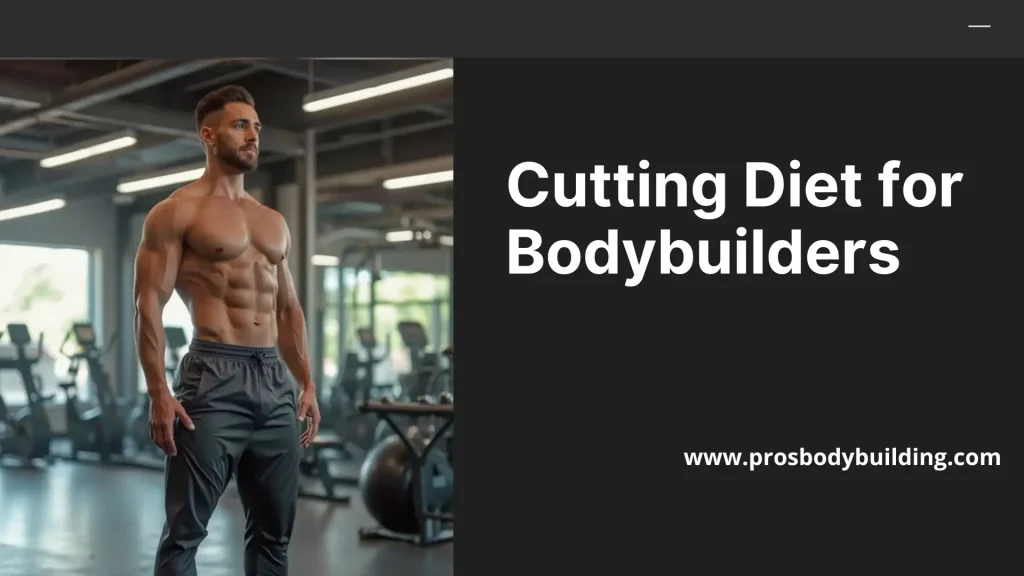
The frustrating part isn’t the hunger, though. It’s the fear. The fear that after months of grinding in the gym, building that muscle you’re proud of, a cutting phase is going to come along and eat it all away. That you’ll step on stage — or just look in the mirror — and see someone smaller, flatter, weaker than before.
Here’s the truth: you don’t have to lose muscle when you cut. Done right, a cutting diet strips away body fat while keeping your hard-earned gains almost entirely intact. Done wrong? Yeah, it can go sideways fast.
This guide breaks down exactly how to do it right — with practical, no-nonsense strategies that actually work for bodybuilders, not weekend warriors.
What Happens During The Cutting Phase
First, Understand What’s Really Happening During a Cut.
Before we get into tactics, it helps to understand the biology at play. When you put your body in a caloric deficit — meaning you eat fewer calories than you burn — it needs to find energy somewhere. The goal is to make sure it pulls that energy from fat stores, not muscle tissue.
The problem is your body isn’t particularly loyal to your muscle. Under the wrong conditions (too steep a deficit, too little protein, too much cardio, not enough sleep), it will start breaking down muscle for fuel. This is called catabolism, and it’s the enemy of every bodybuilder on a cut.
The good news? Your body won’t cannibalize muscle if you give it a good reason not to. Specifically: if you keep lifting heavy, eat enough protein, and don’t slash calories so aggressively that your body panics. When those three things are in place, fat is the target — not muscle
How To Cut Without Burning Fat
Here are some of the most effective and proven tips to help you lose excess body fat without losing your hard earned muscle mass:
1. Keep Your Protein Sky High (Higher Than You Think)
If there’s one rule that trumps everything else during a cutting diet, it’s this: protein is non-negotiable.
Most gym-goers eat plenty of protein when bulking. During a cut, some people make the mistake of dropping it to save calories. That’s backwards. When you’re in a deficit, your muscle tissue is more vulnerable than ever. Protein is what protects it.
For bodybuilders in a cutting phase, research consistently points toward 1.0–1.2 grams of protein per pound of body weight, daily. Some competitive athletes push it even higher, closer to 1.4g per pound, especially in the final weeks before a show.
The reason protein is so effective at preserving muscle during a cut is threefold. First, it provides the amino acids your muscles need to repair and maintain themselves. Second, it has a high thermic effect — your body burns more calories just digesting it compared to carbs or fat. Third, it’s incredibly satiating, which makes eating less feel a whole lot more manageable when you’re running on a deficit.
Good sources to lean on: chicken breast, turkey, white fish, egg whites, lean beef, Greek yogurt, cottage cheese, and a quality whey protein isolate for convenience.
2. Don’t Slash Calories Too Hard
This is where a lot of bodybuilders blow it, especially ones who are impatient to get lean fast.
A deficit of 500 calories per day is generally the sweet spot for most people — enough to lose roughly a pound of fat per week without triggering significant muscle loss. Some people do well with a slightly larger deficit in the early stages of a cut when body fat is higher, then tighten it up as they get leaner.
What you want to avoid is the dramatic slash — dropping 1,000+ calories overnight because you’re ten weeks out and panicking. Your body interprets extreme caloric restriction as a threat. Cortisol spikes, testosterone drops, muscle catabolism kicks in. The scale might move faster in the short term, but you end up softer, not harder.
A controlled, steady deficit of 300–500 calories is boring but it works. Track your food for at least the first few weeks so you actually know where you stand. Estimating is a trap — most people either overestimate how little they’re eating or underestimate it, and either way it derails the process.
3. Structure Your Carbs Around Your Training
Carbs are not the enemy during a cut. They’re actually essential, especially for anyone training at high intensity. The problem is eating them at the wrong times or in excessive amounts.
The smartest approach for bodybuilders is to concentrate carbohydrates around training sessions. Have a moderate portion before your workout to fuel performance, and another serving after to support recovery and protein synthesis. Outside of that window, you can taper carbs down significantly, focusing on lean protein and fibrous vegetables to fill out your meals.
Some bodybuilders swear by carb cycling — alternating between higher-carb days on training days and very low-carb days on rst days. It can work well for maintaining training intensity while still creating a meaningful weekly caloric deficit. Whether you go that route or just eat a steady moderate amount of carbs depends on personal preference and how your body responds.
What you don’t want to do is eliminate carbs entirely. Severely depleted glycogen stores tank your workout performance. When your training goes downhill, muscle retention goes with it.
4. Never Stop Lifting Heavy
This one seems obvious, but it’s worth saying plainly: do not change your training style to “toning” mode the moment you enter a cutting phase.
“Toning” isn’t real. What you’re actually trying to do is maintain the muscle mass you built. And the signal you send your body to keep that muscle is the same signal that built it in the first place — resistance training with meaningful loads.
Don’t suddenly switch to three sets of 20 reps with light weight because you think that’s how cutting works. Keep the weight heavy. Keep the compound movements in. Squats, deadlifts, bench press, rows, overhead press — these are still your best friends.
You may notice your performance dip a little during a cut, especially if you’re deep into a deficit. That’s normal. The goal is to minimize the performance drop, not eliminate it entirely. If you’re maintaining most of your strength, you’re almost certainly maintaining most of your muscle.
You might reduce total volume slightly — one or two fewer sets per exercise — to manage recovery demands when calories are lower. But the intensity and movement selection should stay largely the same.
5. Add Cardio Strategically, Not Aggressively
Cardio is a tool, not a punishment. Used wisely, it helps you maintain a deficit without having to eat even less. Used excessively, it eats into recovery and starts competing with the muscle you’re trying to keep.
The most muscle-friendly forms of cardio for bodybuilders are low-intensity steady-state (LISS) — things like incline walking, cycling at a moderate pace, or rowing at a comfortable effort. These burn calories without creating a large recovery debt or the kind of cortisol spike that comes with brutal high-intensity sessions on top of already hard lifting.
Start with two to three sessions of 30–45 minutes per week and adjust from there based on how your body composition is changing. If fat loss stalls, add another session before you start cutting food further.
Fasted cardio — doing your low-intensity session first thing in the morning before eating — is popular in bodybuilding circles and may offer some benefits for fat oxidation, especially in the later, leaner stages of a cut. That said, it’s not a magic bullet. Total weekly energy expenditure matters more than timing. Find what you’ll actually stick to.
6. Take Sleep as Seriously as Your Diet
Sleep deprivation during a cut is like quietly sabotaging yourself and then wondering why nothing is working.
When you don’t sleep enough, cortisol climbs. Testosterone and growth hormone drop. Appetite-regulating hormones (ghrelin and leptin) go haywire, making you hungrier and less satisfied by what you eat. Recovery suffers. Cravings spike. Muscle catabolism accelerates.
Seven to nine hours of quality sleep per night isn’t a luxury during a cutting phase — it’s part of the program. If you’re cutting calories, training hard, and sleeping six hours, you’re fighting yourself every step of the way.
7. Manage Cortisol Before It Manages You
Cortisol is the stress hormone, and it has a direct relationship with fat storage (particularly around the midsection) and muscle breakdown. During a cut, cortisol tends to run higher — you’re eating less, training hard, and if life is stressful on top of that, the effect is compounded.
Practical ways to keep cortisol in check: don’t overtrain, don’t run your deficit into the ground, sleep enough, and include recovery-focused activity like walking, stretching, or yoga on off days.
Some bodybuilders also find ashwagandha helpful — it’s a well-researched adaptogen with meaningful evidence for cortisol reduction, and it’s an ingredient you’ll find in quality supplements for exactly this reason. Cortisync is an excellent cortisol reducer for men that has been getting exciting user reviews.
8. Don’t Ignore Refeeds
If you’ve been cutting for more than a few weeks, strategic refeeds can work in your favor. A refeed is essentially a planned higher-calorie, higher-carb day (usually at or close to maintenance calories) designed to temporarily restore glycogen levels, boost leptin, and give your body — and your mind — a breather from the deficit.
Refeeds aren’t cheat days. You’re not eating everything in sight. You’re eating more carbohydrates from quality sources — rice, oats, sweet potato, fruit — while keeping protein high and fat moderate.
The benefit? They can help prevent the metabolic slowdown that comes from extended periods of caloric restriction, restore training performance temporarily, and make a long cut psychologically sustainable. Most bodybuilders find that one refeed per week works well once they’re leaner than around 12–15% body fat.
9. Get Enough Micronutrients
When calories drop, so does food variety for a lot of people. That makes micronutrient deficiencies a real risk during a cutting phase — and deficiencies in things like zinc, magnesium, vitamin D, and B vitamins directly affect testosterone production, energy metabolism, sleep quality, and immune function.
Prioritize nutrient-dense foods even when cutting — leafy greens, brightly colored vegetables, eggs, fatty fish, nuts. If your diet gets very restricted in the final push before a competition, a quality multivitamin is worth adding as insurance.
The Best Fat Burner Supplement for Bodybuilders: Phen24
Even when your diet and training are dialed in, some bodybuilders find it useful to have a well-formulated supplement in their corner — something that helps maximize fat oxidation, control cravings, and keep energy stable during a caloric deficit. That’s where a good fat burner earns its place in the stack.
Of the options out there, Phen24 stands out as one of the most thoughtfully designed for people who actually train — and specifically for the demands of a bodybuilding cut.
What makes Phen24 different from most fat burners is its 24-hour approach. There are two formulas: a daytime capsule and a nighttime capsule, each targeting different aspects of fat loss at different points in the day.
The daytime formula focuses on boosting metabolism, increasing thermogenesis, and supporting energy levels so you can train hard even when calories are lower. Key ingredients include caffeine and guarana extract — a combination that works well because caffeine provides a sharp, immediate energy lift while guarana’s slower-release effect smooths out any crashes and reduces jitteriness. Cayenne powder adds meaningful thermogenic support, helping you burn more calories throughout the day just from the heat it generates.
There’s also zinc, which supports testosterone levels — important for bodybuilders because test tends to drop during extended caloric restriction. And manganese, which is involved in energy metabolism and cognitive function, helpful for keeping your head in the game during a draining cut.
The nighttime formula takes a completely different approach, which is where Phen24 really earns its credibility. Most fat burners are just stimulant pills you take in the morning and forget about by evening. Phen24’s night formula works while you sleep — using ingredients like glucomannan (a fiber that promotes satiety and reduces late-night cravings), vitamin C, and green tea extract to keep your metabolism ticking and cortisol levels down without disrupting sleep.
This matters more than most people realize. Nighttime cravings and poor sleep are two of the biggest reasons cutting diets fail. Having something that specifically targets those issues — without the stimulants that would ruin your sleep quality — is genuinely useful.
The full formula is made from natural ingredients, which means no harsh chemicals or banned substances — a real concern for competitive bodybuilders who may face drug testing. It’s manufactured by Wolfson Brands, the same company behind PhenQ, which has a solid reputation in the supplement space for quality and transparency.
For bodybuilders who are eating in a meaningful deficit and training hard, Phen24 works best as exactly what it is — a supportive supplement, not a shortcut. Your diet still does the heavy lifting. But in a sport where the margins between winning and losing a competition (or just looking great or almost great) can come down to small details, a supplement that helps you maintain energy, control cravings, and support fat burning around the clock is worth considering.
Pulling It All Together: What a Cutting Week Actually Looks Like
All of this can sound a bit abstract, so here’s what applying these principles looks like in practice for a typical natural bodybuilder during a cutting phase:
Training: Four to five weight training sessions per week, keeping movements and loads close to what you’d do in the off-season. Three sessions of low-intensity cardio (35–45 minutes each) on non-lifting days or after lifting.
Eating: Total calories set 400–500 below maintenance. Protein at 1.1–1.2g per pound of bodyweight. Carbohydrates timed primarily around training sessions. One refeed per week on your most intense training day. Vegetables and water filling the gaps.
Recovery: Seven to eight hours of sleep non-negotiable. One full rest day per week with light walking only.
Supplements: A quality whey protein to hit protein targets conveniently, creatine maintained throughout the cut to preserve strength and cell volume, Phen24 taken as directed (two capsules with breakfast, four night capsules before dinner), and a multivitamin as micronutrient insurance.
The Bottom Line
A cutting phase doesn’t have to mean watching your hard-earned muscle disappear. Bodybuilders who lose significant muscle during a cut are almost always making one or more of the same mistakes — the deficit is too steep, protein is too low, training intensity drops off, or sleep is treated as an afterthought.
Get those fundamentals right and the fat comes off while the muscle stays put. It’s not complicated — though it’s not always easy either. There’s a difference. Complicated means you don’t know what to do. Not easy means you know exactly what to do, and you have to do it anyway, day after day, when it would be a lot more comfortable not to.
That’s bodybuilding. And if you’ve made it this far into a cutting diet article, you already knew that.
Always consult a healthcare professional before adding any supplement to your routine, particularly if you have pre-existing health conditions or are competing in a tested federation.