Deadlifts and Testosterone: How This One Exercise Can Supercharge Your Hormones
What if one single exercise could do more for your testosterone levels than almost anything else in the gym? Sounds too good to be true — but the science backs it up completely. The deadlift is not just a strength exercise. It’s a hormonal event.
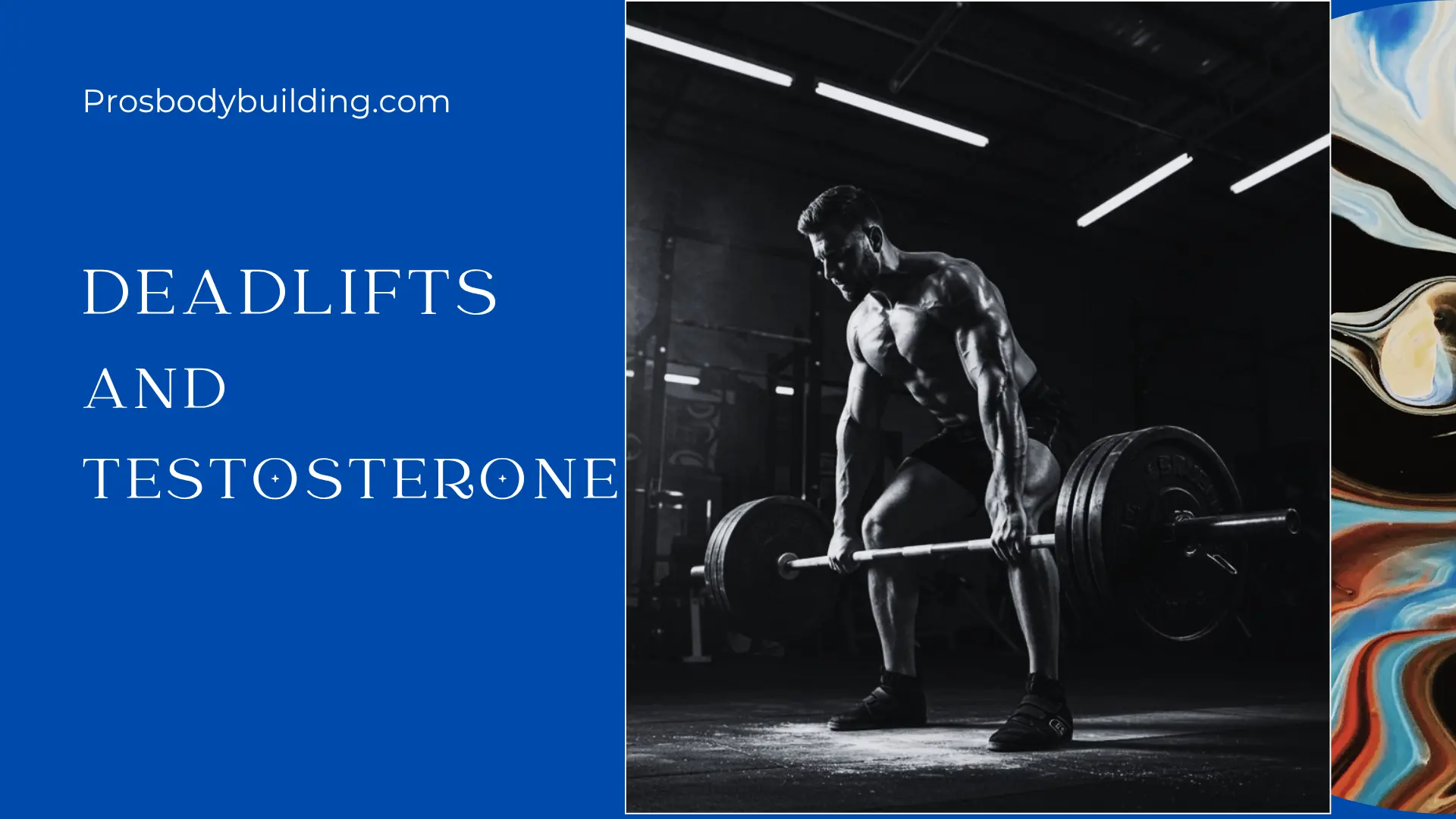
Studies show that compound, multi-joint exercises like the deadlift trigger significantly greater acute testosterone responses compared to isolation exercises. We’re talking about a movement that recruits more total muscle mass simultaneously than almost any other lift on the planet — and that mass recruitment is exactly what your endocrine system responds to. The bigger the muscular demand, the louder the hormonal signal.
I’ve seen lifters completely transform their physique and energy levels by simply making the deadlift the cornerstone of their training. Not by adding more cardio. Not by buying expensive supplements. Just by pulling heavy things off the floor consistently, intelligently, and with a clear understanding of what they were trying to achieve hormonally.
In this guide, we’re breaking down exactly how and why deadlifts boost testosterone, what the research actually says, how to program them for maximum hormonal output, the nutritional strategies that amplify the response, and the recovery factors that most people completely ignore. Whether you’re a seasoned powerlifter or just learning your first hip hinge, this is the blueprint you need to harness the full hormonal power of the deadlift.
The Science Behind Deadlifts and Testosterone
To understand why the deadlift is so effective at boosting testosterone, you first need to understand a little bit about how the body produces it.
Testosterone isn’t just sitting in a tank waiting to be released — it’s synthesized on demand through a cascade of hormonal signals that begins in the brain and ends in the testes (in men) or ovaries (in women).
This pathway is called the hypothalamic-pituitary-gonadal axis, and heavy resistance training is one of the most powerful natural stimulators of this system we know of.
When you load a barbell and begin a heavy set of deadlifts, the mechanical stress placed on your muscles sends a cascade of signals to your central nervous system.
The brain responds by increasing the release of luteinizing hormone (LH) from the pituitary gland, which in turn signals the gonads to ramp up testosterone synthesis. The greater the muscular demand — both in terms of weight and the total volume of muscle engaged — the stronger this upstream signal becomes.
Acute vs. Chronic Testosterone Response
There are two distinct ways that deadlifts impact testosterone, and understanding both is important for building an effective training program. The acute response refers to the sharp, temporary rise in testosterone that occurs in the immediate post-exercise window — typically peaking 15–30 minutes after training and returning to baseline within an hour or two.
This spike plays a key role in triggering muscle protein synthesis and creating a favorable anabolic environment for recovery.
The chronic adaptation, however, is where the real long-term magic happens. Consistent, progressive deadlift training over weeks and months leads to structural adaptations in the endocrine system itself — resulting in higher baseline testosterone levels, improved testosterone-to-cortisol ratios, and greater hormonal sensitivity in muscle tissue.
In other words, your body doesn’t just produce more testosterone temporarily — it gets better at producing it overall.
How the Deadlift Compares to Other Compound Lifts
Research consistently places the deadlift and squat at the top of the hierarchy when it comes to testosterone response — and for good reason.
Both movements recruit enormous amounts of muscle mass across multiple joint systems simultaneously.
However, the deadlift has a slight edge in total muscle recruitment, particularly in the posterior chain — the glutes, hamstrings, erector spinae, and traps — which are among the largest and most metabolically active muscle groups in the body. More muscle engaged means a stronger hormonal signal. It really is that simple.
Testosterone increase by exercise
Estimated acute testosterone increase (%) relative to baseline. Based on peer-reviewed resistance training research. Individual results vary.
Why the Deadlift Is the King of Testosterone-Boosting Exercises
Ask any experienced strength coach which exercise they’d program if they could only choose one, and the deadlift comes up more often than not.
The reason isn’t tradition or bro-science — it’s pure biomechanical and hormonal logic. No other exercise comes close to the deadlift in terms of total systemic demand.
Unmatched Muscle Recruitment
When you deadlift correctly, virtually every major muscle group in your body is engaged in some capacity. The primary movers — glutes, hamstrings, and quadriceps — drive the lift from the floor.
The erector spinae and multifidus muscles of the lower back maintain spinal position under enormous compressive load. The lats and rhomboids brace the upper back and protect the shoulder joint.
The traps, rear deltoids, and biceps all contribute to keeping the bar path tight. Your entire core — rectus abdominis, obliques, transverse abdominis — fires isometrically to protect the spine and transfer force efficiently from the lower body to the upper.
And we haven’t even mentioned the grip. Your forearms, wrist flexors, and hand muscles are working at or near maximum capacity to hold onto the barbell — particularly in heavier sets.
This full-body recruitment profile is the fundamental reason the deadlift triggers such a powerful hormonal response. No isolation exercise, no cable machine, no leg press can replicate this.
The hormonal environment created by a heavy deadlift is uniquely powerful precisely because the exercise is uniquely demanding.
The Neurological Demand
Beyond muscle mass, the deadlift places an extraordinary demand on the central nervous system. The coordination required to generate maximum force through multiple joint systems simultaneously — while maintaining precise positional control under heavy load — creates a level of neural drive that is simply unmatched by most other exercises. This high neurological demand appears to be an independent contributor to the acute testosterone response, separate from the muscular stimulus alone.
Why Machines Can’t Replicate This
Machine exercises fix your movement path, reduce the stability demand, and artificially restrict the number of muscle groups that need to contribute to the lift.
What feels like a “safer” way to train is actually a hormonally inferior one. The unpredictable, multi-planar nature of a free barbell deadlift — the need to generate your own stability, brace your own core, and coordinate your own movement pattern — is exactly what makes it so hormonally potent. Simplifying the exercise simplifies the response.
How to Deadlift for Maximum Testosterone Output
Knowing that deadlifts boost testosterone is one thing. Knowing how to structure your deadlift training to maximize that hormonal response is another entirely. Not all deadlift sessions are created equal, and the variables you choose — load, rep range, rest periods, and frequency — have a massive impact on the size of the hormonal signal you generate.
Load and Rep Range
The research is fairly consistent on this point: heavy loading at lower rep ranges produces the greatest acute testosterone response. Sets of 3–6 repetitions at 80–90% of your one-rep maximum appear to be the sweet spot for hormonal output.
This is because heavy loads require maximal motor unit recruitment — essentially forcing your body to activate everything it has — which corresponds directly to a larger hormonal signal.
This doesn’t mean higher rep work has no place in a testosterone-focused program. Sets of 8–12 at moderate loads are valuable for muscle hypertrophy and metabolic stimulus, and they contribute meaningfully to the chronic adaptations we discussed earlier. But if your primary goal is testosterone output per session, the evidence favors keeping loads heavy and reps relatively low.
Rest Periods
Shorter rest periods might feel more intense and productive, but they actually blunt the testosterone response. Research shows that rest periods of 2–3 minutes between heavy sets support greater acute testosterone output compared to shorter 60–90 second intervals.
The reason is straightforward: your muscles and nervous system need adequate recovery between sets to express maximum force. If you’re grinding through fatigue rather than generating true maximal effort, the hormonal stimulus is reduced accordingly.
Training Frequency
How often should you deadlift to maximize testosterone? For most people, 1–2 heavy deadlift sessions per week represents the optimal frequency. The deadlift is an extraordinarily taxing exercise — not just on your muscles, but on your central nervous system and connective tissue.
Programming it more than twice a week without the recovery infrastructure to support it will lead to accumulated fatigue, elevated cortisol, and paradoxically suppressed testosterone levels. Quality and recovery always beat quantity.
Conventional vs. Sumo Deadlift
Both variations are highly effective and produce strong hormonal responses. The conventional deadlift with a hip-width stance tends to place greater emphasis on the posterior chain — particularly the hamstrings and erectors — while the sumo variant with a wider stance shifts more work to the glutes and quads.
From a pure testosterone-output perspective, both are excellent choices. Choose the variation that allows you to lift heavier and move better. The bar weight you can handle safely and consistently is the most important variable of all.
Romanian Deadlift and Trap Bar Variations
The Romanian deadlift (RDL) is an outstanding accessory movement for hormonal stimulus — it creates enormous mechanical tension in the hamstrings and glutes at long muscle lengths, which is a potent driver of both hypertrophy and hormonal response.
The trap bar deadlift, meanwhile, allows many lifters to handle greater loads than the conventional barbell, making it a smart option for maximizing the testosterone-boosting overload stimulus. Both variations earn their place in a well-rounded deadlift program.
Deadlift Programming for Hormonal Health — Beginner to Advanced
Understanding the principles is one thing — actually building a program around them is another. Here’s how to structure your deadlift training at every experience level to maximize your long-term hormonal adaptations.
Beginner Programming: Build the Foundation
If you’re new to deadlifting, your primary goal right now isn’t maximum testosterone output — it’s learning to move correctly and building the neurological patterns that will allow you to express real force later. Starting Strength and StrongLifts 5×5 are both excellent frameworks for beginners.
These programs involve lifting 3 times per week with consistent, linear progression on the core compound lifts including the deadlift. As a beginner, you’ll make rapid strength gains through neural adaptation alone — and those gains will progressively increase the hormonal stimulus as your loads increase week to week.
Intermediate Programming: Drive Continued Progress
Once linear progression starts to slow — typically after 3–6 months of consistent training — you’ll need more sophisticated programming to keep driving adaptation.
The Texas Method and Jim Wendler’s 5/3/1 are both excellent intermediate frameworks. 5/3/1 in particular is well-suited to testosterone optimization because it systematically cycles loads across a 4-week period, building toward maximum-effort top sets that are highly effective at generating the acute hormonal response you’re after.
Advanced Programming: Periodization for Peak Output
Advanced lifters benefit most from structured periodization — the systematic manipulation of training volume and intensity over time to drive continued adaptation. Linear periodization gradually increases intensity over a training block.
Undulating periodization alternates between different rep ranges across training sessions, allowing you to train multiple physiological qualities simultaneously. Block periodization separates training into distinct phases — accumulation (volume), intensification (heavy loading), and realization (peaking) — which is particularly effective for competitive lifters.
The Critical Role of Deload Weeks
Many lifters treat deload weeks as an admission of weakness. They’re actually one of the most important tools in a serious training program. Accumulated fatigue from weeks of heavy deadlifting masks the true state of your fitness and suppresses your hormonal response.
A well-timed deload — reducing volume and intensity by 40–50% for one week every 4–8 weeks — allows cortisol to drop, testosterone to recover, and your body to absorb the adaptations from the preceding training block. You come back stronger, leaner, and hormonally primed for the next phase.
The Testosterone-Boosting Effect of Deadlifts on Men vs. Women
One of the most persistent myths in fitness culture is that women shouldn’t lift heavy because it will make them “bulky” or give them “too much testosterone.” Both claims are physiologically wrong, and the science is worth understanding clearly.
Different Baselines, Same Relative Benefits
Men typically have testosterone levels roughly 10–20 times higher than women — but the relative hormonal response to heavy resistance training is meaningful for both sexes.
Women experience significant acute testosterone increases following heavy compound lifting, and the chronic adaptations — improved muscle mass, reduced body fat, better bone density, and elevated energy — are equally accessible regardless of gender. The absolute testosterone numbers are different, but the direction of the adaptation is the same.
Why Women Should Not Fear This
The reason women don’t “bulk up” from heavy deadlifting isn’t because they’re not training hard enough — it’s because they don’t have the hormonal environment to support that level of muscle hypertrophy.
Even with the acute testosterone boost from deadlifting, female testosterone levels remain far below the threshold required to produce the kind of dramatic muscle mass seen in male bodybuilders. What women do get from heavy deadlifting is a firm, athletic, well-defined physique — exactly what most female lifters are actually pursuing.
The Case for Men Over 40
For men experiencing the natural testosterone decline that begins in their mid-30s — typically a drop of around 1–2% per year — heavy compound training including the deadlift is one of the most evidence-backed strategies available.
Multiple studies on older men demonstrate that heavy resistance training significantly attenuates age-related testosterone decline, preserves lean muscle mass, reduces visceral fat, and maintains energy levels and libido. The deadlift isn’t just for young athletes. It might be even more important for men over 40 than it is for anyone else.
Nutrition Strategies That Amplify the Testosterone Response to Deadlifts
Training is the stimulus. Nutrition is the raw material. No matter how well you deadlift, you cannot fully optimize your testosterone response without the right nutritional foundation in place. These are the key dietary levers that directly impact your hormonal output.
Pre-Workout Nutrition
Walking into a heavy deadlift session under-fueled is one of the most common and costly mistakes lifters make. When muscle glycogen is depleted, your body’s ability to generate maximal force is compromised — and a compromised effort means a blunted hormonal response.
A pre-workout meal containing 40–60g of carbohydrates and 25–35g of protein consumed 60–90 minutes before training ensures your muscles are fueled for maximum performance. Think oats with a protein shake, or rice and chicken if you’re training in the afternoon.
Post-Workout Nutrition and the Anabolic Window
The post-workout period is when your body is most primed to utilize nutrients for muscle repair and hormonal synthesis. Consuming 30–50g of fast-digesting protein — whey protein is ideal here — alongside 50–75g of carbohydrates within 45–60 minutes of completing your deadlift session helps extend the acute anabolic environment, amplify muscle protein synthesis, and support the replenishment of glycogen stores that will fuel your next session.
Dietary Fat — The Non-Negotiable
Testosterone is a steroid hormone synthesized from cholesterol — which means dietary fat is a direct precursor to its production. Chronically low fat intake is one of the fastest routes to suppressed testosterone. Research consistently shows that men on low-fat diets have significantly lower testosterone levels than those eating adequate fat. Aim for fat to constitute at least 25–30% of your total calorie intake, prioritizing sources like eggs, fatty fish, avocado, olive oil, and red meat in moderation.
Key Micronutrients for Testosterone
Three micronutrients stand out above all others in the context of testosterone production:
- Zinc: A zinc deficiency is directly correlated with reduced testosterone levels. Heavy training depletes zinc through sweat and metabolic demand. Top dietary sources include oysters (by far the richest source), red meat, pumpkin seeds, and legumes.
- Vitamin D: More accurately a hormone than a vitamin, vitamin D plays a direct role in testosterone synthesis. Research shows that men with optimal vitamin D levels have significantly higher testosterone than those who are deficient. Sun exposure and fatty fish are good sources, but many people — especially in lower-sunlight climates — require supplementation.
- Magnesium: Involved in hundreds of enzymatic reactions including testosterone synthesis. Dark leafy greens, nuts, seeds, and dark chocolate are excellent dietary sources.
A Note on Testosil
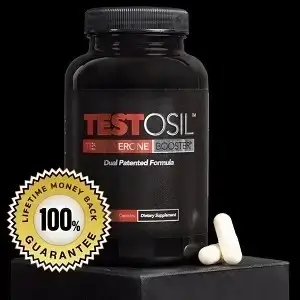
In the world of natural testosterone support supplements, Testosil is a product that comes up with increasing frequency in bodybuilding and fitness circles. It markets itself as an all-natural testosterone support formula, with its most prominent ingredient being KSM-66 Ashwagandha — a clinically studied, high-concentration extract of Ashwagandha root. Additional ingredients include Fenugreek, L-Arginine, Panax Ginseng, Zinc, Vitamin D, and AstraGin, a patented absorption-enhancing compound.
It is worth noting that KSM-66 Ashwagandha — Testosil’s lead ingredient — has been independently studied in peer-reviewed trials, with some research showing meaningful increases in testosterone and reductions in cortisol in healthy men. However, the Testosil formulation as a combined product has not been independently evaluated in its own clinical trial, which is the case for the vast majority of branded supplements on the market.
As with any supplement, results will vary considerably depending on baseline hormonal status, diet, training quality, and sleep. Testosil should be viewed as a potential addition to an already solid nutritional and training foundation — not a substitute for any of it.
Click Here To Read Detailed Testosil Review By Clicking Here
Recovery, Sleep, and Lifestyle Factors That Maximize Testosterone From Deadlifts
Here’s the truth that most fitness content glosses over: testosterone isn’t produced during your workout. It’s produced during your recovery. The training session is the signal — the sleep, rest, and lifestyle management that follows is where the actual hormonal synthesis takes place. Get this part wrong and you can be deadlifting perfectly and still failing to optimize your testosterone.
Sleep — The Most Powerful Testosterone Tool You Have
The relationship between sleep and testosterone is not subtle. The majority of daily testosterone production in men occurs during REM sleep — specifically during the nocturnal pulses of LH that drive testicular testosterone synthesis overnight. Men who consistently sleep fewer than 7 hours per night show measurably lower testosterone levels — by as much as 15% in some studies — compared to those sleeping 8–9 hours. That’s a more significant suppression than many pharmaceutical interventions produce in the opposite direction.
Sleep quality matters as much as duration. Sleep apnea, poor sleep hygiene, late-night screen exposure, and alcohol consumption all fragment sleep architecture and disrupt the nocturnal hormonal cascades that produce testosterone. Treating your sleep as a performance variable — not an afterthought — is one of the highest-leverage decisions you can make for your hormonal health.
Cortisol — The Direct Opponent of Testosterone
Cortisol and testosterone share a functional antagonism — when one goes up, the other tends to go down. Cortisol is your primary stress hormone, and while short-term elevations (like those produced during a heavy deadlift session) are beneficial and adaptive, chronic elevation through work stress, overtraining, poor nutrition, or inadequate sleep creates a sustained anti-testosterone environment in your body.
Managing cortisol is therefore an essential part of managing testosterone. This means structuring your training intelligently — not overreaching week after week — eating enough calories to support your activity level, getting adequate sleep, and building genuine stress management practices into your life. Meditation, time in nature, breathwork, and social connection all have measurable effects on cortisol and, by extension, on testosterone.
The Warning Signs of Overtraining
Overtraining syndrome — characterized by persistent fatigue, declining performance, poor sleep, irritability, reduced libido, and suppressed immune function — is essentially a state of hormonal dysregulation where the training stimulus has exceeded the body’s capacity to recover and adapt. If you’re noticing these signs, the answer isn’t to train through it. It’s to back off, eat more, sleep more, and allow your endocrine system to rebalance.
Alcohol and Testosterone
The evidence here is clear and consistent: alcohol suppresses testosterone. Even moderate consumption — two to four drinks — produces a measurable reduction in testosterone levels that can persist for 12–24 hours. Chronic heavy drinking causes structural damage to the Leydig cells in the testes that produce testosterone, leading to long-term hormonal suppression. This doesn’t mean a single beer will undo your training. But if hormonal optimization is genuinely your goal, keeping alcohol intake low — and avoiding it entirely in the 24 hours surrounding your training sessions — is a smart and evidence-backed approach.
Common Deadlift Mistakes That Kill Your Testosterone Response
You can know all the right principles and still sabotage your results by falling into one of these common traps. Each of these mistakes directly reduces either the quality of the training stimulus or the body’s ability to convert that stimulus into hormonal adaptation.
Lifting Too Light
The most widespread mistake in testosterone-focused training. Walking up to a barbell, loading something comfortable, and grinding out sets of 15 is not going to produce the hormonal response you’re after. Testosterone responds to challenge.
It responds to heavy loads that demand maximal motor unit recruitment and push your neuromuscular system to its limits. If you could hold a conversation during your working sets, you’re probably not lifting heavy enough to generate a meaningful acute testosterone spike.
This isn’t permission to sacrifice form for weight — but it is a strong argument for progressively and consistently overloading the bar.
Too Much Junk Volume
More isn’t always better when it comes to deadlifting. Adding set after set of submaximal work beyond the point of diminishing returns doesn’t amplify the testosterone response — it prolongs the cortisol elevation that follows training and extends the recovery demand on your body.
High-quality, high-intensity work with adequate rest between sets produces a far more favorable testosterone-to-cortisol ratio than grinding through an excessive volume of medium-intensity sets. Program deliberately and eliminate anything that isn’t driving genuine adaptation.
Poor Form Leading to Injury
Nothing destroys testosterone more completely or for longer than a significant injury.
A herniated disc, a torn hamstring, or a lower back strain doesn’t just put you out of the gym for weeks or months — the prolonged inactivity, pain stress, and cortisol elevation that accompany serious injury can suppress testosterone for extended periods.
Learning to deadlift correctly before loading the bar heavy isn’t a beginner concern — it’s a long-term hormonal investment. Ego loading with poor technique is one of the most expensive mistakes a serious lifter can make.
Inconsistency
The chronic testosterone adaptations that make the deadlift such a powerful hormonal tool don’t happen overnight. They’re the cumulative result of months and years of consistent progressive overload.
Training hard for two weeks, taking three weeks off, going hard again for a month, then getting distracted produces none of the durable endocrine adaptations that make a real difference. Show up consistently, add weight to the bar over time, recover properly between sessions, and the hormonal results will follow.
There is no substitute for sustained consistency.
Neglecting the Supporting Pillars
The deadlift is the engine. But nutrition, sleep, stress management, and recovery infrastructure are the fuel, oil, and maintenance that keep the engine running.
Lifters who focus exclusively on optimizing their training while neglecting these other variables are leaving the majority of their testosterone potential on the table.
All of the principles in this guide work synergistically. Implement as many of them as possible, and the compound effect on your hormonal health will be dramatic.
Conclusion
If there’s one thing this guide makes clear, it’s that the deadlift is far more than a strength exercise. It’s a hormonal stimulus, a metabolic event, and a long-term investment in the quality of your endocrine health.
No other movement combines the total-body muscle recruitment, neurological demand, and progressive overload potential of a heavy barbell deadlift — and that unique combination is exactly why it produces such a powerful testosterone response.
But the deadlift doesn’t work in isolation. The hormonal benefits you’re after come from the complete picture: pulling heavy and intelligently, eating enough of the right foods, sleeping like it’s your most important recovery tool, managing stress, limiting alcohol, and building your program around progressive overload over weeks, months, and years. Cut corners on any of these, and you leave results on the table.
The good news is that you don’t have to get everything perfect from day one. Pick up the principles that matter most to you right now, implement them consistently, and build from there. Start with the deadlift. Get your protein and fat intake right. Prioritize sleep. And add weight to the bar every time you can do so safely.
Your testosterone levels, your muscle mass, your energy, your confidence — all of it responds to the same fundamental input: the consistent, intelligent decision to challenge your body in ways that demand adaptation. The deadlift is the sharpest tool you have for doing exactly that. The barbell is waiting. Time to pull.