How To Get Shredded – Get A Lean Ripped Physique
Here is a stat that will put things in perspective. Research suggests that only about 5% of people who start a fat loss program ever reach single-digit body fat.
Not because getting shredded is impossible. But because most people are following the wrong blueprint.

I have been there. Putting in the hours at the gym, eating what I thought was clean, and still wondering why that last stubborn layer of fat refused to shift.
Sound familiar? The truth is, learning how to get shredded is not just about training harder or eating less. It is about doing the right things in the right order.
Cutting calories without killing your metabolism. Building muscle while losing fat. Knowing exactly which levers to pull when progress stalls.
That is exactly what this guide is about.
Whether you are chasing six-pack abs, prepping for a bodybuilding stage, or simply want to look your absolute best with your shirt off — you are in the right place.
Let’s break it all down.
What Does “Getting Shredded” Actually Mean?
Before you commit to a plan, you need to know exactly what you are working toward. Because “shredded” means something very specific.
And understanding that definition changes how you approach the whole process.
Getting shredded means reducing your body fat to a level where your muscles are visibly defined — where you can see striations, vascularity, and clear separation between muscle groups.
For men, that typically means dropping to somewhere between 6–10% body fat. For women, the equivalent shredded look usually sits around 14–18% body fat.
These are numbers that the vast majority of people never reach. Not because they are genetically cursed.
But because they never had a clear picture of what the goal actually required. Here is something a lot of people get wrong.
Getting shredded is not the same as losing weight. Weight loss simply means the number on the scale goes down.
That number could represent fat loss, muscle loss, water loss — or all three at once.
Getting shredded specifically means losing fat while holding onto — or even building — muscle mass.
That distinction changes everything about how you eat, train, and recover.
There is also a difference between being lean, toned, and shredded.
Being lean means having a relatively low body fat percentage — perhaps 12–15% for men — where you look fit and healthy but definition is not extreme.
Toned is a word that gets thrown around a lot.
In reality, it just means having enough muscle mass combined with low enough body fat that the muscle is visible.
Shredded takes it a step further.
It requires both — significant muscle development and genuinely low body fat — working together.
One without the other does not get you there.
Finally, a word on timelines.
Because this is where most people set themselves up for disappointment before they even begin.
If you are starting at 20% body fat and want to reach 10%, you are looking at a minimum of three to five months of consistent, disciplined effort.
If you are starting at 25% or above, you are realistically looking at six months or more.
Anyone telling you it can happen in six weeks is lying to you.
Or selling something.
Set a real timeline, commit to it, and trust the process.
The people who get shredded are not the most gifted.
They are the most patient.
Set Up Your Caloric Deficit the Right Way
There is no way around this. To get shredded, you have to eat fewer calories than you burn.
That is the fundamental mechanism of fat loss and nothing — no supplement, no training protocol, no biohack — changes that basic equation.
But how you create that deficit matters enormously.
The first step is figuring out your TDEE — Total Daily Energy Expenditure.
This is the total number of calories your body burns each day, including everything from keeping your heart beating and your organs functioning, to the energy you burn during workouts and daily movement.
You can find free TDEE calculators online that take into account your age, height, weight, gender, and activity level.
Use one of these as your starting point.
Once you have your TDEE, subtract 300 to 500 calories from it to create your daily deficit.
At that rate, you are looking at losing roughly 0.5 to 1 pound of fat per week.
That sounds slow.
But it is not.
Over five months, that adds up to 10 to 20 pounds of pure fat — while keeping your muscle intact.
Now here is where most people go wrong.
The moment they decide to get shredded, they slash calories by 1,000 or more per day because they want results fast.
What actually happens is the opposite of what they intended.
Your body interprets a massive calorie drop as a threat.
It triggers what is called metabolic adaptation — a survival mechanism where your body downregulates its metabolic rate to conserve energy.
Your metabolism slows down. Hunger hormones spike. Cortisol rises. Muscle tissue starts breaking down for fuel.
The scale might move fast in week one.
But by week three, everything has stalled — and you feel exhausted, irritable, and depleted.
A moderate deficit of 300 to 500 calories avoids all of that. It keeps your metabolism running, your energy stable, and your muscle tissue protected.
One more thing.
As you get leaner — particularly once you drop below 12% body fat as a man — fat loss naturally slows because your body is more protective of its remaining fat stores.
At this point, your deficit may need to tighten slightly, your cardio may need to increase, or you may need to introduce refeeds.
More on that later.
But the point is this: the approach that works at 20% body fat is not the same one that gets you from 12% to 8%.
The plan has to evolve as your body does.
Build Your Shredding Diet Around High Protein
If there is one nutritional non-negotiable when getting shredded, it is protein.
Everything else can be adjusted, tweaked, and experimented with.
But protein stays high.
Always.
Here is why.
When you are in a caloric deficit, your body is under constant pressure to find alternative fuel sources.
Ideally, it pulls from fat stores.
But if protein is low, it will happily start breaking down muscle tissue instead.
This is called catabolism, and it is the enemy of everything you are working toward.
A high protein intake prevents catabolism by giving your body a constant supply of amino acids — the building blocks of muscle — so it has no reason to dismantle the muscle you have already built.
For anyone training seriously during a shredding phase, research consistently supports eating 1.0 to 1.2 grams of protein per pound of bodyweight per day.
If you weigh 185 pounds, that is between 185 and 222 grams of protein daily.
Yes, that is a lot.
But it is very achievable with the right food choices.
The best lean protein sources to anchor your diet around include chicken breast, turkey breast, white fish like tilapia and cod, canned tuna, shrimp, egg whites, Greek yogurt, cottage cheese, and lean cuts of beef like sirloin.
Whey protein isolate is also a practical tool for topping up your daily intake without adding significant calories or fat.
One more benefit of high protein that most people overlook.
Protein has the highest thermic effect of any macronutrient.
That means your body burns more calories just processing and digesting it — roughly 20 to 30% of its caloric content, compared to about 5 to 10% for carbohydrates and just 0 to 3% for fat.
So eating more protein is quietly increasing your calorie burn without any additional effort on your part.
And it is the most satiating macronutrient.
When you eat enough protein, hunger becomes a much more manageable problem.
That matters enormously when you are eating in a deficit.
For the best results, spread your protein intake across four to five meals throughout the day rather than loading it all into one or two.
This keeps muscle protein synthesis elevated consistently, giving your muscles a steady supply of amino acids to work with.
Dial In Your Carbs and Fats for Maximum Fat Loss
Carbohydrates have been demonized in fitness culture for decades. And it is largely undeserved. Carbs are not your enemy when getting shredded.
Eating too many of them is the problem. Not carbs themselves.
Here is why keeping carbs in your shredding diet matters.
Carbohydrates are your body’s preferred fuel source during intense exercise.
When glycogen levels — the stored form of carbohydrate in your muscles — are severely depleted, your training performance drops noticeably.
You lift less.
You recover slower.
And lower training intensity directly undermines the muscle-preservation signal you need to keep your physique intact through a cut.
The solution is not to eliminate carbs but to time them strategically.
Concentrate the majority of your carbohydrate intake around your training sessions.
A moderate serving of complex carbs — oats, rice, sweet potato, or fruit — in the hours before and after training fuels your session and supports recovery when you need it most.
On rest days and during the parts of the day away from training, carbs can be reduced significantly while protein and fibrous vegetables fill the gap.
Carb cycling takes this principle one step further.
On training days, you eat more carbohydrates — typically 1.5 to 2 grams per pound of bodyweight.
On rest days, you drop them to 0.5 grams per pound or below.
Over the course of a week, this creates a meaningful caloric deficit while keeping training performance high on the days it matters most.
It works very well for people who are already eating and training consistently and want to accelerate fat loss without feeling like they are constantly deprived.
On the fat side of the equation, dietary fat is not something to eliminate either.
Healthy fats — from sources like avocado, olive oil, whole eggs, nuts, and fatty fish — are essential for hormone production.
Testosterone in particular requires dietary fat to be synthesized.
A shredding diet that drops fat intake too low can suppress testosterone, which directly undermines both muscle retention and fat metabolism.
Aim to keep fat intake at roughly 20 to 25% of your total daily calories.
For practical food swaps that reduce calories without reducing the volume of food on your plate, build meals around lean protein, fibrous vegetables, and moderate complex carbs.
Swap white rice for cauliflower rice on lower-carb days.
Use Greek yogurt instead of sour cream.
Choose egg whites over whole eggs for most meals, while keeping a couple of whole eggs daily for the fats and micronutrients.
These small switches add up to hundreds of saved calories per day without ever feeling like you are starving.
Strength Training to Get Shredded — Keep the Muscle, Lose the Fat
Here is something that cannot be overstated.
The single biggest mistake people make when trying to get shredded is changing their training.
They drop the heavy weights.
They start doing circuit training and light, high-rep sets.
They think they need to “switch to toning mode.”
There is no such thing as toning mode. What you are actually trying to do is preserve the muscle you built.
And the signal your body needs to preserve muscle is the exact same signal that built it in the first place. Heavy, progressive resistance training.
Do not abandon your training program just because you are in a caloric deficit. Keep the compound movements in.
Keep the weight as heavy as you can manage given that your recovery capacity will be slightly reduced when eating less.
The best training splits for a shredding phase give you four to five sessions per week of focused resistance training.
Push/pull/legs is one of the most effective structures — training each muscle group twice per week with meaningful volume while allowing adequate recovery between sessions.
Upper/lower splits work equally well, particularly for intermediate lifters.
Full-body training three times per week is a solid option for anyone who also needs time for cardio sessions.
Within each session, anchor your program around compound movements. Squats and their variations for legs. Deadlifts for posterior chain.
Bench press and overhead press for pushing muscles.
Barbell and dumbbell rows, pull-ups, and lat pulldowns for back.
These exercises recruit the most muscle mass, burn the most calories per session, and provide the strongest hormonal stimulus for muscle retention during a deficit.
Isolation exercises — curls, lateral raises, tricep extensions — are fine accessories.
But the compound lifts must be the foundation.
On the topic of volume: when calories are low, recovery is compromised.
You may not be able to handle the same total training volume you were doing in an off-season or maintenance phase.
The solution is to reduce sets slightly — perhaps dropping from four sets per exercise to three — while keeping the weight and intensity the same.
Never sacrifice intensity for volume.
An aggressive, focused three-set workout will serve you far better than a dragged-out five-set session that you do not have the energy to perform properly.
Cardio Strategies for Getting Shredded Fast
Cardio is a tool. Not a punishment. Not the solution to every fat loss problem. A tool.
Used well, it accelerates your calorie deficit without forcing you to cut food intake even further.
Used excessively, it eats into your recovery, raises cortisol, and starts competing with your muscle mass.
The two main types of cardio used during a shredding phase are LISS and HIIT.
Low-Intensity Steady-State cardio — incline walking, cycling, rowing at a moderate pace — burns calories while placing a minimal recovery demand on your body.
It can be done frequently, even on the same day as lifting, without significantly affecting your ability to train hard in the gym.
For most people getting shredded, three to four sessions of 35 to 45 minutes of LISS per week is a solid baseline.
High-Intensity Interval Training involves alternating between short bursts of maximum effort and brief recovery periods.
It burns a high number of calories in a short amount of time and creates an elevated metabolic rate for hours after the session.
The trade-off is that it is demanding.
Stack too much HIIT on top of four or five heavy lifting sessions per week in a caloric deficit, and recovery quickly becomes a problem.
One to two HIIT sessions per week is a sensible ceiling for most people.
Fasted cardio — performed first thing in the morning before eating anything — is a popular strategy in bodybuilding circles.
The theory is that low glycogen and low insulin levels force the body to rely more heavily on fat for fuel during the session.
The honest answer from the research is that it makes a modest difference in fat oxidation during the session itself.
But total daily calorie burn matters far more than whether individual sessions are fasted or fed.
If you feel strong and focused training fasted, do it.
If you feel weak and your performance suffers, eat something small and train fed.
The fat loss difference over weeks and months is minimal.
What is not minimal is NEAT — Non-Exercise Activity Thermogenesis.
This is all the energy you burn through incidental movement throughout the day — walking to your car, taking stairs, pacing while on the phone, fidgeting at your desk.
Studies have shown that NEAT can vary by up to 2,000 calories per day between individuals.
That is a staggering difference.
And it is why some people seem to eat freely without gaining weight while others struggle despite spending an hour in the gym every day.
The practical takeaway?
Aim for 8,000 to 10,000 steps per day as a daily baseline.
This alone creates a calorie deficit equivalent to several cardio sessions per week — without any additional gym time.
Track your steps.
Take the stairs.
Walk instead of driving for short trips.
These habits compound in a big way over the weeks of a shredding phase.
Sleep, Stress, and Hormones — The Hidden Factors That Make or Break Your Shred
You can have a perfect diet and a perfect training plan.
And still struggle to get shredded.
If your sleep and stress are out of control, you are fighting the process from the inside.
This is not a wellness cliché.
This is hard physiology.
When you sleep fewer than seven hours per night, something specific happens to your hunger hormones.
Ghrelin — the hormone that stimulates appetite — rises significantly.
Leptin — the hormone that signals fullness to your brain — drops.
The result is that you wake up hungrier, you need more food to feel satisfied, and your cravings for high-calorie, high-sugar foods spike dramatically.
One study found that sleep-deprived individuals consumed an average of 300 to 500 additional calories per day compared to when they were sleeping adequately.
That is enough to completely erase the caloric deficit you have worked all day to maintain.
Then there is cortisol.
Cortisol is your primary stress hormone, and it rises sharply with sleep deprivation.
Chronically elevated cortisol promotes fat storage — specifically visceral and abdominal fat — and accelerates the breakdown of muscle tissue for energy.
It is the exact opposite of the hormonal environment you need when trying to get shredded.
Seven to nine hours of quality sleep per night is not optional during a shredding phase.
It is as important as your diet.
For better sleep quality, keep your bedroom cool and as dark as possible.
Avoid screens for at least 60 minutes before bed.
Cut off caffeine intake by 2pm if you are sensitive to stimulants.
Try to go to sleep and wake up at the same time every day — including weekends — to regulate your circadian rhythm.
Beyond sleep, chronic psychological stress from work, relationships, and the demands of modern life keeps cortisol elevated even during waking hours.
This is why people who are under sustained high stress often find it almost impossible to lose belly fat regardless of how well they eat.
Cortisol is working against them around the clock.
Stress management is a strategic tool during a shred, not a soft lifestyle consideration.
Even 20 minutes of walking in nature, daily meditation, or simply protecting time for activities you enjoy has a measurable impact on cortisol levels over time.
Ashwagandha — an adaptogenic herb with strong clinical evidence behind it — has been shown to reduce cortisol levels by up to 32% with consistent use.
It is worth adding to your supplement stack during a shredding phase, particularly if stress levels are high.
Finally, testosterone and growth hormone are the two anabolic hormones most critical to getting shredded.
Both support muscle retention, fat metabolism, and recovery.
Both decline with sleep deprivation, chronic stress, excessive cardio, and very aggressive caloric restriction.
Optimizing sleep, managing stress, keeping your deficit moderate, and maintaining zinc and vitamin D levels all support healthy testosterone production during a cut.
Do not underestimate how much the hormonal environment shapes the results you see in the mirror.
Strategic Refeeds and Diet Breaks to Keep Fat Loss Moving
Extended caloric restriction does something sneaky to your body.
Over time, it adapts.
Your metabolism slows.
Leptin drops — making you hungrier and less satisfied by what you eat.
Thyroid function dips slightly.
Training performance starts to suffer.
This is not a sign that you are doing something wrong.
It is a normal biological response to prolonged caloric deficit.
And it is exactly what refeeds and diet breaks are designed to counteract.
A refeed day is a planned increase in caloric intake — typically up to or around your maintenance calories — lasting one full day.
The majority of the extra calories come from carbohydrates, which are the most effective macronutrient for restoring muscle glycogen and temporarily boosting leptin levels.
A refeed is not a cheat day.
This distinction matters.
A cheat day is essentially uncontrolled eating driven by cravings.
It often leads to a surplus of 1,500 calories or more, predominantly from fat and refined sugar, which does nothing useful and can set fat loss progress back by several days.
A refeed is structured, intentional, and carbohydrate-focused.
You eat more — usually 20 to 30% above your normal deficit intake — but you keep protein high and fat controlled.
Rice, oats, sweet potato, fruit, and other quality carbohydrate sources are the focus.
In terms of timing, most people at 15% body fat or above benefit from one refeed every one to two weeks.
Once you are below 12%, weekly refeeds become more useful as the body is more aggressively defending its remaining fat stores.
A diet break takes this concept further.
Instead of one day at maintenance, a diet break involves returning to maintenance calories for an entire week — sometimes two.
This gives your hormones, metabolism, and psychology a full reset.
Research on diet breaks is genuinely positive.
Studies have found that people who incorporated planned diet breaks during a fat loss phase lost more fat over the same period than those who dieted continuously — because the breaks prevented the metabolic adaptation that otherwise slows everything down.
If you have been cutting for more than eight to ten weeks without a break and progress has stalled, a one-week diet break is worth considering.
You will likely gain a small amount of water weight as glycogen restores.
That is not fat.
It will disappear within the first few days of resuming the deficit.
The Best Supplements to Help You Get Shredded
Let’s be clear about something before we get into this.
Supplements are the final 5% of the equation.
The other 95% is your diet, your training, your sleep, and your consistency.
No supplement makes up for poor fundamentals.
But when the fundamentals are solid, the right supplements can meaningfully accelerate fat loss, improve energy, and help you maintain the muscle you are working so hard to protect.
Here are the ones worth your money.
Whey Protein Isolate
The most practical supplement in any shredding stack.
When you are trying to hit 180 to 200 grams of protein per day from whole foods alone, it gets repetitive fast.
A scoop or two of whey protein isolate fills the gap conveniently — high in protein, low in carbs and fat, and fast-digesting for post-workout use.
Creatine Monohydrate
A lot of people stop taking creatine when they start cutting because they worry it causes water retention and will make them look bloated.
This is a misunderstanding.
The water creatine draws into your muscles is intramuscular — it goes inside the muscle cells, making them appear fuller, not puffier.
More importantly, creatine supports ATP regeneration, which means you can maintain higher training intensity even in a caloric deficit.
Higher training intensity means stronger muscle-preservation signal.
Keep taking your five grams per day throughout the entire shredding phase.
Caffeine and Green Tea Extract
Caffeine is one of the most researched performance and fat loss compounds in existence.
It stimulates the central nervous system, increases metabolic rate, and enhances the mobilization of fatty acids from fat tissue for use as fuel.
Green tea extract — particularly its active compound EGCG — has been shown to increase fat oxidation both during exercise and at rest, without the stimulant effects that can interfere with sleep.
Together, these two ingredients form the backbone of most legitimate fat-burning formulations.
Phen24 — The 24-Hour Fat Burner for Serious Shredding
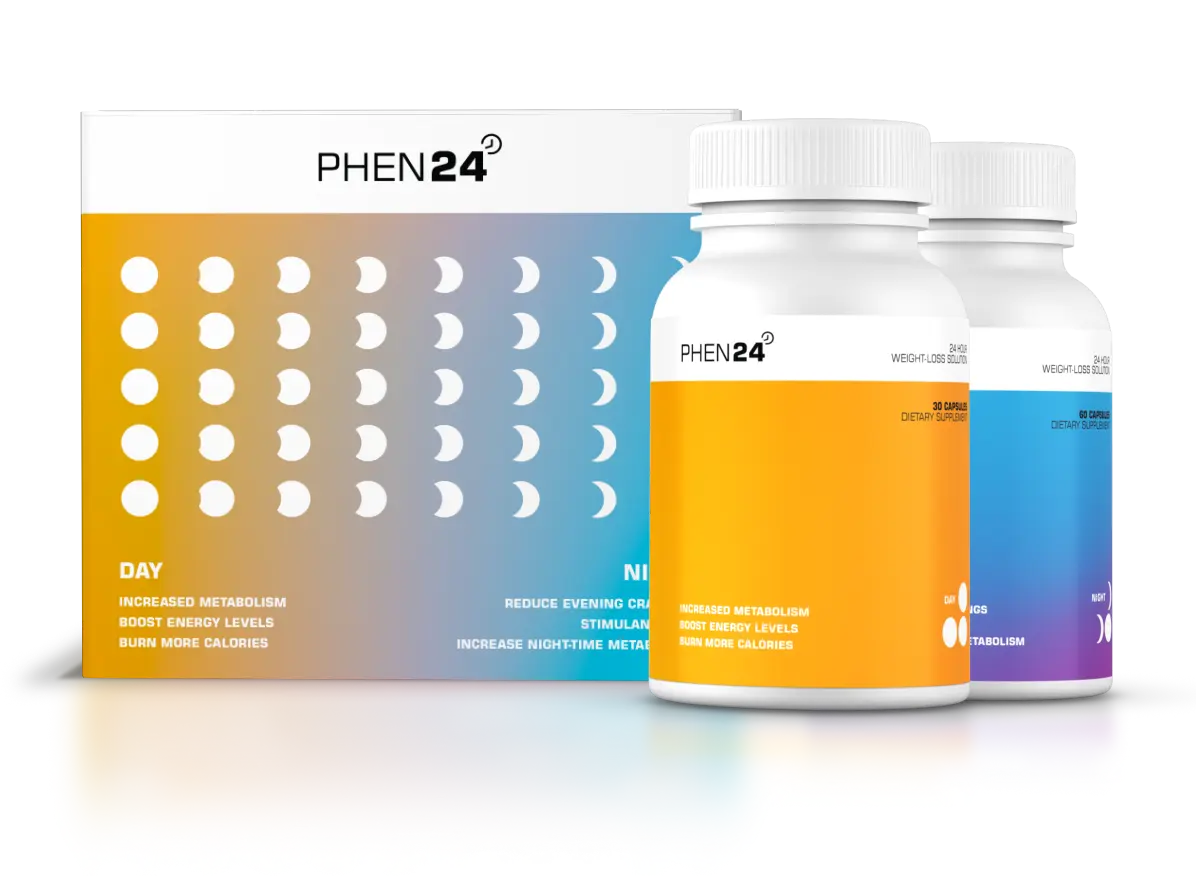
If you want a single supplement that brings together everything your body needs to support fat loss around the clock — not just during your morning session — Phen24 is the most complete option available.
What makes Phen24 genuinely different from every other fat burner on the market is the dual-formula approach.
Most fat burners are stimulant pills you take in the morning and forget about by afternoon.
Phen24 runs two separate formulas in sequence — a Day Formula and a Night Formula — that work in a tag-team fashion to support fat burning for every hour of the day.
The Day Formula contains caffeine and guarana for clean, sustained energy and thermogenesis, cayenne powder for increased calorie burn, zinc to protect testosterone levels during a deficit, and iodine for thyroid support.
The Night Formula takes over from there.
It uses glucomannan to suppress appetite and crush late-night cravings, green tea extract for stimulant-free fat oxidation during sleep, choline to support dopamine levels and keep the mental side of dieting manageable, and a blend of B vitamins and chromium to support overnight metabolic function.
The result is a supplement that supports your shredding goals 24 hours a day.
No other mainstream fat burner does this.
For anyone who has struggled with late-night hunger destroying their caloric deficit, or who has found standard fat burners leaving them flat and fatigued by afternoon, Phen24 is a meaningful step up.
It is made from natural ingredients, contains no banned substances, and is suitable for both men and women. Check out my detailed and unbiased Phen24 review by clicking here.
What to Avoid
Raspberry ketones, garcinia cambogia, and detox teas.
These are some of the most aggressively marketed weight loss supplements on the planet.
They are also some of the least effective.
The evidence for these ingredients is either extremely weak or entirely absent.
Save your money for supplements that actually work.
Common Mistakes That Stop People Getting Shredded
Most people who fail to get shredded are not failing because they lack dedication.
They are failing because they are making one or more of the same predictable mistakes.
Here is what to watch for.
Cutting calories too aggressively.
We have covered this already, but it deserves repeating because it is the number one mistake made by people who want faster results.
A deficit of more than 700 to 800 calories per day almost always results in muscle loss, hormonal disruption, and metabolic slowdown.
The scale moves fast at first.
Then it stops.
And you are left lighter but no leaner.
Stay in the 300 to 500 calorie deficit range.
Let the process take the time it needs.
Dropping the weights and switching to “toning” workouts.
The moment most people decide to cut, they stop lifting heavy.
They start doing endless circuits with light weights and high reps.
This is one of the most damaging things you can do to your physique during a fat loss phase.
Light, high-rep training does not burn dramatically more fat.
But it does remove the stimulus your body needs to preserve the muscle you have spent months or years building.
Keep the weights heavy.
Keep the compound lifts central.
Reduce volume slightly if needed for recovery — but never compromise on intensity.
Not eating enough protein.
This is the silent killer of shredding attempts.
Everything else can be almost right — the deficit, the training, the cardio — and low protein will still unravel it.
Because without adequate protein, the body loses muscle alongside fat.
And losing muscle drops your metabolic rate, softens the physique you are trying to reveal, and makes the whole process increasingly harder the longer it goes on.
Hit your protein target every single day.
It is the one thing that should never be negotiated.
Relying on cardio instead of lifting.
Cardio burns calories.
But it does not build or maintain the muscle mass that gives a shredded physique its shape.
Someone who does an hour of cardio every day without lifting weights will lose fat and muscle simultaneously — ending up smaller but still carrying a relatively high body fat percentage.
This is the dreaded “skinny fat” outcome that so many people accidentally arrive at.
The combination of heavy resistance training and moderate cardio is the only approach that produces the lean, defined, genuinely shredded look most people are chasing.
Neglecting sleep and stress.
At this point in the guide, you already understand why this matters.
But it is worth listing as a mistake because so many people intellectually acknowledge the importance of sleep and stress management while doing absolutely nothing about it.
Knowing is not the same as doing.
If you are regularly sleeping fewer than seven hours and running on chronic stress, you are actively undermining your fat loss at the hormonal level.
Deal with it.
Not eventually.
Now.
Expecting results too fast.
This is probably the deepest mistake of all.
Getting shredded — genuinely shredded, not just slightly leaner than before — is a multi-month process.
Checking the mirror every day for visible changes and getting demoralized when you do not see them is one of the most reliable ways to quit before the results arrive.
Take progress photos once a week, under the same lighting and conditions.
Track your measurements — waist, chest, hips, arms.
Compare your data month to month, not day to day.
The people who get shredded are the ones who kept going when it did not look like it was working.
Because it was working.
It always was.
It just takes longer than we wish it did.
The Bottom Line
Getting shredded is one of the most challenging physical goals you can set for yourself.
It requires discipline, patience, and a willingness to stay consistent long past the point where most people give up.
But it is absolutely achievable.
And you now have the complete roadmap to do it properly.
Start with the deficit — modest, calculated, sustainable.
Build your diet around protein — high, consistent, non-negotiable.
Keep lifting heavy — the muscle you protect during a cut is what makes the shredded physique worth having.
Use cardio as a tool — not a weapon you turn on yourself.
Sleep like it is part of your program — because it is.
Use refeeds intelligently to keep your metabolism from adapting.
And if you want an edge that works around the clock — supporting fat burning during the day, crushing cravings at night, and keeping your metabolism from slowing while you sleep — a 24-hour fat burner like Phen24 is the most complete supplement option available for anyone serious about getting shredded.
You have the knowledge.
You have the plan.
The only variable left is execution.
Start today.
Your future physique is waiting.
Disclaimer: Always consult a qualified healthcare professional before beginning any new diet, training program, or supplement regimen, particularly if you have a pre-existing medical condition. Results vary between individuals based on starting point, consistency, and lifestyle factors.