
DIM Supplement Side Effects for Men: What You Need to Know Before You Start
Before you pop that first DIM capsule, there’s something important you should know. Most men start taking DIM supplements excited about the hormonal benefits — lower estrogen, better testosterone balance, improved prostate health — but very few do their homework on what might happen along the way. And that gap in knowledge? It can turn a promising supplement experience into a confusing, frustrating one.
Here’s a stat that puts it in perspective: up to 60% of men over 40 show measurable signs of estrogen dominance, and DIM (Diindolylmethane) has emerged as one of the most popular natural solutions for addressing it.

But as with any biologically active compound that directly influences your hormone pathways, DIM doesn’t come without its share of side effects — some expected, some surprising, and a few that genuinely warrant medical attention.
I’ve spent a lot of time researching this topic, and I want to give you a completely honest, science-backed picture. Not a scare story, not a sales pitch — just the real information you need to use DIM intelligently and safely.
In this guide, we’re covering every known side effect of DIM supplements in men, why they happen, how common they are, how long they last, and exactly what you can do to minimize them. Let’s get into it.
What Is DIM and How Does It Work in Men’s Bodies?
Let’s start at the beginning, because understanding what DIM actually does in your body is the only way to make sense of why it causes the side effects it does.
A lot of men start taking it based on a recommendation or a quick product description and don’t fully grasp the biological mechanism behind it.
That’s a mistake — because DIM isn’t a simple vitamin. It’s a compound that actively interacts with your hormonal system.
What DIM Actually Is
DIM stands for Diindolylmethane. It’s a naturally occurring compound that your body produces when you digest cruciferous vegetables — broccoli, cauliflower, cabbage, kale, Brussels sprouts.
When you eat these vegetables, stomach acid breaks down a compound called indole-3-carbinol (I3C), and DIM is one of the primary byproducts of that breakdown. You technically get small amounts of DIM every time you eat a plate of broccoli.
The problem is, you’d have to eat enormous quantities of these vegetables every single day to get the doses that research suggests are therapeutically meaningful. That’s why supplement form exists.
Why Men Take DIM
The main reason men turn to DIM is hormonal balance — specifically, managing estrogen. Now, a lot of men are surprised to learn that estrogen is even relevant to them. But it is.
Men produce estrogen too, primarily through a process called aromatization, where the enzyme aromatase converts testosterone into estradiol. In small, controlled amounts, this estrogen is completely normal and necessary for bone density, cardiovascular health, and cognitive function.
The problem starts when that conversion runs too high — which happens increasingly with age, excess body fat, chronic stress, and environmental toxin exposure.
This is where DIM comes in. DIM works by supporting a healthier estrogen metabolism pathway — essentially encouraging the body to process estrogen into its more beneficial forms (2-hydroxyestrone) rather than its more problematic forms (16-alpha-hydroxyestrone).
It also acts as a mild aromatase inhibitor, gently slowing the rate at which testosterone converts to estrogen. The net effect, when it works as intended, is a better testosterone-to-estrogen ratio, reduced estrogen dominance symptoms, and improved hormonal balance across the board.
Who Is Most Likely to Benefit
DIM tends to produce the most meaningful results in men over 40 — where natural age-related hormonal shifts are well underway — men on testosterone replacement therapy (TRT) who need to manage rising estrogen from exogenous testosterone, and bodybuilders seeking to optimize their androgen-to-estrogen ratio.
Understanding this context matters enormously, because the side effects you experience will largely depend on what your baseline hormonal status looks like. A man with significantly elevated estrogen may experience very different effects from a man whose hormones are already in the normal range.
The Most Common DIM Supplement Side Effects in Men
Let’s talk about the stuff people actually report. Not the theoretical concerns from a lab study, but the real-world experiences that men describe after starting DIM. Most of these side effects are mild, temporary, and manageable. But you deserve to know what you’re potentially signing up for before you start.
Dark or Discolored Urine
This one catches people completely off guard, and honestly, it’s alarming if you don’t know it’s coming. Many men taking DIM notice that their urine turns a noticeably darker yellow or amber color — sometimes described as looking like dark apple juice.
Panicked Google searches often follow. Here’s the reassurance: this is one of the most commonly reported DIM side effects and is generally considered benign. It appears to be related to the excretion of DIM metabolites through the urinary system.
It doesn’t indicate kidney damage or liver failure. That said, if the discoloration is extremely dark, persists even with good hydration, or is accompanied by pain or other symptoms, that’s a different story and warrants a doctor’s visit.
Headaches
Headaches are another frequent complaint in the first weeks of DIM supplementation. They tend to be mild to moderate in intensity and are most common in the early days when your body is adjusting to the hormonal shifts the supplement induces.
The mechanism isn’t entirely clear, but it’s likely related to the initial flux in estrogen levels — estrogen has a well-documented relationship with headache and migraine frequency in both men and women.
Staying well-hydrated, taking DIM with food rather than on an empty stomach, and not jumping straight to the maximum dose all help reduce the likelihood and intensity of these headaches. For most men, they resolve within two to three weeks.
Digestive Issues — Nausea, Gas, and Loose Stools
Gastrointestinal complaints are probably the most universally reported category of DIM side effects. Nausea, bloating, increased gas, and looser stools are all common, particularly in the first one to two weeks of supplementation.
This makes sense when you consider that DIM is derived from cruciferous vegetables — a food group already well-known for its gas-producing properties. Taking DIM on an empty stomach significantly worsens these effects.
Always take it with a meal. Starting with a lower dose and building up gradually also makes a meaningful difference. For the vast majority of men, these GI symptoms are temporary and settle down as the body adjusts.
Fatigue
Some men report feeling noticeably more tired than usual in the early weeks of DIM supplementation. This can be puzzling and discouraging, especially if you started taking it specifically because you wanted more energy.
The likely explanation is hormonal adjustment — as DIM begins shifting your estrogen metabolism pattern, there can be a transitional period where the body hasn’t fully recalibrated yet.
Think of it as the hormonal equivalent of a system reboot. It’s temporary for most men, typically resolving within two to four weeks. If fatigue persists beyond a month, that’s worth investigating further, as it may indicate the dose is too high or that DIM isn’t the right fit for your hormonal profile.
Skin Changes
Interestingly, some men report temporary skin breakouts or changes in the early weeks of DIM use. This is counterintuitive, given that DIM is sometimes marketed for its skin benefits — and longer-term users often do report improvements.
But in the short term, as androgens and estrogens shift during the adjustment period, skin can react. This is similar to the skin changes some people experience when starting other hormone-modulating approaches. It’s usually temporary, mild, and resolves as hormone levels stabilize.
Dizziness and Lightheadedness
A smaller subset of men report mild dizziness, particularly after taking their first few doses. This tends to be dose-related — it’s more common at higher doses and in men who are more sensitive to hormonal fluctuations.
If you experience significant dizziness, the practical response is to drop your dose back to the lowest effective level and build back up more gradually. Dizziness that is severe or persistent is a red flag that warrants stopping DIM and speaking with a doctor.
DIM Side Effects Related to Hormonal Shifts in Men
This is where things get more interesting — and more important. Because beyond the straightforward physical side effects we just covered, DIM can produce a range of more subtle but significant effects that are directly tied to its hormone-modulating activity.
These are the side effects that confuse men the most, because they feel psychological or emotional rather than physical. Understanding why they happen makes them far less alarming.
DIM supplement side effects for men
18 known side effects categorised by severity, onset, duration, and management guidance.
- Mild — self-resolving
- Moderate — monitor closely
- Serious — seek medical advice
| Side effect | Category | Severity | Onset | Duration | Management tip |
|---|---|---|---|---|---|
| Dark urine | Urinary | Mild | Days 1–3 | Ongoing | Stay hydrated. Benign in most cases. See a doctor if accompanied by pain. |
| Headaches | Neurological | Mild | Days 1–7 | 2–3 weeks | Drink more water. Take DIM with food. Lower dose if persistent. |
| Nausea | Digestive | Mild | Days 1–5 | 1–2 weeks | Always take DIM with a meal containing healthy fat. |
| Gas and bloating | Digestive | Mild | Days 1–7 | 1–2 weeks | Take with food. Start at 100mg. Usually resolves as body adjusts. |
| Loose stools | Digestive | Mild | Days 1–5 | 1–2 weeks | Reduce dose. Take with food. Avoid stacking with other supplements initially. |
| Fatigue | Hormonal | Moderate | Week 1–2 | 2–4 weeks | Normal during hormonal adjustment. Persistent fatigue may signal too high a dose. |
| Low libido | Hormonal | Moderate | Week 1–3 | 4–6 weeks | Temporary estrogen flux. If it persists beyond 6 weeks, get a hormone panel. |
| Mood changes | Hormonal | Moderate | Week 1–2 | 2–4 weeks | Track mood daily. Persistent irritability may mean dose is too high. |
| Brain fog | Neurological | Moderate | Week 1–2 | 2–3 weeks | Stay hydrated. Improve sleep. Don’t stack with other hormone supplements. |
| Sleep disruption | Hormonal | Moderate | Week 1–2 | 2–3 weeks | Try morning dosing instead of evening. Usually self-resolves. |
| Skin breakouts | Skin | Mild | Week 1–3 | 2–4 weeks | Temporary hormonal flux effect. Usually clears as levels stabilize. |
| Dizziness | Neurological | Moderate | Days 1–5 | 1–2 weeks | Usually dose-related. Drop back to 100mg and titrate up slowly. |
| Breast tenderness | Hormonal | Moderate | Week 1–2 | 2–3 weeks | Temporary. If breast tissue is enlarging (not just tender), see a doctor immediately. |
| Estrogen rebound | Hormonal | Moderate | On stopping | 1–3 weeks | Taper off DIM gradually. Never stop cold turkey after extended use. |
| Estrogen over-suppression | Serious | Serious | Weeks 3–8 | Until dose corrected | Get a hormone panel immediately. Reduce or stop DIM. Do not self-manage. |
| Thyroid interference | Serious | Serious | Variable | Until stopped | Men with thyroid conditions must consult a doctor before taking DIM. |
| Liver stress | Serious | Serious | Variable | Until stopped | Watch for jaundice or abdominal pain. Men with liver disease should avoid DIM. |
| Drug interactions | Serious | Serious | From day 1 | Ongoing | Discuss with your doctor if on blood thinners, antidepressants, or hormone therapy. |
This table is for informational purposes only and does not constitute medical advice. Always consult a qualified healthcare professional before starting any supplement.
Temporary Drop in Libido
One of the more surprising early side effects for men is a temporary reduction in sex drive. You started taking a supplement that’s supposed to optimize your hormonal balance, and your libido goes down?
Frustrating, to say the least. But it makes biological sense.
When DIM first begins shifting your estrogen metabolism, there’s a transitional period of hormonal flux — estrogen levels may temporarily dip lower than optimal before the body recalibrates.
Since both testosterone and estrogen play roles in libido, even a temporary perturbation in either direction can affect sex drive. Most men who experience this report that libido returns to normal — or better — within four to six weeks.
If it persists beyond that window, a dose reduction or hormone panel is warranted.
Mood Changes and Irritability
Estrogen doesn’t just affect physical characteristics in men — it plays a significant role in mood regulation, emotional stability, and even cognitive function.
When DIM shifts your estrogen metabolism, particularly if it pushes estrogen lower than your body is accustomed to, you can experience mood shifts that feel out of character.
Irritability, mild anxiety, emotional flatness, or a general sense of not feeling like yourself are all reported, particularly in the first month. These effects are almost always temporary.
They’re a signal that your hormonal system is adjusting, not that something is permanently wrong. Tracking your mood and energy day by day during the first few weeks can be genuinely helpful for identifying patterns.
Sleep Disruption
Both estrogen and testosterone have documented effects on sleep architecture — the quality, depth, and pattern of your sleep cycles.
When DIM begins altering your hormonal balance, sleep disruption can follow temporarily. Some men report difficulty falling asleep, more frequent waking, or generally less restorative sleep in the first few weeks.
This usually self-resolves as hormonal levels stabilize. If sleep disruption is significant or persistent, it may be worth timing your DIM dose differently — some men find morning dosing preferable to evening dosing for this reason.
Brain Fog
A handful of men report periods of mild brain fog — difficulty concentrating, mental sluggishness, a sense of cognitive cloudiness — during the early weeks of DIM supplementation.
This is almost certainly hormonal in origin, linked to the same estrogen fluctuation that affects mood and libido. It’s temporary for most users.
Staying hydrated, maintaining good sleep habits, and not stacking DIM with other hormone-modulating supplements simultaneously all help minimize this effect.
Breast Tenderness
This is one that men find particularly concerning — and understandably so. Breast tenderness or sensitivity is occasionally reported in early DIM use.
Paradoxically, this can occur either because estrogen is shifting to different metabolic forms (which can temporarily affect estrogen-sensitive tissue) or, in some cases, because of an initial hormonal fluctuation before DIM’s estrogen-balancing effects fully kick in.
For most men, this resolves completely within the first few weeks. However, if breast tissue is genuinely enlarging — not just temporarily tender — that is a significant symptom that requires medical evaluation immediately, as it could indicate a hormonal issue that DIM alone isn’t addressing.
Estrogen Rebound After Stopping
This is something most people don’t talk about enough. If you’ve been taking DIM for several weeks or months and then stop abruptly, your body can experience what’s sometimes called an estrogen rebound — where estrogen levels temporarily spike higher than they were before you started.
This happens because your body’s hormonal regulation system has been adapting to DIM’s presence, and the sudden removal of that influence can cause a temporary overcorrection.
The solution is straightforward: taper off DIM gradually rather than stopping cold turkey, and consider cycling it rather than taking it continuously for extended periods.
DIM Side Effects From Incorrect Dosing
Here’s an uncomfortable truth: the majority of significant DIM side effects in men aren’t caused by DIM itself — they’re caused by taking too much of it.
Dosage is the single most controllable variable in your DIM experience, and getting it wrong is both common and costly. Let’s be really clear about this.
The Safe Dosage Range for Men
The research-supported dosage range for men is generally 100–300mg of DIM per day. Most clinical studies showing benefit have used doses in the 100–200mg range.
Higher doses — 400mg, 500mg, or more — are where side effects become significantly more pronounced and where the risk of over-suppressing estrogen becomes real.
Some supplement products come in 300mg capsules and suggest taking two per day, putting you at 600mg. That’s aggressive. For most men, starting at 100mg per day and working up to 200mg based on your response is the most sensible approach.
Over-Suppression of Estrogen
This is the most important dosing-related risk to understand. Estrogen in men is not the enemy — it becomes problematic only when levels are excessively high relative to testosterone.
When DIM is taken at too high a dose, it can push estrogen too low, and that creates a different but equally problematic set of symptoms.
Low estrogen in men is associated with reduced bone density, joint pain, mood instability, cognitive impairment, and reduced libido — some of the exact same symptoms that high estrogen causes.
This is why blood work is so important. Without knowing your actual estrogen level, you have no way of calibrating your DIM dose appropriately.
The Role of Bioavailability Enhancers
Something many men overlook is that DIM in its natural form is poorly absorbed. Most of what you swallow passes through without being utilized.
This is why quality DIM supplements include bioavailability enhancers — BioPerine (black pepper extract), phosphatidylcholine, or sunflower lecithin — that significantly increase absorption.
The practical implication is that 200mg of enhanced-bioavailability DIM is not the same as 200mg of plain DIM. If you switch from a basic product to an enhanced one without adjusting your dose, you may effectively be doubling your actual DIM intake.
Always account for the bioavailability factor when setting your dose.
One product that has gained recognition in this space is PrimeGENIX DIM 3X. It is marketed as a high-bioavailability DIM formula for men, using a patented absorption technology alongside its DIM content.
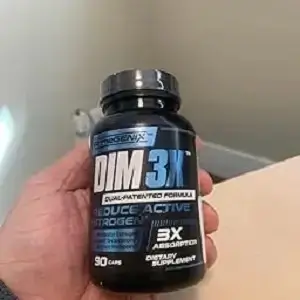
The formula is designed specifically for men’s hormonal health, with a stated emphasis on optimizing testosterone-to-estrogen ratios. It’s worth noting that as with all branded DIM supplements, the combined formulation has not been independently studied in peer-reviewed clinical trials specific to that product.
Individual results depend heavily on baseline hormonal status, age, diet, and training. If you’re considering a product like DIM 3X, treat it as one tool within a broader hormonal health strategy — not a standalone solution — and consult a healthcare provider before starting.
Click here to read Primegenix DIM3X review here
How to Titrate Correctly
Start at 100mg per day with a meal. Hold that dose for two to three weeks and pay attention to how you feel — energy, mood, libido, sleep, gym performance.
If you feel better and side effects are minimal, you can consider moving to 150–200mg. There is rarely a good reason for a man without a specific medical indication to go above 300mg per day. Moving slowly is not weakness — it’s how you identify your optimal dose without overshooting it.
Serious DIM Side Effects Men Should Never Ignore
The vast majority of DIM side effects are mild, temporary, and manageable. But there are a handful of more serious concerns that require your full attention. Knowing the difference between an expected adjustment reaction and a genuine red flag is important for your safety.
Persistent Severe Headaches
Mild headaches in the first week or two?
Common and expected.
Severe, persistent headaches that don’t improve after two to three weeks, or that are accompanied by vision changes, nausea unrelated to digestion, or neurological symptoms?
Those need medical evaluation. Don’t push through them with painkillers and hope for the best.
Signs of Excessive Estrogen Suppression
As we covered in the dosing section, too much DIM can suppress estrogen below healthy levels.
The symptoms of low estrogen in men — persistent joint pain, significant mood deterioration, bone pain, severe fatigue, complete loss of libido — are serious and can worsen over time if the dose isn’t corrected.
If you’re experiencing these symptoms while taking DIM, get a hormone panel done before continuing. This is exactly why baseline blood work matters so much.
DIM and Thyroid Function
This is an area of emerging concern that doesn’t get enough attention. Some research suggests that DIM may interact with thyroid hormone metabolism, potentially affecting the conversion of T4 to T3 in certain individuals.
Men with pre-existing thyroid conditions — hypothyroidism, Hashimoto’s thyroiditis, or those on thyroid medication — should be particularly cautious. If you have a thyroid condition, this is a non-negotiable conversation to have with your doctor before starting DIM.
Liver-Related Symptoms
DIM is metabolized through the liver and is involved in Phase I liver detoxification pathways. For most men with healthy liver function, this is completely manageable.
But men with pre-existing liver disease or compromised liver function face a higher risk of stress on the liver from DIM supplementation.
Symptoms to watch for include jaundice (yellowing of the skin or eyes), significant right-side abdominal pain, extreme fatigue, and nausea that doesn’t resolve. These symptoms require immediate medical attention.
Drug Interactions
DIM is metabolized by the cytochrome P450 enzyme system in the liver — the same system responsible for metabolizing many pharmaceutical medications. This creates a real potential for drug interactions.
Blood thinners (particularly warfarin), certain antidepressants, antifungal medications, and hormone therapies can all potentially interact with DIM. If you are taking any prescription medications, discuss DIM supplementation with your prescribing physician before starting.
Who Should Avoid DIM Supplements Entirely
DIM is not appropriate for everyone. There are specific groups of men for whom the risks outweigh the potential benefits — at least without direct medical supervision. If any of the following apply to you, please talk to your doctor before considering DIM.
Men with Thyroid Conditions
As mentioned, the DIM-thyroid interaction is a genuine concern. Men with hypothyroidism, Hashimoto’s, or those on thyroid hormone replacement should only take DIM under medical supervision with regular thyroid function monitoring.
The potential for DIM to affect T4 to T3 conversion means that thyroid-compromised individuals face a unique risk profile.
Men on TRT Without Medical Supervision
Testosterone replacement therapy already creates a complex hormonal environment that requires careful management.
Adding DIM without understanding your baseline estrogen levels and without medical oversight can produce unpredictable hormonal shifts. Men on TRT who want to use DIM should only do so with their prescribing physician’s knowledge and with regular estradiol monitoring.
Men with Hormone-Sensitive Cancer History
Anyone with a personal history of hormone-sensitive cancers — prostate cancer, testicular cancer, or others — should obtain explicit medical clearance before using any hormone-modulating supplement including DIM.
While some research suggests DIM may have protective effects, the evidence is not definitive enough to warrant unsupervised use in men with this history.
Young Men Under 25
The male hormonal system is still developing and calibrating through the mid-20s. Introducing a hormone-modulating compound during this period carries the risk of disrupting that natural developmental process.
Unless there is a specific clinical indication and medical supervision, young men under 25 are generally better served by optimizing diet, exercise, sleep, and stress management before considering hormone supplements.
Men on Blood Thinners
The potential interaction between DIM and anticoagulant medications like warfarin is serious enough to warrant DIM avoidance entirely unless a doctor has explicitly reviewed and approved the combination. Blood coagulation is not an area where experimentation is appropriate.
How to Minimize DIM Side Effects for Men
Here’s the good news: the majority of DIM’s side effects are highly manageable with the right approach.
Most men who experience significant early side effects are doing one or more of the following things wrong — too high a dose, no food, no blood work, and stacking with other supplements. Fix those variables and the experience changes dramatically.
Start Low and Build Slowly
I cannot emphasize this enough. Starting at 100mg per day with food is the right approach for virtually every man.
There is no benefit to starting high and every reason to start low. Your body needs time to adjust to DIM’s hormone-modulating effects, and a gradual introduction gives it that time.
Two to four weeks at a lower dose before considering any increase is a sensible minimum.
Always Take DIM With Food
This single change eliminates or dramatically reduces most GI side effects. DIM is fat-soluble, meaning it absorbs much better in the presence of dietary fat.
Taking it with a meal — ideally one that contains some healthy fat — improves absorption and significantly reduces the likelihood of nausea, bloating, and digestive discomfort.
Get Blood Work Before and After
This is the most important thing on this list. Before starting DIM, know your baseline numbers — total testosterone, free testosterone, estradiol (E2), LH, and FSH at minimum.
Six to eight weeks after starting DIM, repeat the panel. This gives you objective data to work with rather than relying solely on how you feel.
It also protects you from accidentally suppressing estrogen below healthy levels without realizing it.
Stay Hydrated
Adequate hydration supports the liver detoxification processes that DIM relies on and significantly reduces the likelihood and severity of DIM-related headaches.
Aim for at least three to four liters of water per day while supplementing with DIM — more if you are training hard or in a hot environment.
Choose a High Quality Bioavailable Product
Plain DIM capsules without any bioavailability enhancement are poorly absorbed. Choosing a product that includes BioPerine, phosphatidylcholine, or sunflower lecithin ensures you’re actually getting meaningful DIM into your bloodstream.
Better absorption means you need a lower dose to achieve the same effect — which means fewer side effects.
Cycle Your DIM Use
Taking DIM continuously for extended periods without breaks increases the risk of receptor adaptation and hormonal dysregulation. An eight weeks on, two weeks off cycle is a sensible protocol for most men.
This allows your endocrine system to recalibrate periodically, reduces the risk of estrogen rebound on cessation, and prevents the hormonal system from becoming dependent on external modulation.
Support Your Liver
Given that DIM is processed through the liver, supporting liver health while supplementing makes good sense.
Milk thistle, N-acetylcysteine (NAC), and adequate B vitamins all support the liver detoxification pathways that DIM relies on. This is particularly relevant for men who are also consuming alcohol regularly or taking other supplements that place a demand on the liver.
DIM Side Effects vs. DIM Benefits — Is It Worth It for Men?
Let’s have the honest conversation that most supplement articles avoid. Because the question every man should be asking isn’t just “what are the side effects?” — it’s “is this worth it for me specifically?”
When DIM Is Genuinely Worth It
If you have confirmed elevated estrogen — backed by blood work, not just symptoms — and you’re a man over 35 experiencing the classic signs of estrogen dominance (stubborn belly fat, reduced muscle mass, low libido, fatigue, mood changes, increased breast tissue), DIM has a meaningful evidence base and a reasonable risk-to-benefit profile.
Used correctly, at the right dose, with baseline blood work and proper monitoring, most men in this category tolerate DIM well and report meaningful improvements in how they feel within six to twelve weeks.
When DIM May Not Be Worth It
If your estrogen levels are already in the normal range and you’re taking DIM based on a general sense that “less estrogen is better,” you are likely to experience side effects without corresponding benefit.
DIM is not a supplement for everyone. It’s a targeted intervention for a specific hormonal imbalance. Using it indiscriminately — the way many men do — produces exactly the kind of frustrating “DIM made me feel worse” experiences that flood forums and review sections. Know your numbers before you intervene with your hormones.
The Adjustment Window Reality
The majority of negative DIM experiences happen in the first two to four weeks. This is the adjustment window — when your body is recalibrating its hormonal patterns in response to DIM’s influence. Most side effects during this window are transitional, not permanent.
The men who push through this period with appropriate dosing and proper protocols generally report much better outcomes than those who stop at the first sign of discomfort.
That said, context matters — distinguish between mild adjustment discomfort and genuine red-flag symptoms, and respond accordingly.
The Bottom Line on DIM
DIM is a biologically active compound that deserves to be treated with the same respect you would give any other hormone-modulating intervention.
That doesn’t mean it’s dangerous — for most men in the right context, it’s not. It means it requires a thoughtful, informed approach: know your baseline, start low, take it with food, stay hydrated, monitor your response, and get follow-up blood work. Do that, and the odds of a positive experience are strongly in your favor.
Conclusion
DIM is a genuinely impressive natural compound with real, science-backed benefits for men’s hormonal health — but it’s not something to take casually, and it’s definitely not something to megadose without understanding what you’re doing. The side effects are real. Most are mild and temporary. A few require your full attention.
The key takeaway from everything we’ve covered? Start low, go slow, and get your baseline blood work done. Know your estrogen levels before you start, track how you feel in the first four to six weeks, and adjust your dose based on your response — not based on what worked for someone else on a forum. DIM is a tool, and like any powerful tool, it works brilliantly in the right hands with the right approach.
If you’re experiencing side effects that concern you, don’t just push through them — talk to your doctor. There’s no supplement benefit worth compromising your health over. Used correctly, DIM can be a valuable long-term ally for hormonal balance, prostate health, and overall vitality. Used carelessly, it can create more problems than it solves.
Do the work. Know your numbers. Take it smart.