How Low Testosterone Affects Beard Growth and Body Hair: The Real Deal in 2026
Written by: Tanveer Quraishi · Last updated: October 26, 2026
Checked against Endocrine Society and American Urological Association guidance and published dermatology research. Some links on this page are affiliate links; we may earn a commission at no cost to you.
⚡ Quick Answer
Yes, low testosterone can thin a beard, but it’s rarely the reason a beard is patchy. Beard thickness is mostly set by genetics and how strongly your follicles respond to DHT, a hormone made from testosterone, so low T is worth checking mainly when facial or body hair thins after being fuller and other symptoms show up too.
Key Takeaways
- ✓Testosterone switches beard growth on at puberty, but DHT and follicle sensitivity decide how thick it gets.
- ✓A beard that has always been patchy is almost always genetic, not hormonal.
- ✓Red flags for low T are losing hair you used to have, especially underarm or pubic hair, plus low libido or fatigue.
- ✓Beards keep filling in until about age 30, so patience is a real strategy.
- ✓Topical minoxidil has the best evidence for a thin beard, while TRT only helps men with a confirmed deficiency.
You’ve given it months, maybe years. The beard still comes in thin on the cheeks, with gaps that no amount of patience seems to fill.
It’s natural to wonder whether low testosterone is to blame. Testosterone is the “male hormone,” after all, and beards are about as male as it gets.
The real answer is more interesting, and for most guys more reassuring. This guide explains what actually controls your beard, how to tell a genetic pattern from a hormone problem, and what genuinely works.
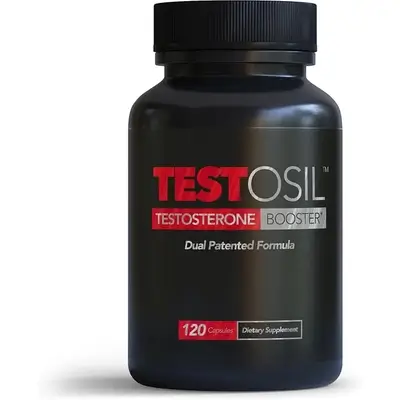
Dealing with more than a thin beard? If you also have low energy, a fading sex drive or stalled gym progress, Testosil is the natural testosterone booster we recommend.
It’s built around KSM-66 ashwagandha and backed by a lifetime money-back guarantee.
Jump to our Testosil pick ↓How Testosterone and DHT Actually Build a Beard
Beard growth is a two-step hormone process. Your testes make testosterone, and an enzyme called 5-alpha reductase converts some of it into dihydrotestosterone, or DHT.
DHT is the hormone your beard follicles really listen to. It binds to androgen receptors in each follicle and tells it to swap fine, light “peach fuzz” for thick, dark terminal hair.
The clearest proof comes from men born with 5-alpha reductase deficiency. They make normal testosterone but little DHT, and they don’t develop much facial or body hair at puberty.
Here’s the key point most articles skip. Once your testosterone is in the normal range, adding more doesn’t make the beard thicker, because the limit is how sensitive your follicles are.
🧬 Think of it like a radio. Testosterone and DHT are the signal, and the androgen receptors in your follicles are the receiver.
A strong signal won’t help much if the receiver in your cheek follicles is set to low volume, and that setting is largely inherited.
What decides how full your beard gets
| Factor | What it does | Impact on fullness |
|---|---|---|
| Genetics and receptor sensitivity | Sets how strongly each follicle responds to DHT and where hair grows | Biggest |
| Age | Beards keep thickening and coarsening from about 18 to 30 | Large (under 30) |
| Ethnic background | Typical beard density differs between populations | Moderate |
| Testosterone level | Matters when clearly low; little extra effect once normal | Only if deficient |
| Alopecia areata | Autoimmune condition that causes smooth, round bald patches | Patchy, sudden |
| Sleep, stress, smoking, diet | Can slow growth or worsen hair quality | Small but fixable |
Sources: Cleveland Clinic, MedlinePlus Genetics, Endocrine Society.
Sources: Cleveland Clinic, MedlinePlus Genetics, Endocrine Society.

Can Low Testosterone Cause a Patchy Beard?
It can, but it usually doesn’t. Cleveland Clinic dermatologists point out that men with normal testosterone are unlikely to have a thin beard because of hormones, while clinically low testosterone can reduce facial hair.
The difference is in the story. Low T tends to take away hair you already had, slowly, while genetics decides the pattern you had in the first place.
There’s one big exception. If testosterone never rose properly during puberty, as with some genetic or pituitary conditions, the beard may barely develop at all, and that usually comes with other signs of delayed development.
Is your patchy beard genetic or hormonal? A quick self-check
Run through both columns honestly. If almost everything you recognize sits on the left, hormones are very unlikely to be the issue.
| 🧬 Points to genetics | 🩸 Worth checking hormones |
|---|---|
| Your beard has always been patchy in the same spots | Your beard or body hair has thinned after being fuller |
| Your father, brothers or uncles have a similar beard | You shave noticeably less often than you used to |
| You’re under 30 and it’s still slowly filling in | Underarm or pubic hair is getting sparse |
| Your chest, leg and pubic hair are normal | Low sex drive, weaker erections or constant fatigue |
| You otherwise feel healthy and energetic | Losing muscle, gaining belly fat or growing breast tissue |
This is a guide, not a diagnosis. Only a blood test can confirm low testosterone.
If two or more items on the right sound familiar, it’s worth a proper look. Our guide to low testosterone symptoms in men covers the full list.
Low Testosterone and Body Hair
Body hair is actually a better clue than your beard. The Endocrine Society lists loss of underarm and pubic hair as one of the few specific signs of testosterone deficiency, alongside very small testes and delayed sexual development.
That’s because these areas depend on androgens to stay thick. Losing them is unusual enough that it points more strongly toward a hormone problem than a thin beard does.
| Hair area | What low T can do | How telling is it? |
|---|---|---|
| Underarm and pubic hair | Gradual thinning or loss | Strong clue |
| Beard | Slower growth, less need to shave | Clue if it’s a change |
| Chest, arms and legs | May thin slowly over years | Weak on its own |
| Scalp | Low T does not cause male pattern baldness | Not a sign |
Based on the Endocrine Society’s list of specific and suggestive signs of testosterone deficiency.
The baldness myth
Plenty of men assume a receding hairline means low testosterone. It’s actually the opposite story, because pattern baldness happens when scalp follicles are genetically oversensitive to DHT.
That’s why so many bald men have thick beards. The same hormone that grows hair on the face shrinks it on the top of the head in men with the right genes.
Other Reasons Your Beard Won’t Fill In
If hormones aren’t the issue, one of these usually is. Most are either temporary or partly within your control.
- ⏳ You’re still young: beards keep thickening into the late 20s, so a sparse beard at 21 says little about how it’ll look at 30.
- 👨👦 It runs in the family: look at the men on both sides of your family, since beard patterns are inherited from your mother’s side too.
- ⭕ Alopecia areata: smooth, coin-shaped bald patches that appear fairly suddenly suggest this autoimmune condition, so see a dermatologist rather than chasing hormones.
- 😴 Poor sleep: in a small study of 10 young men, 48 hours without sleep cut beard growth by about 19%. Our article on low testosterone and sleep explains the hormone side too.
- 😰 Severe stress or illness: a major shock can push hair into a shedding phase called telogen effluvium. It usually recovers within months once the trigger passes.
- 🥩 Diet and smoking: crash diets, low protein and nutrient deficiencies can affect all your hair, and smoking doesn’t help either.
🪒 Does shaving make it grow back thicker? No, because shaving cuts hair at the surface and doesn’t touch the follicle.
Regrowth only feels coarser because the blunt tip is wider than a natural, tapered hair.
When Should You Get Your Testosterone Checked?
A patchy beard on its own isn’t a reason to test. Book a test if your hair has changed and you also have symptoms like low libido, erectile problems, fatigue or muscle loss.
Test properly when you do. US urologists diagnose low T only after two early-morning blood tests under 300 ng/dL plus symptoms, because a single result can mislead.
🧪 Not sure if testing is worth it?
Use our free estimator to get a rough idea of your testosterone range in under a minute. Then follow our step-by-step testing guide.
🧪 Not sure if testing is worth it?
Our complete guide to testosterone testing explains which test to ask for, what it costs and how to read your number. If your result comes back low, what causes low testosterone in men covers the usual culprits.
What Actually Helps a Thin or Patchy Beard
The right fix depends on the cause. Here’s how the main options compare.
| Option | Best for | Evidence | Things to know |
|---|---|---|---|
| Time | Men under 30 | Strong | Free, and often the whole answer |
| Sleep, weight, no smoking | Everyone | Moderate | Also supports healthy testosterone levels |
| Topical minoxidil | Genetic thin or patchy beard | One small trial | Off-label; can irritate skin; gains may fade if stopped |
| TRT | Confirmed testosterone deficiency | Good, if deficient | Prescription only; affects fertility; not used for beards alone |
| Beard transplant | Permanent gaps in adults | Established | Expensive surgery; choose an experienced surgeon |
| “Beard growth” vitamins | Men with a real deficiency | Weak | Won’t change a genetic pattern |
No product is FDA-approved specifically for beard growth. Talk to a dermatologist before trying minoxidil.
What the minoxidil research shows
The best evidence is a 16-week randomized trial of 48 men using 3% minoxidil lotion on the chin and jaw twice a day. Hair count rose by 5.0 in the minoxidil group versus 0.35 with placebo, though hair thickness didn’t change significantly.
That’s a real but modest effect from one small study. Cleveland Clinic dermatologists also note that regrowth products aren’t FDA-approved for beards and can cause skin irritation.
Will finasteride thin your beard?
It’s a fair worry, since finasteride lowers DHT. In a 2024 review of 453 men under 35 taking finasteride or dutasteride for at least a year, about 97% saw no change in beard thickness.
Will Testosterone Therapy Give You a Fuller Beard?
Only if you’re genuinely deficient. In men with confirmed low T, restoring normal levels can bring back thinning facial and body hair over many months.
For men with normal testosterone, TRT won’t rewrite a genetic pattern. It doesn’t create new follicles, and doctors don’t prescribe it to grow a beard.
It also comes with trade-offs. TRT can suppress sperm production, raise red blood cell counts and trigger acne, and any hair gains usually fade if you stop.
👶 Planning to have kids? Testosterone therapy can shut down sperm production.
Read our guide to low testosterone and male fertility before considering treatment.
For the full picture, read our honest breakdown of testosterone replacement therapy. If your levels are borderline, 12 proven ways to fix low testosterone is the better place to start.
Supporting Healthy Testosterone Naturally
If your levels are low-normal and you have symptoms, lifestyle is the foundation. Lift weights, sleep seven-plus hours, lose excess fat and keep alcohol moderate.
Our guides on whether weightlifting increases testosterone, the anti-inflammatory testosterone diet and 10 ways to boost testosterone naturally show you how. If estrogen is part of the picture, see how to stop testosterone converting to estrogen.
A good supplement can add support on top of those habits. Just be clear on what it can and can’t do.
Testosil is a natural, non-hormonal formula built around KSM-66 ashwagandha. It’s made for men with normal-to-borderline testosterone who want better energy, drive and training results.
In an 8-week trial in young men doing resistance training, KSM-66 at 600 mg a day raised testosterone by about 96 ng/dL versus 18 ng/dL on placebo. Strength and muscle gains were bigger too.
🧪 Key ingredients
- KSM-66 ashwagandha
- Fenugreek extract
- D-aspartic acid
- ZMA (zinc, magnesium, vitamin B6)
- Panax ginseng
- L-arginine and garlic extract
✅ Why we prefer it
- Uses branded, standardized KSM-66 rather than generic ashwagandha
- Includes zinc and magnesium, which matter if you’re low in them
- Made in the USA
- Lifetime money-back guarantee from the manufacturer
⛔ Be realistic
- It won’t change a genetic beard pattern
- Not a treatment for diagnosed hypogonadism
- Skip it if you’re under 18 or already on TRT
- Check with your doctor if you take regular medication
🎯 Who it’s for
- Men with low energy or a fading sex drive
- Lifters whose gym progress has stalled
- Men whose blood work isn’t clearly low
- Take it for 8 to 12 weeks, then retest to see if it’s working
Comparing options? Our roundup of the best 5 supplements for low testosterone symptoms puts Testosil side by side with the alternatives.
Beard Growth and Testosterone FAQs
Does a patchy beard mean I have low testosterone?
Usually not. Most patchy beards are genetic, and low T is more likely when hair thins after being fuller and other symptoms appear.
Will a testosterone booster make my beard thicker?
Not if your testosterone is already normal, because beard thickness is mainly set by genetics and DHT sensitivity. A booster may help energy and drive in men with borderline levels, but it won’t fill in genetic gaps.
At what age does a beard stop filling in?
Most beards keep getting thicker and coarser until around age 30. If you’re in your early 20s, give it time before trying treatments.
Does shaving make a beard grow faster or thicker?
No. Shaving doesn’t affect the follicle, and regrowth only feels thicker because the cut ends are blunt.
Can high testosterone make you lose head hair but grow a beard?
Not high testosterone exactly, but DHT sensitivity. Men whose scalp follicles are genetically sensitive to DHT can lose head hair while their beard thrives on the same hormone.
The Bottom Line
Your beard is mostly written in your genes, and low testosterone is an uncommon reason for a patchy one. Pay attention when hair you used to have starts disappearing, especially alongside low libido, fatigue or muscle loss.
If that sounds like you, get a proper morning blood test before trying anything else. If your levels are fine, give your beard time, look after your sleep and health, and consider minoxidil with a dermatologist’s input.
📚 References
- Cleveland Clinic Health Essentials. 5 Reasons Why You Can’t Grow a Beard. November 2024.
- MedlinePlus Genetics. 5-alpha reductase deficiency. US National Library of Medicine.
- Bhasin S, Brito JP, Cunningham GR, et al. Testosterone Therapy in Men With Hypogonadism: An Endocrine Society Clinical Practice Guideline. J Clin Endocrinol Metab. 2018;103(5):1715–1744.
- Symptoms and signs of testosterone deficiency (table reprinted from the Endocrine Society guideline). In: An Individualized Approach to Managing Testosterone Therapy in the Primary Care Setting. Int J Gen Med. 2022.
- Mulhall JP, Trost LW, Brannigan RE, et al. Evaluation and Management of Testosterone Deficiency: AUA Guideline. American Urological Association, 2018 (validity confirmed 2024).
- Ingprasert S, et al. Efficacy and safety of minoxidil 3% lotion for beard enhancement: A randomized, double-masked, placebo-controlled study. J Dermatol. 2016;43(8):968–969.
- Facial hair enhancement with minoxidil: an off-label use. PubMed review.
- Moreno-Arrones O, Saceda-Corralo D, Ortega-Quijano D, et al. Impact of Finasteride and Dutasteride in Beard Thickness in Men With Androgenetic Alopecia: A 453-patient Retrospective Trial. Actas Dermosifiliogr. 2024;115(10):1015–1016.
- Gottesmann C, Hamon JF. Sleep deprivation decreases the beard-hair growth in man. Acta Neurobiol Exp. 1987;47(4):183–187.
- Alopecia Areata of the Beard: A Review of the Literature. PubMed.
- Wankhede S, Langade D, Joshi K, et al. Examining the effect of Withania somnifera supplementation on muscle strength and recovery: a randomized controlled trial. J Int Soc Sports Nutr. 2015;12:43.
- US Department of Health and Human Services. HHS Announces Requested Updates to Testosterone Therapy Product Labels. June 18, 2026.
This article is for educational purposes and isn’t a substitute for advice from your own doctor or dermatologist.