Low Testosterone and Male Fertility: What You Need to Know in 2026
Written by: Tanveer Quraishi · Last updated: November 20, 2026
This article is medically reviewed by Dr. Joseph Nightingale, MBBS, MSc — Updated November 2026. Checked against Endocrine Society, American Urological Association and CDC guidance and published reproductive research.
⚡ Quick Answer
Low testosterone can lower sperm production, but many men with low T can still father children. The bigger fertility threat is testosterone therapy itself, which tells your brain to stop the hormone signals that make sperm, so men who want kids should get a semen analysis and specialist advice before starting TRT.

Key Takeaways
- ✓Sperm production depends on testosterone inside the testes, which runs about 100 times higher than in your blood.
- ✓TRT and anabolic steroids suppress sperm, sometimes down to zero, and the Endocrine Society advises against TRT for men planning a family soon.
- ✓Recovery after stopping testosterone usually happens, but it can take 6 to 24 months.
- ✓Fertility-friendly options such as clomiphene, hCG and aromatase inhibitors can raise testosterone without shutting sperm down.
- ✓See a specialist after 12 months of trying, or 6 months if your partner is 35 or older.
You and your partner have been trying for months. Meanwhile you’ve been feeling flat, your sex drive has dipped, and a friend mentioned that low testosterone might be the problem.
It’s a fair question, but the relationship between testosterone and fertility is more surprising than most men expect. In some cases, the most common fix for low T is exactly what would stop you becoming a dad.
This guide explains how testosterone really affects sperm, what testing to ask for, and which treatments protect your fertility. If you lift or have ever run a cycle, there’s a section written specifically for you.
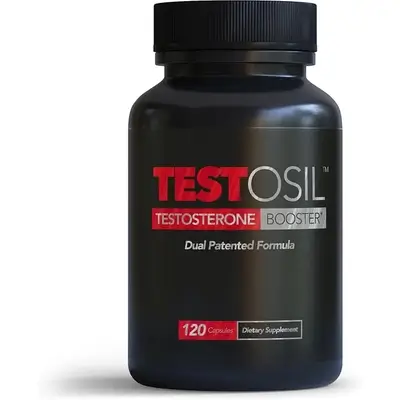
Want natural support without hormones? Testosil doesn’t contain testosterone, so it avoids the direct sperm-suppressing mechanism of TRT. Its effect on fertility as a finished formula has not been established.
It’s built around KSM-66 ashwagandha, an extract studied in men with low sperm counts, and comes with a lifetime money-back guarantee.
Jump to our Testosil pick ↓How Testosterone Actually Controls Sperm Production
Sperm production is run by a chain of command that starts in your brain. The hypothalamus releases GnRH, which tells the pituitary gland to send two hormones, LH and FSH, down to the testes.
LH tells the testes to make testosterone, and FSH tells them to make sperm. Both signals are needed, and the testosterone that matters most for sperm stays inside the testes rather than circulating in your blood.
| Hormone | Made in | Its job in fertility |
|---|---|---|
| ① GnRH | Hypothalamus (brain) | Starts the chain by signaling the pituitary |
| ② LH | Pituitary gland | Tells the testes to produce testosterone |
| ③ FSH | Pituitary gland | Drives the cells that nurture developing sperm |
| ④ Testicular testosterone | Testes (stays local) | Fuels sperm production at very high local levels |
| ⑤ Blood testosterone | Released from the testes | Drives libido, muscle and energy, and tells the brain when to slow down |
Sources: Endocrine Society guideline; Annals of the New York Academy of Sciences.
🔬 Why your blood test can mislead: testosterone inside healthy testes is about 100 times higher than the level in your blood.
That’s why a normal blood result doesn’t guarantee good sperm, and why raising blood testosterone from the outside can actually starve the testes.
Does Low Testosterone Cause Infertility?
Sometimes, but not always. Many men with low testosterone still produce enough sperm to conceive, while some men with normal testosterone have very low sperm counts.
Male factors play a part in about half of couples who struggle to conceive, and are the sole cause in roughly 1 in 5. Infertility is usually defined as no pregnancy after a year of regular, unprotected sex.
Where your low T comes from matters a lot. Doctors split it into two types, and the fertility outlook is very different for each.
| Type of low T | Where the problem is | Typical blood pattern | Fertility outlook |
|---|---|---|---|
| Secondary (brain or pituitary) | The signal from the brain is weak | Low T with low or normal LH and FSH | Often treatable |
| Primary (testes) | The testes can’t respond fully | Low T with high LH and FSH | Harder, but options exist |
The Endocrine Society notes that hormone therapy can restore sperm production in secondary, but not primary, hypogonadism.
Low T can also affect fertility indirectly. A fading sex drive and weaker erections mean less sex, which lowers the odds of conception even if your sperm are fine, and our guide to testosterone and male libido covers that side.
Why Testosterone Therapy Is the Bigger Fertility Risk
Here’s the part that catches many men out. When you take testosterone from outside, your brain senses plenty of it in the blood and cuts back the LH and FSH signals.
Without those signals, testosterone inside the testes drops and sperm production slows, sometimes to zero. The Endocrine Society is direct about it: testosterone therapy suppresses sperm production, and it recommends against TRT in men planning fertility in the near term.
⚠️ Already on TRT and trying for a baby? Don’t stop or change your treatment on your own.
Talk to your prescriber and ask for a referral to a urologist or male fertility specialist, who can plan a switch to fertility-friendly treatment.
How long does sperm take to come back?
The best data comes from men who used testosterone as an experimental male contraceptive. In an analysis of 1,549 healthy men, an estimated two-thirds reached 20 million sperm/mL within 6 months of stopping, and nearly all reached that threshold by 24 months.
While on testosterone
⬇ Sperm falls
Counts drop over the first months and can reach zero.
6 months after stopping
~67%
About 2 in 3 reached 20 million sperm/mL.
24 months after stopping
~100%
Nearly all were estimated to reach 20 million sperm/mL.
Keep in mind that these were healthy volunteers using testosterone for a set period. Older men, long-term TRT users and men who used high-dose steroids may recover more slowly, and some need treatment to restart production.
❄️ Thinking about TRT but want kids one day? Ask about a semen analysis and sperm freezing before you start.
It’s a relatively simple insurance policy, and the American Urological Association recommends a reproductive evaluation before treatment for men interested in fertility.
For a fuller look at the pros and cons, read our breakdown of testosterone replacement therapy.
Steroids, SARMs and Your Sperm: A Note for Lifters
Anabolic steroids work on the same feedback loop as TRT, usually at much higher doses. The CDC lists anabolic steroid use as a factor that can decrease sperm production.
The damage is often reversible, but not always on its own. In a small Yale review of infertile men with past steroid use, absent sperm recovered in 7 of 9 cases, yet most of those men needed hormone treatment to get there.
SARMs and prohormones are often marketed as “safer,” but they can also suppress your natural hormone signals. If you’ve cycled and are now trying for a baby, tell your doctor everything you’ve used, because it changes the treatment plan.
🚫 Skip the DIY “PCT” from forums. Clomiphene, hCG and aromatase inhibitors bought online without supervision can backfire.
Doses and combinations need blood work and follow-up, so get a semen analysis and see a specialist instead.
Training hard without drugs is a different story. Our article on low testosterone in athletes covers how overtraining and under-eating can lower T, and how to fix it.
Fertility-Friendly Alternatives to TRT
If you have low T and want children, there are treatments that raise testosterone by boosting your own hormone signals instead of replacing them. The AUA recognizes these options for men with low T who want to maintain fertility.
| Option | How it works | Effect on sperm | Things to know |
|---|---|---|---|
| Clomiphene (a SERM) | Blocks estrogen feedback in the brain, so LH and FSH rise | Preserves or supports | Pill; used off-label in men in the US; needs monitoring |
| hCG | Mimics LH, so the testes make their own testosterone | Preserves or restores | Injections; sometimes combined with FSH |
| FSH (injections) | Directly stimulates sperm production | May restore in selected men | Used with hCG in some cases of secondary hypogonadism |
| Aromatase inhibitors | Reduce conversion of testosterone to estrogen | May support | Off-label; mainly for men with a high estrogen ratio |
| Testosterone therapy | Replaces testosterone from outside | Suppresses | Not recommended if you want children soon |
All of these are prescription treatments. Which one fits depends on your hormone pattern, so they should be chosen and monitored by a specialist.
If estrogen is part of your picture, our guide to ways to stop testosterone converting into estrogen explains the lifestyle side of that balance.
Getting Tested: What a Fertility Workup Looks Like
Because testosterone and sperm don’t always line up, you need both hormone tests and a semen analysis. A good workup usually includes these steps.
- 🩸 Two early-morning testosterone tests: levels peak in the morning and vary day to day, so one result isn’t enough.
- 🧠 LH and FSH: these show whether the problem starts in the brain or the testes, which decides the treatment.
- 🔬 Semen analysis: the only way to know your sperm count, movement and shape.
- 🩺 Physical exam and extra tests if needed: estradiol, prolactin or a scrotal ultrasound may be added depending on what the first results show.
🧪 Want a rough idea first?
Our free estimator gives you a likely testosterone range in under a minute. Then follow our step-by-step testing guide.
Our complete guide to testosterone testing explains timing, costs and how to read your number. For the semen analysis, these are the lower limits of normal that most labs use.
| Semen analysis measure | Lower limit of normal | What it tells you |
|---|---|---|
| Semen volume | 1.4 mL | Low volume can point to hormone or blockage issues |
| Sperm concentration | 16 million/mL | How many sperm are in each milliliter |
| Total sperm count | 39 million | Sperm in the whole sample |
| Total motility | 42% | Share of sperm that move at all |
| Progressive motility | 30% | Share that swim forward effectively |
| Normal shape (morphology) | 4% | Share of sperm with a normal shape |
WHO 2021 lower reference limits. Results below these don’t mean you can’t conceive, but they’re worth discussing with a specialist.
Lifestyle Factors That Affect Both Testosterone and Sperm
Some of the most effective changes cost nothing. Sperm take roughly two to three months to develop, so give any change at least that long before retesting.
- ⚖️ Lose excess body fat: obesity is linked to lower testosterone and poorer sperm. Our article on weight gain and low testosterone explains the cycle.
- 🔥 Keep things cool: the CDC lists frequent heat exposure to the testes as a risk factor, so limit hot tubs, saunas and laptops on your lap.
- 🍺 Cut back on alcohol and quit smoking: the CDC notes both can decrease sperm production.
- 💊 Review your medications: opioids, some other prescriptions and recreational drugs can lower testosterone, so ask your doctor before stopping anything.
- 😴 Sleep seven-plus hours: testosterone production is closely tied to sleep. Here’s more on low testosterone and sleep.
- 🏋️ Train smart and eat well: regular strength training and a balanced diet support healthy hormones. See our anti-inflammatory testosterone diet.
For a complete plan, read 12 proven ways to fix low testosterone. If you’re not sure what’s driving your low T, start with what causes low testosterone in men.
When to See a Fertility Specialist
The CDC’s rule of thumb is to seek help after a year of trying, or after six months if your partner is 35 or older. Don’t wait that long if any of these apply to you.
✅ Book an appointment sooner if:
- ✓You’ve used TRT, anabolic steroids or SARMs, now or in the past
- ✓You’ve had symptoms of low testosterone or a low result on a blood test
- ✓You’ve had testicular injury, surgery, undescended testes or chemotherapy
- ✓You notice testicular pain, swelling or a lump
- ✓You’re 40 or older, which the CDC links to more difficulty conceiving
The right specialist is a urologist with a focus on male fertility, sometimes called an andrologist. Your partner’s doctor can also order a semen analysis as a first step.
Can a Testosterone Booster Help Fertility?
Let’s be straight: no supplement treats medically diagnosed infertility, and it shouldn’t replace a semen analysis or specialist care. What a good natural booster can do is support healthy hormones without the sperm-suppressing effect of TRT.
There’s some research behind the ingredient we rate most highly. In a small 12-week pilot study of 46 men with low sperm counts, KSM-66 ashwagandha at 675 mg a day raised sperm concentration by 167% and testosterone by 17%, though the study didn’t measure pregnancy rates.
That’s promising, but it’s one small study. Testosil’s daily dose of KSM-66 may differ from the study’s, so treat it as support alongside medical advice rather than a fertility treatment.
Testosil is a natural, non-hormonal formula built around KSM-66 ashwagandha. Unlike TRT, it does not supply exogenous testosterone.
Its anchor ingredient has been studied for both testosterone and sperm. In men doing resistance training, KSM-66 raised testosterone by about 96 ng/dL versus 18 ng/dL on placebo over 8 weeks.
🧪 Key ingredients
- KSM-66 ashwagandha
- Fenugreek extract
- D-aspartic acid
- ZMA (zinc, magnesium, vitamin B6)
- Panax ginseng
- L-arginine and garlic extract
✅ Why we prefer it
- Hormone-free, with no exogenous testosterone
- Uses branded, standardized KSM-66 rather than generic ashwagandha
- Includes zinc, which matters for men who are low in it
- Lifetime money-back guarantee from the manufacturer
⛔ Be realistic
- Not a treatment for diagnosed infertility or hypogonadism
- Won’t reverse sperm suppression from TRT or steroids
- Skip it if you’re under 18 or already on TRT
- Check with your doctor if you’re on fertility treatment or other medication
🎯 Who it’s for
- Men not on hormones who want natural testosterone support
- Men with low energy or a fading sex drive
- Couples who are also getting a proper fertility workup
- Take it for at least 3 months, since sperm take that long to develop
Low Testosterone and Fertility FAQs
Can I get my partner pregnant if I have low testosterone?
Often, yes. Many men with low T still produce enough sperm, and only a semen analysis can tell you where you stand.
Does TRT make you permanently infertile?
Usually not. In studies of hormonal male contraception, about two-thirds reached 20 million sperm/mL within 6 months of stopping, and nearly all were estimated to do so within 2 years. Recovery after prolonged TRT or steroid use can be less predictable.
Do natural testosterone boosters lower sperm count?
Hormone-free boosters like Testosil don’t contain testosterone, so they don’t trigger the shutdown that TRT and steroids cause. Be wary of any “booster” that contains prohormones or SARMs, which can suppress your hormones.
How long after stopping steroids will my sperm come back?
It varies from months to a couple of years, depending on the drugs, doses and how long you used them. Some men need hormone treatment such as hCG to recover, so see a specialist rather than waiting.
Should I freeze sperm before starting TRT?
If you might want children in the future, it’s worth discussing with your doctor. A semen analysis and sperm freezing before treatment protect your options if recovery is slow.
The Bottom Line
Low testosterone can affect fertility, but it’s rarely the end of the road, and many men with low T become fathers. The most important thing is not to reach for testosterone therapy or steroids while you’re trying for a baby.
Get two morning hormone tests and a semen analysis, then see a male fertility specialist about options that protect your sperm. Meanwhile, fix sleep, weight and alcohol, and consider a hormone-free booster like Testosil for extra support.
📚 References
- Bhasin S, Brito JP, Cunningham GR, et al. Testosterone Therapy in Men With Hypogonadism: An Endocrine Society Clinical Practice Guideline. J Clin Endocrinol Metab. 2018;103(5):1715–1744.
- Mulhall JP, Trost LW, Brannigan RE, et al. Evaluation and Management of Testosterone Deficiency: AUA Guideline. American Urological Association, 2018 (validity confirmed 2024).
- Urology Times. Key updates from the AUA/ASRM male infertility guideline amendment. 2024.
- Centers for Disease Control and Prevention. Infertility: Frequently Asked Questions.
- Leslie SW, Soon-Sutton TL, Khan MAB. Male Infertility. StatPearls. NCBI Bookshelf.
- The androgen microenvironment of the human testis and hormonal control of spermatogenesis. Ann N Y Acad Sci. 2005.
- Liu PY, Swerdloff RS, Christenson PD, et al. Rate, extent, and modifiers of spermatogenic recovery after hormonal male contraception: an integrated analysis. Lancet. 2006;367(9520):1412–1420.
- HealthDay. Infertility Due to Steroid Abuse Can Be Reversed (Yale chart review presented at ASRM). 2005.
- World Health Organization reference values, summarized by GPnotebook. Semen analysis: normal results.
- Pfizer Health Answers. Low Testosterone and Infertility in Males. 2024.
- Ambiye VR, Langade D, Dongre S, et al. Clinical Evaluation of the Spermatogenic Activity of the Root Extract of Ashwagandha (Withania somnifera) in Oligospermic Males: A Pilot Study. Evid Based Complement Alternat Med. 2013;2013:571420.
- Wankhede S, Langade D, Joshi K, et al. Examining the effect of Withania somnifera supplementation on muscle strength and recovery: a randomized controlled trial. J Int Soc Sports Nutr. 2015;12:43.
This article is for educational purposes and isn’t a substitute for advice from your own doctor or fertility specialist.