DIM and Thyroid Function in Men: What the Research Says and What You Need to Know Before You Start (2026)
If you are a man taking DIM for estrogen balance or testosterone optimization, there is one topic that does not get nearly enough attention.
That topic is thyroid function — and it could significantly affect how you feel on DIM, or whether you should be taking it at all.
DIM (Diindolylmethane) has earned a well-deserved reputation as one of the most effective natural tools for improving estrogen metabolism and the testosterone-to-estrogen ratio in men.
But it is a biologically active compound that does not operate in isolation — it influences multiple metabolic pathways simultaneously, including pathways that interact with thyroid hormone metabolism in ways that most supplement marketing materials never mention.
Here is a fact that puts this in perspective: thyroid disorders affect an estimated 20 million Americans, and men with undiagnosed thyroid dysfunction are particularly common — because thyroid disease is typically seen as a women’s issue and is often missed or dismissed in male patients.
That means a meaningful proportion of men taking DIM for hormonal optimization may already have a thyroid situation that DIM could influence — without knowing it.
This guide is not designed to scare you away from DIM.
It is designed to give you the complete picture — the science behind DIM’s potential interactions with thyroid function, who needs to be most cautious, what symptoms to watch for, and how to use DIM intelligently if you have thyroid concerns.
How the Thyroid Gland Works and Why It Matters for Men’s Health
Most men think of the thyroid as a gland that affects energy and weight — and while that is true, it is a significant understatement of what the thyroid actually does.
The thyroid is essentially the metabolic thermostat of the entire body — regulating everything from energy production and body temperature to hormonal balance, cognitive function, and cardiovascular health.
The HPT Axis
The thyroid gland operates through a finely tuned feedback loop called the hypothalamic-pituitary-thyroid axis — or HPT axis.
The hypothalamus produces thyrotropin-releasing hormone (TRH), which signals the pituitary to release thyroid-stimulating hormone (TSH), which in turn tells the thyroid gland to produce its hormones.
When this cascade is disrupted at any point, thyroid hormone output can be affected — and the downstream effects ripple through virtually every system in the body.
T4, T3, and Why Conversion Matters
The thyroid primarily produces thyroxine — T4 — which is a relatively inactive prohormone.
For T4 to have its biological effects, it must be converted into triiodothyronine — T3 — the active form that actually drives metabolic processes in cells.
This T4-to-T3 conversion happens primarily in the liver and peripheral tissues through enzymes called deiodinases — and this is exactly where the DIM connection becomes relevant.
Why Men Are Underdiagnosed
Thyroid disease is diagnosed in women at approximately 5 to 8 times the rate it is diagnosed in men — but this does not mean men are simply less affected.
It means men are far less likely to be tested, far less likely to report the subtle symptoms, and far more likely to have their fatigue, weight gain, and mood changes attributed to other causes.
A man with subclinical hypothyroidism may go years without a diagnosis — which is why baseline thyroid blood work before starting any hormone-affecting supplement, including DIM, is so important.
Thyroid and Testosterone
Thyroid function and testosterone are more intimately connected than most men realize.
Hypothyroidism reduces levels of sex hormone-binding globulin (SHBG) inconsistently, interferes with LH signaling to the testes, and can directly impair testosterone synthesis — producing a hormonal picture that overlaps significantly with the symptoms of low testosterone.
This is why any man experiencing classic low testosterone symptoms should have his thyroid checked alongside his hormone panel — the two systems are not independent.
DIM Thyroid Risk Level by Male Group
| Male group | Thyroid risk from DIM | Recommended action |
|---|---|---|
| Healthy thyroid, no history | Low | Baseline thyroid panel before starting. Standard 200mg bioavailable dose is appropriate. |
| Low iodine intake | Low–Moderate | Test and correct iodine deficiency first. Start DIM at 100mg only after iodine status is addressed. |
| Family history of thyroid disease (untested) | Moderate | Get a full thyroid panel including antibodies before starting. Start at 100mg with 6-week monitoring. |
| Subclinical hypothyroidism | Moderate–High | Medical supervision required. Start at 100mg only with physician awareness and frequent monitoring. |
| Diagnosed hypothyroidism | High | Explicit medical supervision required before starting. Consider thyroid-safe alternatives first. |
| Hashimoto’s thyroiditis | High | Endocrinologist sign-off mandatory. Extra caution due to autoimmune complexity. Alternatives preferred. |
| On levothyroxine or thyroid medication | High | Physician consultation mandatory. Take DIM and thyroid medication at least 4 hours apart if approved. |
How DIM Is Metabolized and Why It Interacts With Thyroid Pathways
To understand why DIM and thyroid function are connected, you need to understand how DIM is actually processed in the body.
And the key word is liver.
The Liver as the Connection Point
Once DIM is absorbed through the gut, it travels directly to the liver where it undergoes Phase I and Phase II biotransformation.
Phase I metabolism primarily involves the cytochrome P450 enzyme system — the same family of enzymes responsible for metabolizing thyroid hormones, steroid hormones, and many pharmaceutical drugs.
When DIM induces certain CYP enzymes — particularly CYP1A1, CYP1A2, and CYP3A4 — it creates competition for the same metabolic machinery that processes thyroid hormones.
The result can be an alteration in how efficiently T4 is converted to T3, and how quickly thyroid hormones are metabolized and cleared from circulation.
Thyroid Binding Globulin
DIM’s effects on estrogen metabolism also have an indirect connection to thyroid function through thyroid-binding globulin — TBG.
TBG is the protein that binds thyroid hormones in the bloodstream, controlling how much free T3 and free T4 are available to tissues.
Changes in estrogen levels — which DIM directly influences — affect TBG production in the liver, which in turn affects how much thyroid hormone is freely available versus protein-bound and inactive.
The Dose Dependency
This is a critical point that gets overlooked in most discussions: the degree to which DIM interacts with thyroid pathways is dose-dependent.
At the very low doses you would obtain from eating cruciferous vegetables, these interactions are minimal and clinically insignificant for most people.
At the supplemental doses commonly marketed — 200mg, 300mg, or more — the enzyme induction effects are more pronounced, and the potential for meaningful thyroid pathway interaction increases accordingly.
This is not a reason to avoid DIM entirely — it is a reason to start lower, monitor more carefully, and understand that more is not always better when it comes to hormone-active compounds.
What the Research Says About DIM and Thyroid Function
Let us be direct about something from the start: the research specifically examining DIM’s effect on thyroid function in healthy adult men is limited.
This is not unusual for supplement research — but it does mean we need to be careful about how we interpret what is available.
Animal Studies and Their Limitations
Several animal studies have examined the effects of high-dose indole compounds — including DIM and its precursor I3C — on thyroid function.
Some of these studies have shown effects on thyroid hormone levels at very high doses, including changes in T4 and T3 concentrations and alterations in thyroid weight.
However, extrapolating from animal studies to human supplementation is always a significant leap — the doses used in animal studies are typically far higher relative to body weight than typical human supplement doses, and species differences in metabolism are substantial.
The Goitrogen Concern
Cruciferous vegetables — the dietary source of DIM — are classified as goitrogens, meaning they contain compounds that can interfere with thyroid hormone synthesis in certain circumstances.
The concern is most relevant in the context of iodine deficiency, where goitrogenic compounds have a greater opportunity to suppress thyroid function because the thyroid is already under stress from inadequate iodine supply.
Whether supplemental DIM at standard doses produces a meaningful goitrogenic effect in iodine-sufficient men with normal thyroid function is genuinely uncertain — the specific human research is lacking.
The Clinical Observation Picture
What we do have, beyond the formal research, is a body of clinical observation from practitioners working in men’s hormonal health who have noted thyroid changes in some patients following DIM supplementation.
These observations are not randomized controlled trials — they are practitioner reports and patient accounts — but they are consistent enough to warrant the precautionary approach this guide recommends.
The pattern that emerges from clinical reports suggests that men who are already subclinically hypothyroid, iodine-insufficient, or on thyroid medication are the most likely to notice thyroid-related changes on DIM.
Men with healthy, well-functioning thyroid glands and adequate iodine status appear significantly less likely to experience meaningful thyroid effects from DIM at standard supplemental doses.
Signs That DIM May Be Affecting Your Thyroid Function
One of the challenges with DIM-thyroid interactions is that the symptoms of thyroid suppression closely overlap with many general DIM adjustment symptoms.
Knowing the specific pattern of thyroid-related symptoms — and the timeline that distinguishes them from normal adjustment — is essential for responding appropriately.
Energy and Metabolic Symptoms
Unexplained fatigue that develops or significantly worsens after starting DIM — particularly if it does not improve after the typical 2 to 4 week adjustment period — is one of the key warning signs.
Similarly, unexpected weight gain or stalled fat loss despite maintaining the same caloric deficit that was previously working is a metabolic red flag that warrants thyroid investigation.
Feeling cold when others are comfortable — cold intolerance — is a classic hypothyroid symptom that has no real connection to normal DIM adjustment and should always prompt a thyroid check.
Cognitive and Mood Symptoms
Brain fog that persists beyond the first two weeks of DIM use, combined with significant memory difficulties or a pronounced slowing of mental processing speed, may indicate thyroid impact rather than normal DIM adjustment.
Mood changes — particularly a persistent flatness of affect, low motivation, or worsening depression — can also signal thyroid suppression and should be taken seriously, especially if they appear or worsen after starting DIM.
Physical Symptoms
Dry skin, hair thinning — particularly at the outer third of the eyebrows — and brittle nails are all classic physical manifestations of hypothyroidism.
Constipation and general digestive slowing, combined with an unexplained reduction in heart rate, round out the physical picture of potential thyroid suppression from DIM.
The Timeline Distinction
Normal DIM adjustment symptoms — mild headaches, temporary digestive discomfort, brief libido fluctuation — typically resolve within 2 to 4 weeks.
Thyroid-related symptoms either persist beyond that window without improving, or develop later after DIM use has been established for several weeks — a timing pattern that is more consistent with cumulative thyroid pathway interference than with simple adjustment.
Men Who Should Be Most Cautious About DIM and Thyroid Interactions
DIM is not equally risky for all men from a thyroid perspective.
There are specific groups where the potential for thyroid interaction is meaningfully higher — and where extra caution, medical consultation, or alternative approaches are warranted.
Men With Diagnosed Hypothyroidism
If you have been diagnosed with hypothyroidism — whether primary (thyroid gland dysfunction) or secondary (pituitary signaling failure) — DIM supplementation requires explicit medical supervision.
Your thyroid system is already operating under a deficit, and adding a compound that affects the CYP enzyme pathways through which your thyroid medication is metabolized creates unpredictability that your prescribing physician needs to be aware of and monitor.
Men With Hashimoto’s Thyroiditis
Hashimoto’s is an autoimmune condition in which the immune system attacks thyroid tissue — and it is the most common cause of hypothyroidism in developed countries.
Men with Hashimoto’s have additional complexity to consider, because some research suggests that certain indole compounds may influence immune system activity in ways that are not fully understood.
Until more specific research on DIM in Hashimoto’s patients is available, this group should approach DIM with particular caution and always with endocrinologist supervision.
Men on Levothyroxine or Other Thyroid Medications
Levothyroxine is metabolized through the same CYP3A4 pathway that DIM influences — which creates a real potential for pharmacokinetic interaction.
DIM-induced changes in CYP3A4 activity could theoretically affect how quickly levothyroxine is metabolized, altering its effective concentration in the body.
If you are on levothyroxine or any other thyroid medication, this is a non-negotiable conversation to have with your prescribing physician before starting DIM.
Men With Subclinical Hypothyroidism
Subclinical hypothyroidism — elevated TSH with normal free T4, often without obvious symptoms — is surprisingly common in men over 40 and frequently undiagnosed.
These men are in a precarious thyroid state where additional interference with thyroid hormone metabolism from DIM may be enough to push their thyroid function below the clinical threshold — producing symptoms that would not have appeared without DIM’s influence.
Men With Low Iodine Intake
If your diet is low in iodine — no seafood, no iodized salt, limited dairy — you may have suboptimal iodine levels that make you more sensitive to goitrogenic effects.
Testing iodine status before starting DIM is straightforward and inexpensive — and addressing an iodine deficiency before starting DIM is a sensible precautionary step.
The Iodine Connection — Why Iodine Status Matters When Taking DIM
The relationship between DIM, cruciferous vegetables, and iodine is one of the most practically important aspects of this topic — and one of the least discussed.
Understanding it helps you make a concrete, actionable decision about your iodine status before starting DIM.
Why Iodine Matters for Thyroid Function
Iodine is the literal building block of thyroid hormones — each molecule of T4 contains four iodine atoms, and each molecule of T3 contains three.
Without adequate iodine, the thyroid cannot produce its hormones regardless of how well the rest of the hormonal signaling system is working.
Cruciferous Vegetables and Goitrogens
Cruciferous vegetables contain naturally occurring compounds called glucosinolates, which are converted in the gut to isothiocyanates and other compounds that can interfere with iodine uptake by the thyroid gland.
In populations with adequate iodine intake, the goitrogenic effect of normal dietary cruciferous vegetable consumption is minimal and clinically insignificant.
In populations with marginal or deficient iodine intake, the same level of cruciferous consumption can produce a meaningful suppression of thyroid hormone synthesis — because the thyroid is already struggling to get enough iodine.
How This Applies to Supplemental DIM
When you take DIM as a supplement, you are delivering a concentrated indole compound that bypasses the normal dilution and co-factor delivery of whole food consumption.
Whether supplemental DIM at 200mg or 300mg per day produces the same goitrogenic mechanism as the glucosinolates in whole cruciferous vegetables is not definitively established.
But the biochemical plausibility is real enough — and the practical implication is clear: if your iodine intake is inadequate, address that before adding DIM.
Selenium and Thyroid Function
Selenium is essential for the deiodinase enzymes that convert T4 to T3 — making it a critical cofactor for thyroid hormone activation.
Men who are selenium-deficient may have impaired T4-to-T3 conversion that is further compromised by DIM’s effects on the liver enzyme pathways involved in that conversion.
Brazil nuts are the richest dietary source of selenium — 1 to 2 per day provides the full daily requirement. Ensuring adequate selenium alongside DIM use is a practical protective measure.
How to Use DIM Safely if You Have Thyroid Concerns
For men with thyroid concerns who still want to explore DIM for its hormonal benefits, there is a safe and systematic way to approach it.
It requires more planning than simply buying a bottle and starting, but the additional steps are straightforward and provide genuine protection.
Get a Complete Thyroid Panel First
Before taking your first DIM capsule, get a full thyroid panel run — not just TSH, but free T4, free T3, reverse T3, and thyroid antibodies (anti-TPO and anti-thyroglobulin).
This panel gives you a complete baseline picture of your thyroid status — and without it, you have no way of knowing whether any changes you experience on DIM are thyroid-related or not.
Start at the Lowest Effective Dose
For men with thyroid concerns, starting at 100mg per day of bioavailable DIM is significantly more prudent than jumping straight to 200mg or higher.
The dose-dependent nature of DIM’s enzyme interactions means that starting low gives your body time to adjust and gives you the opportunity to identify any early thyroid signals before they compound.
Choose a High-Bioavailability Product
One product worth mentioning in this context is PrimeGENIX DIM 3X — a DIM formulation specifically designed for men’s hormonal health that features a patented absorption-enhancing system.
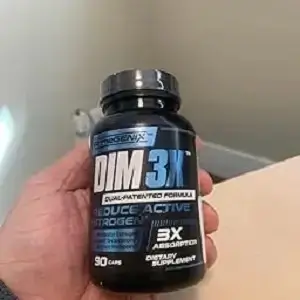
For men with thyroid concerns, the relevance of bioavailability enhancement is this: a product that delivers consistent, predictable DIM absorption at a lower stated dose is preferable to a plain DIM product that requires a higher dose to achieve the same systemic effect.
Better bioavailability means you can potentially achieve meaningful hormonal effects at a lower dose — which is directly relevant when you are trying to minimize the enzyme induction load on pathways shared with thyroid hormone metabolism.
As with all branded supplement products, PrimeGENIX DIM 3X as a combined formulation has not been independently evaluated in its own peer-reviewed clinical trial — a standard industry limitation.
Individual responses — including thyroid-related ones — will vary based on baseline thyroid status, iodine levels, body composition, and concurrent medications.
If you have thyroid concerns, discuss DIM 3X or any other DIM product with your physician or endocrinologist before starting.
Click here to check out my detailed Primegenix DIM3X review
Timing Away From Thyroid Medication
If you are on levothyroxine or any other thyroid medication, take your thyroid medication and your DIM at different times of day — ideally with at least 4 hours between them.
This timing separation reduces the opportunity for direct pharmacokinetic interaction in the gut and liver during the same metabolic processing window.
The Monitoring Schedule
Retest your full thyroid panel at 6 weeks after starting DIM — comparing your post-DIM values against your baseline.
Pay particular attention to free T3 — a reduction in free T3 despite stable or unchanged TSH and free T4 would suggest that DIM is affecting the T4-to-T3 conversion pathway and warrants medical review.
DIM Cycling for Thyroid Protection
Running DIM on an 8 weeks on, 2 weeks off cycle serves a dual purpose for men with thyroid concerns.
It reduces cumulative enzyme induction load on the liver pathways shared with thyroid hormone processing, and it allows the body to recalibrate thyroid hormone metabolism periodically rather than sustaining continuous CYP enzyme modification.
DIM Alternatives for Men With Thyroid Conditions Who Still Need Estrogen Support
If you have a thyroid condition and your endocrinologist advises against DIM, you are not without options for managing estrogen balance naturally.
Several alternatives exist that do not share DIM’s CYP enzyme pathway interactions with thyroid hormone metabolism.
Calcium D-Glucarate
Calcium D-glucarate supports estrogen clearance through the glucuronidation pathway in the liver — a Phase II detoxification route that is distinct from the CYP enzyme pathways that DIM primarily uses.
This makes calcium D-glucarate a particularly attractive alternative for men who need estrogen support but are trying to minimize CYP enzyme interference with their thyroid medication or thyroid hormone conversion.
500mg per day is the commonly used dose, and it can be combined with other thyroid-safe approaches for more comprehensive estrogen management.
DIM vs Thyroid-Safe Alternatives
| Option | Estrogen support | CYP pathway interaction | Thyroid safety | Best for |
|---|---|---|---|---|
DIM 200–400mg/day |
Strong | Yes — CYP1A1, CYP1A2, CYP3A4 Shared with thyroid hormone metabolism pathways |
Caution needed | Healthy thyroid with baseline panel and monitoring |
Calcium D-glucarate 500mg/day |
Moderate | Minimal — glucuronidation pathway Distinct from CYP — does not share thyroid enzyme pathways |
High | Men on thyroid medication or with thyroid conditions |
Zinc 25–40mg/day |
Good (aromatase inhibition) | None Works upstream via mineral-enzyme interaction, not CYP |
High | All men with thyroid concerns — most thyroid-neutral option |
Dietary cruciferous 3–4 servings/week |
Mild | Minimal at food doses Whole food co-factors modify and buffer indole activity |
High | Low-risk approach for mild estrogen support needs |
Anastrozole Prescription only |
Strong | Yes — CYP1A2, CYP3A4 Pharmaceutical — requires medical supervision |
Requires monitoring | Clinically confirmed high estrogen under physician supervision |
Body fat reduction Lifestyle |
Strong (indirect) | None Reduces aromatase activity at the source — no supplemental intervention |
Highest | All men — the most thyroid-safe and most impactful single intervention |
For informational purposes only. Consult a qualified healthcare professional before starting any supplement, particularly if you have a thyroid condition or are on medication.
Zinc
Zinc is a direct inhibitor of aromatase — the enzyme that converts testosterone to estrogen — and its mechanism of action does not involve the CYP pathways that interact with thyroid hormone metabolism.
For men with thyroid concerns who need to address testosterone-to-estrogen ratio issues, zinc at 25 to 40mg per day represents one of the most thyroid-neutral approaches available.
Lifestyle-Based Estrogen Management
Body fat reduction is the most powerful estrogen management tool available to men — and it carries zero thyroid interaction risk.
Since adipose tissue is the primary site of aromatase activity in men, reducing body fat directly reduces the rate of testosterone-to-estrogen conversion without any pharmacological or supplemental intervention.
Heavy compound resistance training, adequate sleep, stress management, and alcohol reduction all support a more favorable testosterone-to-estrogen ratio through mechanisms that are entirely compatible with healthy thyroid function.
Dietary Estrogen Management
Cruciferous vegetables at normal dietary doses provide meaningful estrogen metabolite support through the indole-3-carbinol pathway — at concentrations that are far less likely to produce thyroid pathway interference than supplemental DIM.
Three to four servings of broccoli, cauliflower, or cabbage per week delivers a meaningful dose of dietary indoles alongside the cofactors, fibre, and micronutrients that modify their effects — a more nuanced delivery mechanism than isolated supplemental DIM.
Blood Work Protocol for Men Using DIM With Thyroid Concerns
Blood work is the cornerstone of responsible DIM use for any man — but it is doubly important for men with thyroid concerns.
Here is the complete monitoring framework.
Blood Work Monitoring Schedule
Pre-DIM Full Panel
Before starting DIM, run a comprehensive panel that covers both thyroid and hormonal markers.
Thyroid markers should include TSH, free T4, free T3, reverse T3, anti-TPO antibodies, and anti-thyroglobulin antibodies.
Hormonal markers should include total testosterone, free testosterone, estradiol, SHBG, LH, and FSH.
Metabolic markers should include a full liver function panel, kidney function, fasting glucose, insulin, and a lipid panel.
The 6-Week Retest
Six weeks after starting DIM, repeat the thyroid panel and the core hormonal markers.
Compare each value against your baseline — what you are looking for are directional changes that go beyond normal lab variation, particularly in free T3 and the TSH-to-free T4 relationship.
A TSH that rises significantly while free T4 stays the same suggests the pituitary is sensing reduced thyroid output — a pattern consistent with DIM affecting thyroid hormone availability.
A free T3 that drops while TSH and free T4 stay stable is a more specific signal suggesting DIM may be affecting T4-to-T3 conversion — and this pattern warrants immediate discussion with your physician.
Ongoing Monitoring
For long-term DIM users with thyroid concerns, repeating the full panel every 3 to 4 months is appropriate.
Between formal blood tests, tracking subjective markers weekly — energy, body temperature tolerance, cognitive clarity, bowel regularity, heart rate — gives you real-time signals between the objective data points.
Working With Your Doctor
Bring your baseline and follow-up blood work results to your doctor or endocrinologist — not just the DIM product label.
Frame the conversation around the specific markers that changed and ask for their clinical interpretation in the context of your DIM use — a practitioner familiar with supplement interactions can help you distinguish between meaningful changes and normal variation far more reliably than any self-assessment.
Conclusion
DIM is a genuinely useful natural tool for men seeking to optimize their estrogen metabolism and testosterone ratio — but it is not a simple wellness supplement with no downstream effects.
Its interaction with thyroid function is real, documented in the relevant biochemical literature, and deserves serious attention — particularly for the significant minority of men who have thyroid conditions that have never been diagnosed.
The key message here is not that men should avoid DIM.
It is that men should take it with the same level of informed awareness that they would bring to any biologically active intervention that touches their endocrine system.
Know your thyroid baseline before you start. Start at a lower dose. Monitor your blood work. Know the symptoms that should prompt you to stop and seek medical advice.
For men with healthy thyroid function and no thyroid history, DIM at appropriate doses with good bioavailability remains a well-tolerated and effective tool for hormonal optimization.
For men with existing thyroid conditions — particularly hypothyroidism or Hashimoto’s — the conversation with your endocrinologist before starting DIM is non-negotiable.
Your thyroid and your hormonal balance work together. Protect both.