Why Does DIM Turn Urine Dark? The Complete Explanation for Men Taking DIM Supplements
You took your first DIM capsule, went to the bathroom a few hours later, and stopped dead in your tracks.
Your urine was darker than you have ever seen it — a deep amber, almost brownish color that looked nothing like what you are used to.

Panic set in. Is something wrong? Did you damage your kidneys? Should you stop taking DIM immediately?
Take a breath. You are not alone — and in the vast majority of cases, you are not in danger.
Dark urine after starting DIM supplementation is one of the most commonly reported and most alarming-looking side effects men experience — and also one of the most misunderstood.
What you actually need is a clear, science-based explanation of exactly what is happening in your body, why DIM causes urine discoloration, and what warning signs would indicate something more serious.
That is exactly what this guide delivers.
By the end of it, you will know precisely why DIM turns urine dark, whether your specific situation is normal, and how to manage this side effect intelligently going forward.
What Is DIM and What Does It Do in the Body?
Before we can understand why DIM affects urine color, we need to understand what DIM actually is and how your body processes it.
The way DIM is metabolized is directly relevant to what ends up in your urine.
What DIM Is
DIM stands for Diindolylmethane — a naturally occurring compound produced in your body when you digest cruciferous vegetables like broccoli, cauliflower, and kale.
It forms through the breakdown of a precursor compound called indole-3-carbinol in the acidic environment of your stomach.
Men take DIM primarily to support healthier estrogen metabolism, improve the testosterone-to-estrogen ratio, and reduce symptoms associated with estrogen dominance such as fat gain, water retention, low libido, and mood instability.
How Your Body Processes DIM
Once DIM is absorbed through the gut, it travels to the liver — the body’s primary metabolic processing hub.
The liver handles DIM through what are called Phase I and Phase II detoxification pathways, converting it into water-soluble metabolites that can be safely excreted from the body.
These metabolites are then passed into the bloodstream, filtered by the kidneys, and ultimately excreted in urine.
This journey from capsule to kidney is what creates the urine discoloration — and understanding it removes most of the fear around seeing darker urine after taking DIM.
The CYP450 Connection
DIM influences the cytochrome P450 enzyme system — a family of liver enzymes responsible for metabolizing a huge range of compounds, including hormones, drugs, and supplement ingredients.
As these enzymes break DIM down, they produce specific indole-based metabolites that carry a natural pigmentation — and it is these colored compounds that end up giving your urine its darker appearance.
The Science Behind Why DIM Turns Urine Dark
The discoloration you see is not random and it is not a sign of contamination or toxicity.
It has a specific, well-understood biochemical explanation.
The Indole Structure
DIM belongs to a class of compounds called indoles — organic molecules with a distinctive ring structure that is common in many naturally occurring compounds.
When the liver breaks DIM down through its cytochrome P450 pathways, it produces several indole-based metabolites, many of which carry inherent color properties.
These colored metabolites are water-soluble — which is precisely why the body routes them through the kidneys for excretion in urine rather than through other elimination pathways.
Why the Color Is Yellow-Amber to Brown
The specific metabolites produced from DIM processing tend to produce colors in the yellow-amber to light brown spectrum — similar in principle to how other bioactive compounds like certain B vitamins or natural plant pigments produce distinct urine colors.
The shade you see depends heavily on concentration — how many metabolites are present relative to how much water is in your urine.
A well-hydrated man may notice only a slightly deeper yellow. A man who has not drunk enough water may notice a significantly darker amber or brownish color from the same DIM dose.
Why It Is Strongest in the Morning
First morning urine is the most concentrated urine of the day — your kidneys have been filtering blood overnight without the diluting effect of water intake.
This means DIM metabolites that have accumulated overnight are present in higher concentration, producing the darkest and most visually striking discoloration you are likely to see.
This is completely normal and is actually true of many compounds that affect urine color — the effect is always most pronounced when urine is most concentrated.
Is Dark Urine From DIM Dangerous?
This is the question every man is really asking when he notices the color change.
And for the vast majority of men in good health, the answer is no — with some important caveats.
What the Color Change Actually Means
The dark urine you are seeing is a direct sign that your liver has metabolized the DIM you took and your kidneys are efficiently excreting those metabolites.
It is, in that sense, evidence that the supplement is being absorbed and processed — not evidence that something has gone wrong.
The metabolites responsible for the color are not toxic compounds — they are the normal breakdown products of an indole supplement passing through a healthy detoxification system.
What It Is Not
DIM-related urine discoloration is not hematuria — blood in the urine.
It is not a sign of kidney damage, which would typically present with a very different set of accompanying symptoms including pain, reduced urine output, and significant changes in kidney function markers on blood tests.
And in men with healthy liver function, it is not a sign of liver toxicity — DIM is processed through the liver, but the mere fact of producing colored metabolites is not an indicator of liver stress.
Individual Variation
Some men notice significant, consistent darkening of their urine every time they take DIM.
Others barely notice any color change at all — even at the same dose.
This variation reflects differences in individual liver enzyme activity, metabolic rate, hydration habits, and the specific form of DIM being taken — and none of these variations are inherently cause for concern.
What Normal DIM-Related Urine Discoloration Looks Like
Knowing what to expect takes away most of the anxiety around this side effect.
Here is a clear picture of what normal DIM-related urine discoloration looks and behaves like.
The Color Range
Normal DIM-related discoloration falls in the range from a noticeably deeper yellow — more golden than pale straw — all the way to an amber or light brown color in concentrated conditions.
If your urine looks like dark apple juice, that is consistent with high DIM metabolite concentration combined with lower water intake.
If it is a slightly richer yellow than you normally see, that is also consistent — and on the milder end of the spectrum for DIM users.
The Timing Pattern
The discoloration tends to be most pronounced in the two to six hours after taking DIM, as metabolites are actively being excreted.
It lightens throughout the day as you drink water and dilute the metabolite concentration in each urination.
By the evening, many men find the color has normalized almost entirely — only to see the darker morning urine again the following day after the overnight concentration effect.
How It Changes Over Time
Many men notice that the discoloration is most striking in the first one to two weeks of DIM supplementation, when the body is still adjusting to processing a new compound.
As the body adapts — the liver enzymes become more efficiently calibrated to handling DIM — many men find the intensity of the discoloration reduces noticeably over time.
This is a normal adaptation pattern, not a sign that DIM has stopped working.
When Should You Be Worried About Dark Urine on DIM?
Most dark urine on DIM is harmless — but there are specific warning signs that require medical attention.
Knowing these red flags is just as important as knowing why the color change is usually benign.
Red Flag 1: Blood in Urine
If your urine has a red, pink, or rust-colored tinge — rather than yellow-amber or brown — that is a potential sign of blood in the urine (hematuria) and requires prompt medical evaluation.
DIM metabolites do not produce red or pink discoloration. Any red or pink color is a separate issue entirely.
Red Flag 2: Cola-Colored Urine With Pain
Very dark brown urine that looks like cola, combined with flank pain, back pain, or fever, can indicate a serious kidney condition called rhabdomyolysis or acute kidney injury.
This is distinctly different from the amber-brown of DIM metabolite excretion and should be treated as a medical emergency.
Red Flag 3: Jaundice
If you notice yellowing of the skin or whites of the eyes alongside dark urine, stop DIM immediately and seek medical attention.
This combination is a classic presentation of liver dysfunction — jaundice combined with dark urine suggests bile is not being properly processed and excreted.
Red Flag 4: Painful Urination
Dark urine combined with burning, stinging, or pain during urination suggests a urinary tract infection or kidney stone — neither of which is related to DIM metabolism.
These conditions need medical treatment regardless of whether you are taking DIM.
Red Flag 5: Persistent Dark Urine Despite Good Hydration
Normal DIM discoloration lightens significantly with adequate water intake.
If you are drinking 3 or more liters of water daily and your urine remains persistently dark, that warrants a doctor visit and a urinalysis to rule out non-DIM causes.
Red Flag 6: Accompanying Systemic Symptoms
Dark urine combined with nausea, right-side abdominal pain, extreme fatigue, or loss of appetite suggests potential liver involvement and requires immediate medical evaluation.
The rule of thumb is simple: isolated urine color change that lightens with hydration is almost certainly DIM-related and benign. Dark urine with any accompanying symptoms is a reason to stop DIM and see a doctor.
How to Reduce Dark Urine While Taking DIM
If the discoloration bothers you — even knowing it is usually harmless — there are practical steps you can take to reduce its intensity.
Most of them are simple and immediately effective.
Drink More Water — Consistently
This is the single most effective intervention for reducing DIM-related urine discoloration.
Increasing your daily water intake to 3 to 4 liters dilutes the concentration of DIM metabolites in each urination, reducing the intensity of the color change significantly.
Spread your water intake throughout the day rather than drinking large amounts at once — consistent dilution is more effective than episodic hydration.
Take DIM With Food and Water
Taking DIM with a meal — particularly one containing healthy fats — improves absorption and may reduce the concentration of unabsorbed or partially absorbed DIM that reaches the kidneys.
Taking it alongside a large glass of water (400-500ml) immediately begins the dilution process and reduces the peak concentration of metabolites in your next urination.
Consider Your Timing
Some men find that taking DIM in the evening reduces the visual impact of discoloration, since the concentrated morning urine is the most affected and overnight metabolism allows for more complete processing before the day begins.
Others prefer morning dosing specifically to monitor the color change as a rough indicator of absorption — there is no universal right answer here.
Support Your Liver
Since DIM is processed through the liver, supporting healthy liver function can help the metabolic pathway run more efficiently.
Milk thistle (silymarin) and N-acetylcysteine (NAC) are the most evidence-supported liver support supplements to consider alongside DIM — particularly for long-term users.
Adjust Your Dose Temporarily
If the discoloration is severe or distressing in the first weeks, reducing your DIM dose temporarily and building back up gradually can reduce intensity while your body adjusts.
Starting at 100mg rather than 200mg and titrating up over two to four weeks is a sensible approach for men who find the initial discoloration concerning.
DIM Dose and Urine Color — Is There a Connection?
Yes — there is a clear and consistent relationship between DIM dose and the intensity of urine discoloration.
Understanding this relationship helps you interpret what you see and adjust your protocol intelligently.
Higher Dose, Darker Color
More DIM means more metabolites for the liver to process and the kidneys to excrete — which means a higher concentration of colored compounds in urine.
Men who move from 100mg to 300mg of DIM typically notice a corresponding increase in the depth of urine color, particularly in concentrated morning samples.
Bioavailability Matters
Here is something that surprises many men: enhanced bioavailability DIM products can produce more pronounced discoloration than plain DIM at the same stated dose — because more of the DIM is actually reaching systemic circulation and being processed.
If you switch from a basic DIM product to one with BioPerine, phosphatidylcholine, or sunflower lecithin and notice your urine gets darker, that may actually be confirmation that the higher-bioavailability product is delivering more DIM to your system.
Splitting Doses
Men who split their daily DIM dose between morning and evening sometimes notice that neither single dose produces as dark a urine as a single larger dose would.
This is because each dose produces a smaller metabolite load at any given time — something worth considering if you want to manage the visual effect while maintaining your total daily dose.
Using Color as an Absorption Indicator
Some experienced DIM users actually use the presence of mild urine discoloration as an informal confirmation that their supplement is being absorbed.
A complete absence of any color change despite taking DIM at meaningful doses can suggest the product has poor bioavailability and is passing through largely unabsorbed.
DIM Dark Urine vs Other Supplement Side Effects — Understanding What Is What
DIM is not the only supplement that affects urine color — and if you are taking multiple products, identifying the source of color change can be confusing.
Here is how to distinguish DIM from other common culprits.
B Vitamins — Especially B2
Riboflavin (vitamin B2) is the most common cause of bright, almost neon yellow urine in supplement users — it is dramatically more vivid than DIM-related discoloration.
If your urine looks fluorescent yellow, that is almost certainly B2 excretion, not DIM. DIM produces a more amber or golden-brown shade, not a bright vivid yellow.
Turmeric and Curcumin
Turmeric can produce a distinctly yellow-orange tinge in urine — more orange than DIM’s amber-brown.
If you are taking both DIM and a curcumin supplement, the combined effect can produce a more intensely colored result than either alone.
Dehydration
Dark urine from dehydration is the most common misattribution men make when starting DIM.
If you have not changed your water intake since starting DIM, some of what you are seeing may simply be normal concentrated urine that you are now paying more attention to because you are alert to any changes.
The practical test is straightforward: drink significantly more water for two days while keeping DIM the same. If the color lightens substantially, dehydration was contributing. If it does not lighten much at all, DIM metabolites are the primary cause.
Ruling Out Infection
Urinary tract infections can produce cloudy, dark, or unusual smelling urine — distinct from the clear-but-colored appearance of DIM metabolite excretion.
DIM discoloration does not produce cloudiness, unusual odor, or pain. If any of those are present alongside the color change, a UTI or kidney issue is more likely the cause than DIM.
What DIM Dark Urine Tells You About Your Metabolism
Once you get past the initial alarm, there is actually something informative about seeing your urine change color on DIM.
It is giving you real-time feedback about your body’s metabolic activity.
Active Liver Processing
The presence of DIM metabolites in your urine is direct evidence that your liver has taken DIM through its Phase I and Phase II detoxification pathways and converted it into water-soluble compounds for excretion.
This is precisely what you want to happen — it means the DIM is being processed and its effects on estrogen metabolism are being activated.
The Estrogen Metabolism Connection
As DIM is processed through the liver, the same enzymatic pathways that produce its colored metabolites are also producing the beneficial estrogen metabolites — particularly 2-hydroxyestrone — that improve the testosterone estrogen ratio.
In this sense, the urine color change is not just a side effect — it is a byproduct of the same metabolic activity that makes DIM useful.
Individual Enzyme Activity
Men who see more intense discoloration may have more active CYP1A1 and CYP1A2 enzyme pathways — which also tend to correlate with more efficient production of the beneficial 2-hydroxy estrogen metabolites.
Men who see very little discoloration at reasonable doses may have slower cytochrome P450 activity, which can mean both less visual effect and potentially less efficient DIM metabolism.
Adaptation Over Time
When the discoloration fades after several weeks of consistent DIM use, it typically reflects the liver’s adaptation to processing DIM more efficiently — not a reduction in its hormonal effects.
Think of it like any other metabolic adaptation: the body becomes better at handling a regularly encountered compound, producing metabolites more efficiently and clearing them more smoothly.
Choosing a DIM Supplement — What to Look For and a Note on PrimeGENIX DIM 3X
If you are experiencing significant urine discoloration from DIM, the quality and formulation of the product you are taking is directly relevant.
Not all DIM supplements are created equal — and the differences matter both for effectiveness and for how the supplement affects urine color.
Why Bioavailability Is the Critical Factor
Standard DIM without absorption enhancement has very poor bioavailability — a significant portion of what you take never reaches systemic circulation and simply passes through.
This creates an inconsistent situation: some of the DIM is being metabolized and producing its hormonal effects, while the rest is being excreted unprocessed — and you have no reliable way to know how much of each is happening.
A well-formulated, bioavailability-enhanced DIM product ensures that a consistently higher proportion of each dose reaches your bloodstream and liver, producing more predictable metabolic effects and more consistent urine color patterns.
What to Look For on the Label
The key bioavailability enhancers to look for are BioPerine (standardized piperine extract), phosphatidylcholine, and sunflower lecithin — all of which have evidence supporting their ability to significantly improve DIM absorption.
A minimum of 200mg of DIM per serving is appropriate for men using it for hormonal ratio management, alongside third-party testing and GMP certification as baseline quality standards.
PrimeGENIX DIM 3X
One product that comes up consistently in discussions about DIM for men’s hormonal health is PrimeGENIX DIM 3X.
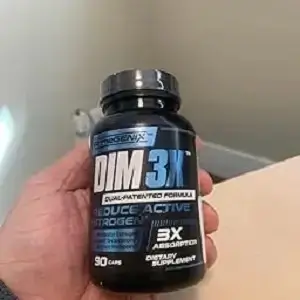
It is specifically designed for men’s hormonal optimization and features a patented absorption-enhancing system that addresses the core bioavailability limitation of standard DIM products — delivering a meaningfully higher proportion of DIM to systemic circulation per dose.
In the context of urine discoloration specifically, this is worth noting: because DIM 3X is designed for higher and more consistent absorption, men using it at appropriate doses are more likely to see the urine color change that indicates active DIM metabolism — a sign the supplement is actually reaching their system rather than passing through unabsorbed.
The ingredient profile of DIM 3X is transparent, the DIM content per serving is appropriate for men seeking hormonal ratio support, and the formulation is built specifically around the needs of male users.
As with all branded supplement products, PrimeGENIX DIM 3X as a combined formulation has not been independently evaluated in its own peer-reviewed clinical trial — a standard industry limitation.
Individual responses — including the degree of urine discoloration — will vary based on body weight, hydration, liver enzyme activity, and baseline hormonal status.
Check out my detailed and unbiased Primegenix DIM3X review by clicking here
Getting Blood Work to Rule Out Underlying Issues
For men who want certainty rather than reassurance, blood work is the definitive tool for confirming that DIM-related urine discoloration is exactly what it appears to be — and nothing more.
Here is what to test and when.
Before You Start DIM
Getting baseline blood work before starting any DIM supplement is the gold standard approach.
At minimum, run a liver function panel (ALT, AST, GGT, alkaline phosphatase), kidney function markers (creatinine, BUN, eGFR), and a complete blood count.
These baseline values give you a reference point that allows you to confidently compare results after starting DIM and rule out any pre-existing conditions that might affect how you respond to supplementation.
A Urinalysis for Definitive Clarity
If you are genuinely uncertain whether the color change in your urine is DIM-related or something else, a simple urinalysis will tell you definitively.
A urinalysis can detect blood, protein, white blood cells, bacteria, and other markers of kidney or urinary tract disease — none of which should be present in DIM-related discoloration.
If the urinalysis comes back normal aside from the color, you have your confirmation: what you are seeing is DIM metabolite excretion, not a pathological process.
Monitoring While on DIM
For long-term DIM users, repeating a liver function panel every six months is a reasonable precaution — particularly for men who are also taking other supplements or medications that are liver-metabolized.
Any significant elevation in liver enzymes should prompt a conversation with your doctor and a temporary suspension of DIM pending investigation.
Talking to Your Doctor
Be open with your doctor about DIM supplementation — bring the product label, the dose you are taking, and a description of the urine color change you have noticed.
A doctor familiar with supplement interactions can quickly assess whether what you are describing is consistent with normal DIM metabolism or warrants further investigation — and that peace of mind is worth the conversation.
Conclusion
Dark urine after starting DIM is alarming when you first see it — that much is completely understandable.
But for the vast majority of men, it is one of the most harmless-looking side effects in the supplement world.
It is your kidneys doing exactly what they are supposed to do: filtering and excreting the metabolites produced as your liver processes DIM.
The color is caused by indole-based metabolites from normal liver detoxification — not by cellular damage, kidney stress, or liver failure.
That said, “usually harmless” is not the same as “always harmless.”
The red flags are clear: blood in urine, jaundice, significant pain, fever, or discoloration that persists despite good hydration and does not match the gradual onset pattern of typical DIM metabolism.
If any of those apply to you, stop DIM and see a doctor. No supplement benefit is worth overlooking a genuine medical warning sign.
For everyone else — stay hydrated, start at a lower dose, take DIM with a fatty meal and a large glass of water, and give your body the two to four weeks it typically needs to adjust.
Most men find the discoloration reduces significantly or disappears entirely once the body has adapted to DIM’s metabolic demands.
And if you ever want to confirm definitively that the color change is DIM and nothing more — stop taking it for a week. If the color normalizes, you have your answer. Simple as that.